

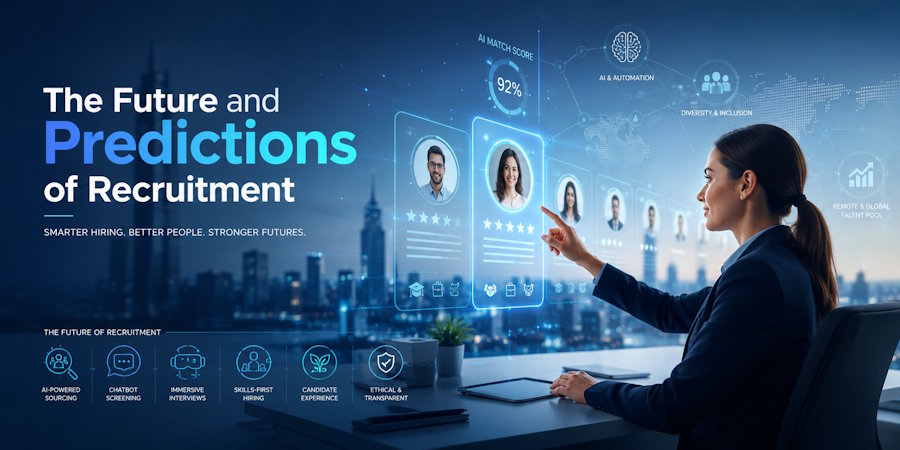
The sector of recruitment has always been dynamic, changing all the time to satisfy the demands of both companies and job seekers. Technology breakthroughs, societal shifts, and evolving labour expectations are all contributing to the recruitment landscape's transition as we continue into the digital age. Although the recruiting industry is expected to be dynamic, effective, and highly adaptable in the future, there are obstacles that must be overcome to guarantee an inclusive and equitable hiring procedure. The main trends and forecasts influencing the future of hiring are examined below.
Transition to Hybrid and Remote Work Models
Remote work became more popular as a result of the COVID-19 pandemic, and flexible work arrangements are undoubtedly here to stay. Consequently, hiring practices are changing to take into account remote and hybrid positions. Businesses can now access a worldwide workforce rather than being limited to local talent pools. Virtual hiring procedures, such as video interviews and online tests, are increasingly commonplace. Organizations must modify their hiring procedures to draw in and assist remote workers while resolving issues like time zone disparities and cultural integration if they want to remain competitive.
Emphasis on Artificial Intelligence and Automation
Automation and artificial intelligence (AI) are poised to transform hiring procedures. Recruiters can expedite the applicant sourcing, resume screening, and even preliminary interview procedures with AI-powered solutions. Large volumes of data can be analyzed by algorithms to find exceptional talent, which reduces human bias and saves time. Additionally, chatbots and virtual assistants are becoming commonplace, interacting with applicants in real time, responding to their questions, and helping them with the application process. Organizations must, however, make sure that these technologies are developed morally, with protections to maintain diversity and stop discrimination.
Emergence of Data-Driven Recruitment
David Magnani, President of M&A Executive Search believes a key component of contemporary recruitment tactics is data analytics. Employers are using data to gauge hiring effectiveness, forecast candidate success, and pinpoint areas where their hiring processes need to be improved. When assessing a candidate's chances of long-term retention or cultural fit, for example, predictive analytics can assist recruiters in making well-informed judgements. Companies will need to make investments in strong data management systems and guarantee adherence to privacy laws as this trend continues to spread in order to safeguard candidate data.
Transition to Hybrid and Remote Work Models
Remote work became more popular as a result of the COVID-19 pandemic, and flexible work arrangements are undoubtedly here to stay. Consequently, hiring practices are changing to take into account remote and hybrid positions. Businesses can now access a worldwide workforce rather than being limited to local talent pools. Virtual hiring procedures, such as video interviews and online tests, are increasingly commonplace. Organizations must modify their hiring procedures to draw in and assist remote workers while resolving issues like time zone disparities and cultural integration if they want to remain competitive.
Focus on Employer Branding and Candidate Experience
Justin Berg of CV Maker said, employer branding is essential for drawing in top talent in a labour market that is becoming more and more competitive. More than a pay cheque, candidates are searching for companies that share their values, provide opportunity for advancement, and cultivate a great work environment. As a result, businesses are investing in their employer brands by demonstrating their commitment to sustainability, diversity, and employee wellbeing. As candidates become more selective, many also research employer reputation and compare potential employers through independent employer ranking platforms such as Employer League before deciding where to apply. Building strong relationships and reducing drop-off rates during the hiring process will also depend on improving the applicant experience, from application to onboarding.
Demand for Skills-Based Hiring
Skills-based hiring is progressively taking the place of traditional credentials like degrees and certifications. Instead of depending only on a candidate's educational background, employers are now paying more attention to their actual skills and potential. The quick speed of technological progress, which necessitates constant upskilling of people, is the driving force behind this transition. To make sure that candidates' abilities match job requirements, skills-based tests, coding challenges, and portfolio checks are increasingly commonplace elements of the hiring process.
Strategies for Integrating Diversity, Equity, and Inclusion (DEI)
Inclusion, equity, and diversity are now crucial elements of contemporary hiring practices; they are no longer optional. In order to create teams that represent a range of viewpoints and experiences, organizations are placing a high priority on diverse hiring methods. AI and other technologies can help lessen unconscious bias, but businesses must be careful not to reinforce systemic injustices. Among the strategies being utilized to establish fair hiring practices include diversity-orientated recruitment metrics, inclusive job descriptions, and deliberate outreach to under-represented groups.
Acceptance of Contingent and Gig Workforce Models
The gig economy is expanding quickly as more professionals look for part-time, contract, or freelance work. As businesses adjust to managing and integrating contingent labor, this change is changing traditional recruitment approaches. Platforms that match companies with qualified workers for temporary employment, such as Upwork and Fiverr, are flourishing. Businesses must create plans for efficiently hiring, supervising, and keeping gig workers while making sure they are treated fairly and given the assistance they need.
Initiatives for Ongoing Reskilling and Upskilling
Continuous learning will be necessary for the workplace of the future, and hiring practices will place a greater emphasis on applicants' readiness and capacity to upskill. To keep their workforce competitive, businesses are spending money on training initiatives and collaborations with academic institutions. For companies trying to draw in top talent, emphasizing professional growth opportunities during the hiring process will become a crucial differentiation.
Utilizing Cutting-Edge Augmented Reality (AR) and Virtual Reality (VR)
Augmented reality and virtual reality are becoming cutting-edge recruitment techniques. Through immersive experiences like virtual office tours or lifelike job previews, these technologies can help candidates better comprehend the position and culture of the company. VR can be used to test candidates' aptitude and mimic real-world situations for jobs needing specialized expertise. VR and AR technologies have the potential to revolutionize how businesses interact with potential employees as they become more widely available.
Conclusion
To sum up, the future of hiring is going to be more inclusive, data-driven, and dynamic than it has ever been. Organizations may create strong recruitment strategies that draw in and keep top people by embracing technological advancements, adjusting to shifting workforce trends, and placing a high priority on ethical behavior. It is obvious that the development of hiring will continue to influence the workplace for many years to come.

