

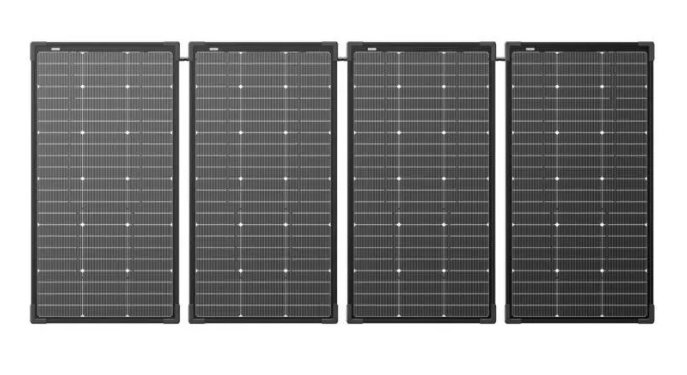
Solar panels turn free sunlight into useful electricity, but buying the right number often feels confusing. Many homeowners either overestimate and pay for more panels than they need, or underestimate and still rely heavily on the grid. A simple method can fix that. You only need three key details: how much power you use, how many hours of strong sun you get, and how much electricity each panel can produce. Once you know these, you can plan a system for cutting bills, powering a small office, or backing up essential devices. This guide walks through the steps in plain language and shows how portable panels, including options like EcoFlow, fit into real-world setups.
What Determines the Number of Solar Panels You Need?
Your Daily Electricity Consumption
Your daily electricity consumption is the foundation of your solar panel calculation. You will find this number on your power bill, usually in kilowatt-hours (kWh). To get a daily figure, divide your monthly kWh by 30. For example, if your home uses 900 kWh per month, that is about 30 kWh per day. Offices or workshops may use more due to computers, lighting, and equipment. Backup systems for fridges, routers, and a few lights may only need 3–6 kWh daily. List your main appliances, how many hours they run, and their wattage to cross-check your number. A clear daily total helps you size your solar system correctly, avoid surprises, and see how much of your usage you want to offset or cover completely.
Solar Panel Wattage and Efficiency
Solar panel wattage and efficiency tell you how much energy each panel can produce under standard conditions. Wattage shows the maximum power output, such as 100W, 200W, or 400W. Efficiency shows how well a panel turns sunlight into electricity; higher efficiency panels generate more power in the same space. This matters if you have a small roof, balcony, RV, or limited yard area. A 400W high-efficiency panel can replace several smaller ones, simplifying wiring and mounting. Real-world output is lower than the rated wattage because of heat, dust, cable losses, and inverter losses. You should factor in a buffer, often around 20%, when planning. When comparing products, check the power rating, cell type, durability, and manufacturer performance warranty. Investing in efficient panels reduces panel count and makes better use of your available space.
How to Calculate Your Solar Panel Requirements
Step 1: Check Your Monthly Energy Usage
Start by checking your latest electricity bill for the section that shows total usage in kilowatt-hours (kWh). Most bills display how much energy you used in the last 30 days. Write down that number and calculate your daily average by dividing by 30. If your bill shows 600 kWh, your daily use is about 20 kWh. Look at several months to see how seasons change your usage. Air conditioning, electric heating, and pool pumps can raise consumption during certain months. Decide whether you want your solar system to cover your yearly average or focus on your highest-usage season. This clear baseline helps you choose an accurate system size.
Step 2: Estimate Peak Sunlight Hours
Next, estimate how many peak sun hours your site receives each day. Peak sun hours differ from daylight hours; they measure the equivalent of full-strength sunlight. Many online solar maps and local weather or energy sites share this information by city or region. For example, parts of the Southwest might get 5–6 peak hours, while cloudier areas may see only 3–4. Roof angle, direction, and shade from trees or buildings also affect available sun. Try to mount panels facing the sun’s path with minimal shade. Use the average peak hours for your area as a realistic input for your calculation.
Step 3: Divide Energy Needs by Panel Output
Now combine the numbers. Take your daily energy use in kWh and divide it by the expected daily output per panel. To estimate daily output per panel, multiply panel wattage (in kW) by peak sun hours and then reduce by about 20% for system losses. For instance, a 400W (0.4 kW) panel in a 5-hour location: 0.4 × 5 = 2 kWh, then about 1.6 kWh after losses. If you use 16 kWh per day, 16 ÷ 1.6 = 10 panels. For smaller portable setups, repeat the same steps with 100W or 200W panels and your specific backup loads.
Choosing the Right Solar Panels for Better Efficiency
Portable Solar Panels for Flexible Use
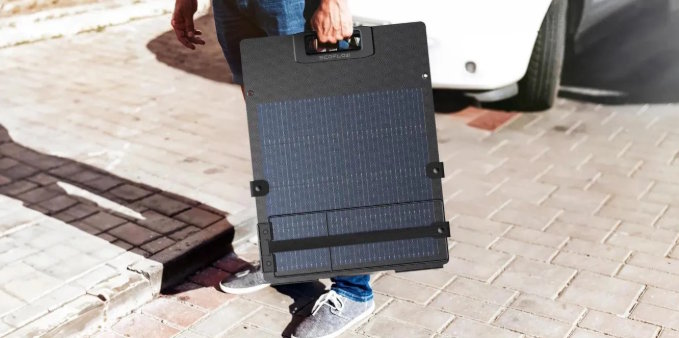
Portable solar panels suit people who need flexible power rather than a fixed rooftop array. These panels often fold or roll, making them easy to move between home, RV, boat, or campsite. You can use them to charge batteries, power stations, or small DC devices. Their output ranges from around 60W to 400W per panel, so you can scale your setup as needed. If you only need to run a laptop, lights, and a phone, one or two portable panels paired with a compact power station might be enough. They also work as an emergency backup if the grid fails. Look for durable materials, good conversion efficiency, and simple connectors.
EcoFlow Solar Panels for Backup and Outdoor Power
EcoFlow solar panels pair with EcoFlow portable power stations to create a complete, mobile solar solution. These panels are designed for quick setup: unfold, angle toward the sun, and plug into the power station. Users rely on them for camping, RV trips, off-grid cabins, or home backup for essential loads like routers, phones, lights, and small appliances. EcoFlow offers panels in several wattages, letting you mix and match for the right capacity. Their combination of efficient panels and smart power stations helps you monitor input, output, and battery levels in real time. This makes it easy to track how many panels you need for your specific devices.
Conclusion
Calculating how many solar panels you really need comes down to clear numbers, not guesswork. Start with your daily electricity use, then match it to local peak sun hours and the wattage of your chosen panels. Factor in system losses and your goals—whether you want to cut bills, power a small office, or keep essential devices running during outages. Fixed rooftop systems suit long-term home and business use, while portable options, including EcoFlow solar panels, give you flexible power for backup and outdoor needs. Once you run the simple calculation, you can size your system with confidence, control costs, and enjoy reliable, cleaner energy every day.

