

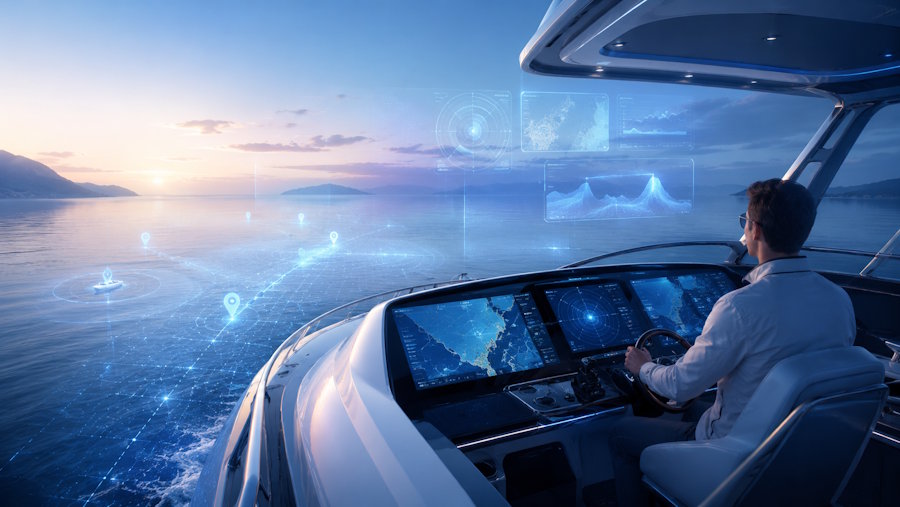
Modern boating has evolved far beyond charts, compasses, and basic instruments.
Today's vessels are equipped with sophisticated navigation technologies that help boaters travel more safely, efficiently, and confidently. GPS systems, digital mapping, weather monitoring, communication equipment, and vessel management tools have transformed the experience of being on the water.
Yet while many people focus on the technology itself, fewer consider how operators actually interact with it.
The effectiveness of a navigation system depends not only on the information it provides but also on how easily that information can be accessed and understood. As marine technology becomes more advanced, user interfaces are becoming just as important as the systems they control.
This is why modern boat control panels are playing an increasingly important role in the evolution of marine navigation.
Navigation Technology Has Changed Dramatically
Not long ago, navigation relied heavily on manual processes.
Boaters used:
- Paper charts
- Physical compasses
- Visual landmarks
- Radio communications
While many of these tools remain valuable, digital systems now provide far more information than ever before.
Today's vessels can display:
- Real-time positioning
- Weather conditions
- Route planning
- System diagnostics
- Safety alerts
- Performance monitoring
Managing this information efficiently requires thoughtful interface design.
Information Is Only Useful If It's Accessible
Modern boats generate large amounts of data.
The challenge is presenting that information in ways that help operators make decisions quickly and accurately.
This is where navigation interfaces become essential.
User Experience Matters on the Water
Marine environments can be demanding.
Boat operators often need to make decisions while managing changing weather, vessel traffic, and varying water conditions.
Complex or confusing controls can create unnecessary distractions.
Modern interface design focuses on:
- Clarity
- Simplicity
- Fast access to information
- Improved usability
These features help boaters stay focused on what matters most.
Integration Is Shaping the Future
One major trend in marine technology is system integration.
Rather than managing multiple disconnected devices, operators increasingly prefer centralized platforms that bring information together.
Integrated systems help simplify vessel management by reducing the number of separate controls required.
Benefits often include:
- Better organization
- Faster access to data
- Improved situational awareness
- Enhanced efficiency
Simpler Systems Reduce Stress
Boating should be enjoyable.
When systems work together seamlessly, operators spend less time managing technology and more time enjoying the experience.
Safety Benefits Extend Beyond Navigation
Improved interfaces don't simply make boats easier to operate.
They can also support safer decision-making.
When operators can quickly access critical information, they are often better prepared to respond to changing conditions.
This may improve:
- Route management
- Hazard awareness
- Operational efficiency
- Emergency response readiness
The result is a safer environment for everyone onboard.
Marine Technology Continues Advancing
Innovation within the marine industry shows no signs of slowing.
Manufacturers continue developing smarter solutions designed to improve usability while supporting increasingly sophisticated onboard systems.
Many vessel owners are adopting marine interface systems because they recognize the importance of creating intuitive interactions between operators and technology.
Smarter Navigation Starts With Better Interfaces
Navigation technology has become remarkably powerful, but its true value depends on how effectively people can use it. Modern marine interfaces help bridge the gap between complex systems and practical decision-making. As boats become more connected and capable, smarter control solutions will continue shaping the future of navigation on the water.

