

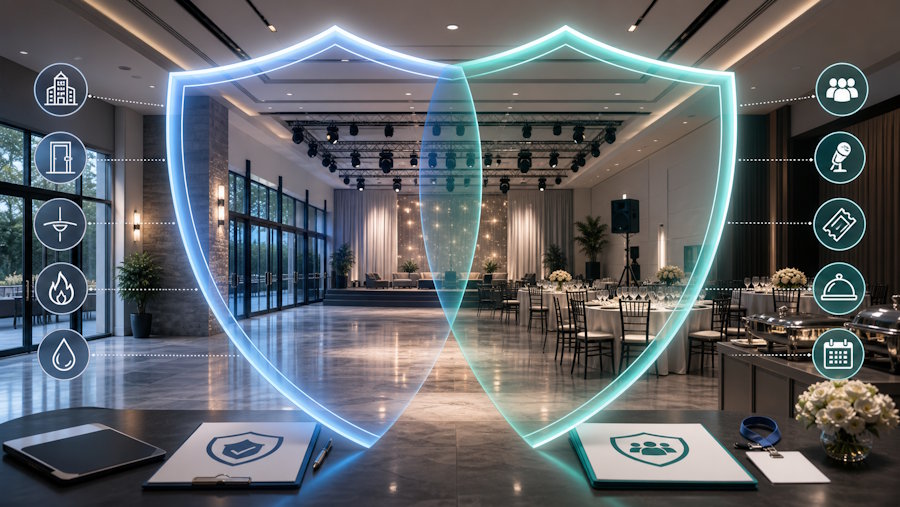
Many event planners think the venue's insurance covers everything when arranging a party, wedding, charitable fundraising event, or one-day exhibition. After all, if the venue has insurance, why would you need your own, right?
Regretfully, that assumption might be dangerous. Event insurance and venue insurance differ. They guard different parties, address several issues, and have gaps if you depend on the site's policy. Unless you have your cover, you might not be protected if something goes wrong during your event—injuries, damage, or cancellations.
This article discusses the main distinctions between venue insurance and event insurance, what each covers, and why, as the organizer, you still need your own policy. At QuoteRadar, you can easily compare different providers' insurance quotes and get the right one for you.
What Does Venue Insurance Include?
Usually, a venue's insurance focuses on safeguarding the venue rather than your event. This encompasses:
- Damage to the property or venue building (fire, floods, structural damage, etc.)
- Public liability for venue-owned dangers (e.g., a loose step or broken handrail wounding a guest)
- Those hired by the venue (under their employers’ liability).
Essentially, the venue’s policy shields them from being held accountable for damages or injuries caused by their staff, equipment, or location.
Therefore, the venue can offer cover should a ceiling tile fall and hurt someone throughout your event. But you are probably responsible if a hired caterer drops wine on the carpet or a visitor trips over your equipment.
To get the right insurance according to your business that can protect you adequately if something goes wrong, it is essential to compare using comparison websites like https://www.quoteradar.co.uk/public-liability-insurance/one-off-event/.
What Venue Insurance Does Not Cover?
Though it differs somewhat depending on the location, most venue insurance does not include the organiser's obligations, which include:
- Injuries resulting from your decorations, equipment, or activities
- Damage incurred by your providers or guests
- Accidents involving outside vendors you hired
- Cancellations resulting from unexpected events
- Loss or theft of things brought in by your guests or yourself
For instance:
- If you bring in a smoke machine that sets off the fire alarm, venue insurance will not pay penalties or fees.
- A youngster gets hurt while playing in your rented bouncy castle — it's on you.
- Your singer drops off the stage you set up; you could be accountable.
Without own event insurance, you could have to cover legal costs, payments, and even damage expenses from your own personal account.
What Does Event Insurance Cover?
Event insurance is designed to cover you as the organizer, and the policy determines whether it covers the following:
- Public liability: Should someone get hurt or their property is damaged due to your event.
- Employer liability: If you have volunteers, employees, or helpers, and they get hurt.
- Event equipment coverage: For rented equipment, ornaments, or electronics.
- Cancellation cover: Should unexpected events call for cancellation or postponement.
- Damage to the venue: Should your activities or guests be responsible?
Even if the venue is covered, having your event insurance guarantees you are not financially exposed if anything goes wrong.
Why do Certain Locations Ask You to Have Your Insurance?
Many UK government venues need evidence of your event coverage before you may stage anything. Why?
Because they don’t wish to be held accountable for the dangers of your event.
Depending on the kind of your event, you may be required to display public liability certificate covering up to a given amount (e.g., £1 million or £5 million). Presenting this might prevent legal and financial problems for both you and them.
Final Thoughts:
Your event and the location have to be protected. Especially for a one-day event, it may be tempting to rely on the venue’s insurance to reduce expenses.
Doing so exposes you to dangers unrelated to the place itself. If you are responsible for planning the event, hiring employees, loading and unloading equipment and welcoming visitors, you should think about having own event insurance.
It helps guarantee that one accident will not turn your special day into a financial catastrophe, giving you peace of mind.

