

Modern growth systems are no longer built solely on traditional marketing channels.
Instead, many developers and growth engineers are now designing automated workflows that collect, structure, and operationalize publicly available data from social platforms to support lead generation, market research, and customer acquisition.
This shift reflects a broader trend: growth is becoming increasingly technical.
Rather than relying on manual prospecting or isolated tools, teams are building integrated systems that transform scattered social signals into structured, actionable pipelines.
Why Developers Are Becoming Growth Engineers
The boundary between engineering and marketing is becoming less distinct.
Developers are now frequently involved in:
- Designing data collection pipelines
- Structuring CRM integrations
- Automating outreach workflows
- Building internal intelligence systems
This evolution has given rise to a new role often referred to as “growth engineering,” where technical teams directly influence acquisition strategies.
At the core of this approach is one principle: scalable systems outperform manual processes.
The Social Data Layer Behind Modern Prospecting
Public social platforms contain a significant amount of structured and semi - structured data that can be leveraged for growth systems.
These data points may include:
- Professional profiles and roles
- Company affiliations
- Audience engagement patterns
- Community behavior signals
When properly structured, this data becomes a valuable input layer for downstream systems such as CRM enrichment, segmentation engines, and outreach automation tools.
However, the challenge is not access to data - it is transformation and usability.
Collecting B2B Signals From LinkedIn
LinkedIn remains one of the most commonly used sources for B2B signal extraction due to its professional nature and structured identity data.
Developers and growth teams often use LinkedIn - derived datasets to:
- Identify decision - makers within target industries
- Map organizational structures
- Prioritize outreach based on role relevance
- Enrich CRM records with contextual information
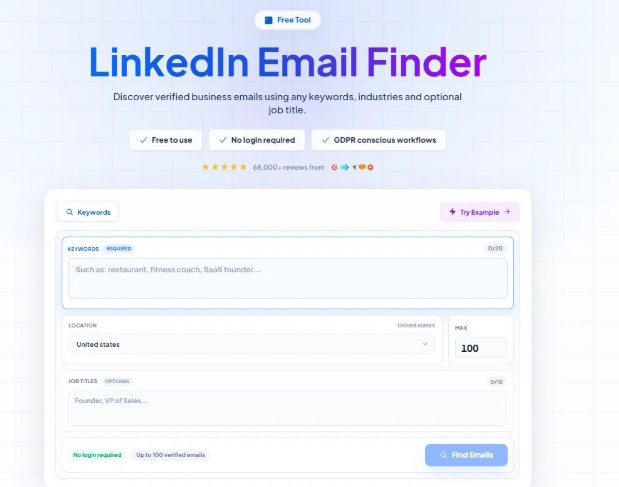
In practical workflows, teams may integrate tools such as a LinkedIn email finder or an email lookup to help bridge the gap between professional profiles and actionable contact data.
When integrated into automated pipelines, this type of enrichment enables faster qualification and more efficient outbound systems.
Extracting Audience Insights From Instagram
While LinkedIn provides structured professional data, Instagram offers a different type of input: behavioral and audience - level signals.
From an engineering perspective, Instagram data can be used to understand:
- Audience composition
- Community clustering
- Content engagement patterns
- Interest - based segmentation
These signals are especially useful for consumer - facing products, creator economy platforms, and brand marketing systems.
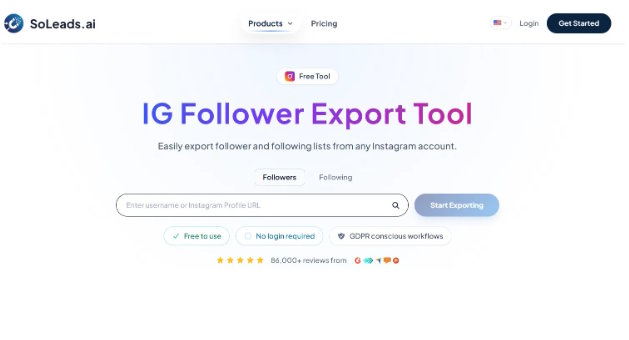
To structure this type of data for downstream usage, some workflows incorporate tools such as an ig follower export tool, allowing teams to organize publicly available audience information into usable datasets for analysis and segmentation.
When combined with other data sources, this enables more complete user profiling and targeting logic.
Integrating Data Into CRM and Automation Systems
Once data is collected and structured, the next step is integration.
Modern growth systems typically connect multiple components:
- Data ingestion layer (social platforms, APIs, scraping systems)
- Processing layer (cleaning, normalization, deduplication)
- Storage layer (CRM, data warehouse)
- Activation layer (email outreach, ads, retargeting systems)
This architecture allows teams to move from raw data to actionable workflows without manual intervention.
For example, enriched contact data can be automatically pushed into a CRM, assigned scoring rules, and triggered into outreach sequences.
Ethical Considerations and Compliance
As social data becomes more widely used in automation systems, ethical and compliance considerations are increasingly important.
Responsible systems should ensure:
- Only publicly available data is used
- Platform terms of service are respected
- User privacy is maintained
- Data usage remains context - appropriate
Sustainable growth systems are not only effective but also compliant and transparent.
The Rise of Technical Growth Systems
The future of lead generation is not about isolated tools - it is about systems.
Organizations that succeed will be those that can design scalable pipelines that convert fragmented social signals into structured intelligence.
In this environment, developers are no longer just supporting marketing teams.
They are becoming core architects of growth infrastructure.

