

Traveling around the world is one of the most thrilling experiences ever. You get to see new places and make new friends, whether it’s the locals or the like-minded tourists.
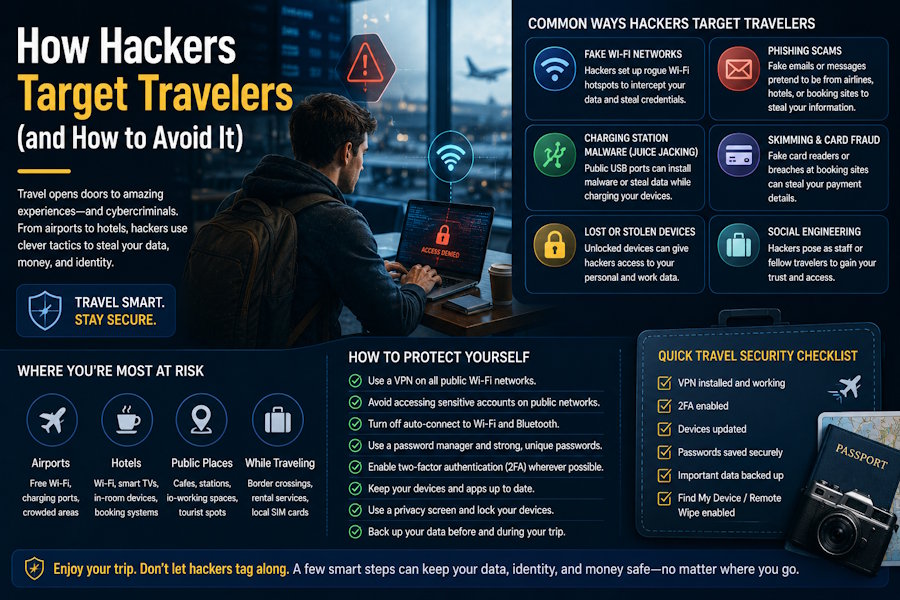
Yet, as a traveler, you might also be targeted by scammers. They create mock Wi-Fi networks, phishing emails, and fake websites to mess with tourists — so, here are the most common hacker tactics and how to avoid them.
Public Wi-Fi Attacks
Imagine you have just arrived at your destination. You are sitting down at the local coffee shop for a short rest, and you see an open Wi-FI network called “Free_WiFi”. Surely enough, you connect — after all, airports and other busy areas are where you find free Wi-Fi. Unfortunately, it might not be real, but a fake one just to steal your data. Once you connect, hackers can monitor your data from messages to sensitive credit card details.
To avoid this, don’t use any public Wi-Fi for sensitive activities like banking or shopping; limit it to listening to music or watching videos without logging into your personal accounts. Disable automatic connection in settings. Additionally, use a VPN to encrypt your network. VPN services are often promoted by creators online, sometimes through deals or affiliate offers such as Surfshark YouTuber codes, which travelers may come across when looking for discounts.
Fake Booking and Visa Websites
Hackers can steal your details and money even before you depart. You might log in to the booking website and use your credit card to pay for accommodation without realizing it’s not real. Now, your credit card details are in the hands of a scammer. Fake booking and visa websites have become identical to the real ones, but you can still avoid them.
Always type website addresses fully into the browser instead of opening them through emails. Use big, well-known platforms and official websites for accommodation and visa. Check the URL before handing over personal information.
Phishing Emails and Messages
Most internet users think that phishing is too obvious and easy to spot. Yet, when you are rushing and panicking, even the most basic phishing email can prompt you to hand over your personal information. They use the company logo, style of messaging, and a similar-looking email address, but it’s still fake.
Even when you receive a seemingly official message stating you’ve got reservation problems, stop and think. Most companies do not ask for sensitive information via email — especially by sending a link to follow. If you’re doubting it, go to your account and check the update there.
Reach out to the official service to check if the email or number used really belongs to the customer support team. To minimize hacking attempts, create long, unique passwords for every account and turn on two-factor authentication.
How to Stay Clear Of Cyber Scams as a Tourist
There is nothing worse than losing control of your data on a vacation, during the time of the year when you should be relaxing. Yet, cybercriminals won’t be able to ruin your trip if you prepare properly:
- use a VPN to encrypt your internet activity, making the data unreachable for hackers, even if they intercept the connection;
- go to secure, well-known websites for tickets, accommodation, or visa;
- do not use public Wi-Fi if possible, and don’t share personal information via an unsecured connection;
- invest in an eSIM for Europe, Asia, or other continent and use mobile internet as a more secure alternative instead of Wi-Fi;
- create only strong, unique passwords for each of your accounts;
- turn on two-factor authentication where possible.
Traveling Safely — No Hackers Involved
Being a tourist is fun. You travel to a new destination, go sightseeing, and make exciting connections. But what happens if someone steals your credit card information?
Remember, hackers won’t ruin your trip if you don’t let them. As long as you take the necessary steps and precautions, your personal information will stay with you, even if bad actors try to intercept your Wi-Fi connection or send you phishing emails.

