

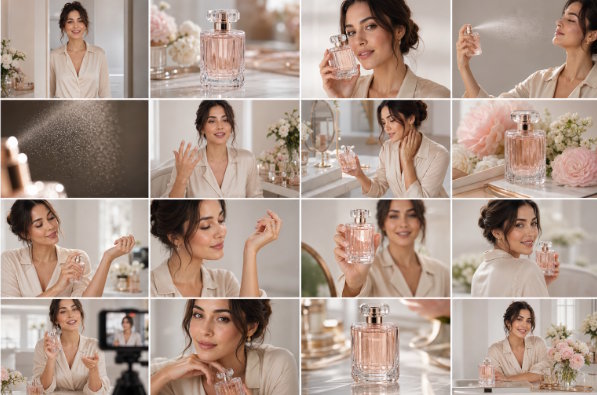
For years, digital marketing teams had a familiar problem: they needed more video than they could realistically produce. One product launch might require a hero ad, several TikTok cuts, a few Instagram Reels, a YouTube Shorts version, retargeting creative, founder-led content, creator-style demos, and localized variants. The creative demand kept expanding, but production budgets, timelines, and human capacity did not expand at the same speed.
That gap is exactly where AI video is becoming useful. Not because it replaces strategy, storytelling, or customer insight, but because it changes the economics of creative testing. A still image, a product page, a short script, or a campaign brief can now become multiple video directions much faster than a traditional shoot-and-edit cycle.
According to IAB's 2025 Digital Video Ad Spend & Strategy Full Report, 86% of buyers are already using or planning to use generative AI to build video ad creative, and buyers expect GenAI creative to reach 40% of all ads by 2026. That does not mean every ad will become fully automated. It means the production layer is becoming lighter, faster, and more iterative.
Image idea: Show how a static visual can become the starting point for motion, camera direction, voice, and short-form content.
The Real Shift: From One Perfect Asset to Many Testable Angles
Traditional video production often pushes teams toward a "big bet" mindset. You plan the concept, hire talent, book the shoot, approve the edit, and hope the final result performs. That process can still be valuable for major campaigns, but it is not always practical for daily paid social, ecommerce testing, or creator-style content.
Modern creative performance is more experimental. A brand may need to test:
- Different hooks
- Different product benefits
- Different visual openings
- Different presenters
- Different captions
- Different calls to action
- Different aspect ratios
- Different emotional tones
One video is rarely enough. Even a strong ad can fatigue once the audience has seen it too many times. The question is no longer only "Can we make a good video?" It is also "Can we make enough good variations to learn what the market responds to?"
This is why AI video tools are moving from novelty to workflow. A tool such as an image-to-video AI workflow can help marketers turn a product photo, concept image, portrait, or campaign still into a short motion test. Instead of leaving a visual asset static, teams can experiment with camera movement, subtle animation, product reveals, environmental effects, or social-ready clips.
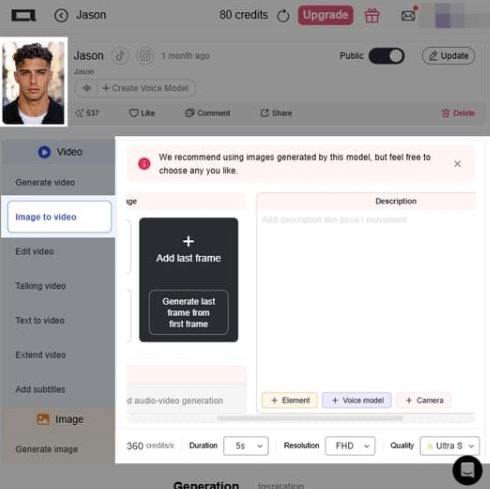
The value is not just visual polish. The value is speed of learning.
Why Creator-Style Video Matters
The rise of creator marketing has changed what audiences expect from brand content. Polished studio commercials still have their place, but many social feeds reward content that feels native, specific, and human. Short-form video works best when it feels like it belongs in the feed instead of interrupting it.
IAB's 2025 Creator Economy Ad Spend & Strategy Report found that U.S. creator economy ad spend was projected to reach $37 billion in 2025, growing about four times faster than the overall media industry. The same report noted that 48% of ad spenders consider creators a "must buy," ranking behind only social media and paid search.
That matters because creator-style advertising is not only about hiring influencers. It is about adopting the creative logic of creator content: a sharper hook, a more direct voice, a clearer product moment, and a format built for fast viewing.
Image idea: Use a product-to-video workflow screenshot to explain how ecommerce teams can move from product assets to ad variations.
AI Helps Most When the Strategy Is Already Clear
The biggest misconception about AI video is that it solves the entire marketing problem. It does not. A weak product angle, vague customer pain point, or generic script will still produce generic creative.
AI works best when it is connected to a clear testing system. Before generating videos, a team should know:
- Who the video is for
- What pain point it addresses
- Which product benefit matters most
- What proof point or demo should appear
- Which platform the video is designed for
- What action the viewer should take next
Once those decisions are clear, AI can help create faster versions of the idea. For example, a skincare brand might test three openings: one focused on texture, one focused on routine simplicity, and one focused on before-and-after expectations. A software brand might test a founder-style explainer, a screen-recorded demo, and a creator-style "three reasons" video.
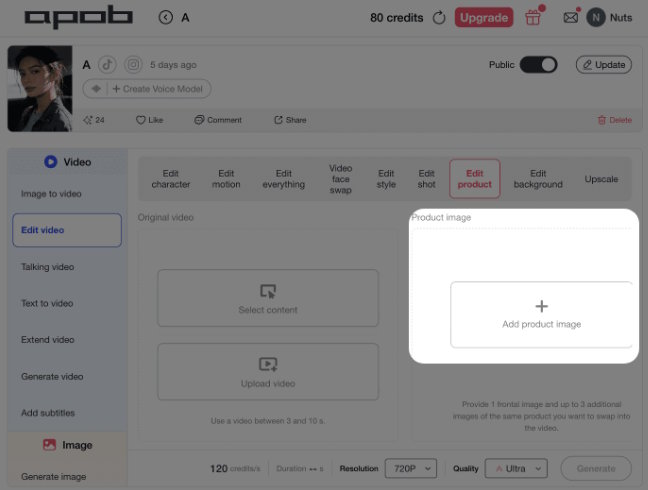
This is where an AI ad video generator can fit into a practical workflow. Instead of treating video creation as a one-off production event, marketers can use AI to turn scripts, product images, briefs, or landing page ideas into multiple ad-ready directions.
A Simple AI Video Testing Framework
A useful way to think about AI video is not "generate a video" but "build a creative loop."
Start with one product promise. The promise should be specific enough to test. For example, "helps small teams create product demos faster" is stronger than "makes marketing easier."
Create three hooks. One hook can be problem-led, one can be curiosity-led, and one can be outcome-led. The first three seconds matter because they decide whether the rest of the video gets a chance.
Use one core visual asset. This might be a product image, app screenshot, founder portrait, customer-style image, or campaign still. The asset becomes the anchor for motion.
Generate several short versions. Keep the structure simple: hook, problem, product moment, benefit, proof, and call to action.
Measure the result. Watch time, thumb-stop rate, click-through rate, conversion rate, saves, comments, and cost per result all matter more than whether the video looks impressive in isolation.
Refresh the winners. When one angle works, create new variations around it. Change the first line, the visual opener, the caption style, or the CTA.
Image idea: Show the asset input stage, where product images and campaign materials become the raw material for AI video testing.
The Human Layer Still Matters
AI can increase production speed, but trust is still fragile. IAB's creator economy report found that 95% of advertisers have concerns about using AI in creator marketing, with loss of human connection listed as a major concern.
That concern is valid. Audiences do not respond to content only because it moves. They respond because it feels relevant, credible, and useful. AI-generated video should still follow basic creative discipline:
- Do not exaggerate product results.
- Do not fabricate testimonials.
- Do not imply a real person endorsed a product if they did not.
- Use clear disclosures where required.
- Keep claims aligned with what the product can actually do.
- Let human review guide final publishing decisions.
In other words, AI should make creative testing faster, not less responsible.
What Good AI Video Looks Like
Good AI video does not need to feel overproduced. In many social environments, simpler is better. A strong AI-generated ad or creator-style clip usually has five qualities.
First, the opening is visual. The viewer immediately understands what they are looking at.
Second, the message is specific. The video does not try to explain every feature at once.
Third, the motion supports the point. Camera movement, animation, and transitions should guide attention instead of distracting from the product.
Fourth, the format matches the platform. A vertical TikTok-style ad, a square feed ad, and a YouTube placement should not all be treated the same.
Fifth, the creative is easy to iterate. If the team cannot quickly change hooks, captions, presenters, or product angles, the workflow is still too slow.
Image idea: Introduce the role of repeatable presenters, voice options, and consistent campaign identity in AI-assisted ad production.
The Future Is Not Fully Automated Marketing
The more realistic future is a hybrid creative system. Human teams will still define positioning, customer insight, brand standards, ethical boundaries, and campaign goals. AI will help them produce more variations, learn faster, and reduce the cost of testing.
This is especially important for smaller brands. A large company can afford multiple shoots, agencies, editors, and creators. A smaller ecommerce team may only have product images, a landing page, and a few campaign ideas. AI video gives those teams a way to compete with more frequent creative output.
The winners will not be the brands that generate the most videos. They will be the brands that learn the fastest from the videos they generate.
Conclusion
AI video is changing marketing because it turns creative production into a more flexible testing system. Static assets can become motion. Product images can become demos. Scripts can become multiple short-form ads. Campaign ideas can become versions for different platforms and audiences.
But the core rule has not changed: video works when it connects a clear message with a real audience need. AI can lower the friction of production, but strategy still gives the content its reason to exist.
For guest posting, content marketing, ecommerce, and paid social, that is the useful lesson. AI video is not simply a way to make more content. It is a way to make better-informed creative decisions, faster.
References
- IAB. "Nearly 90% of Advertisers will Use Gen AI to Build Video Ads, According to IAB's 2025 Video Ad Spend & Strategy Full Report." https://www.iab.com/news/nearly-90-of-advertisers-will-use-gen-ai-to-build-video-ads/
- IAB. "Creator Economy Ad Spend to Reach $37 Billion in 2025, Growing 4x Faster than Total Media Industry, According to IAB." https://www.iab.com/news/creator-economy-ad-spend-to-reach-37-billion-in-2025-growing-4x-faster-than-total-media-industry-according-to-iab/
- Social Media Today. "Meta Unveils New AI Ad Tools, Including Improved Video Generation Options." https://www.socialmediatoday.com/news/meta-announces-ai-ad-tools-video-generation-business-ais/750984/
- APOB AI. "Free Image To Video AI." https://apob.ai/image-to-video-ai/
- APOB AI. "Free AI Ad Video Generator." https://apob.ai/ai-ad-video-generator

