

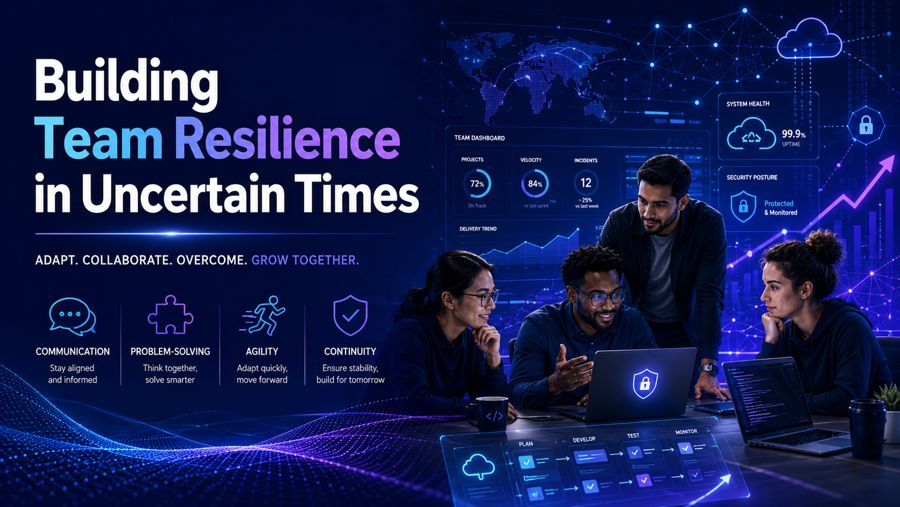
Uncertainty is now a permanent feature of working life. Markets shift quickly, priorities change, and teams are regularly asked to do more with less. In this environment, resilience has become one of the most valuable qualities a team can have. Resilient teams do not simply survive pressure and setbacks; they recover quickly, learn from difficulty, and often come out stronger. Building this quality is not a matter of hoping people are naturally tough. It is something leaders can actively develop. PROTRAINING's corporate training programmes often focus on exactly this, helping teams build the habits and relationships that allow them to withstand pressure. This article explores how to build a team that bends without breaking.
What Team Resilience Really Means
Resilience is often misunderstood as toughness or the ability to endure endless stress without complaint. That is not resilience; it is a path to burnout. True team resilience is the capacity to absorb shocks, adapt, and recover. A resilient team can face a difficult quarter, a lost client, or a sudden change of direction and respond with focus rather than panic. It draws on strong relationships, clear communication, and a shared belief that the team can handle whatever comes.
Strong Relationships Are the Foundation
When pressure hits, teams with strong internal relationships hold together, while teams built only on transactional cooperation tend to fracture. People who trust and support one another share the load, cover for each other, and stay motivated even when things are hard. Investing in relationships during calm periods is what makes a team resilient during difficult ones. The connections you build in good times become the support system you rely on in bad times.
Communicate Openly, Especially Under Pressure
In uncertain times, silence breeds anxiety. When people do not know what is happening, they imagine the worst and lose focus. Leaders build resilience by communicating openly and honestly, even when they do not have all the answers. Acknowledging difficulty, explaining what is known, and being clear about what is still uncertain helps people stay grounded. A team that trusts it will be told the truth can handle far more pressure than one that suspects information is being hidden.
Foster Connection to Sustain the Team
Resilience is easier to sustain when people feel genuinely connected to their colleagues. A team that knows and cares about one another will support each member through difficult stretches. Creating shared experiences outside the daily grind strengthens these bonds. Corporate Team Building Activities in Dubai give teams a chance to reconnect, recharge, and remember that they are working alongside people who have their back. These shared moments build the reserves of goodwill and trust that a team draws on when the pressure rises. A connected team recovers from setbacks far more quickly than a group of isolated individuals.
Treat Setbacks as Opportunities to Learn
How a team responds to failure says a great deal about its resilience. Teams that treat every setback as a disaster or a search for someone to blame become fearful and cautious. Teams that treat setbacks as information, asking what happened and what can be learned, grow stronger with each challenge. Leaders shape this response. By staying calm, focusing on solutions rather than blame, and drawing lessons from difficulty, they teach the team to do the same.
Protect Wellbeing to Preserve Capacity
Resilience is not limitless. A team that is constantly stretched to its limit will eventually break, no matter how strong its relationships are. Sustainable resilience requires attention to wellbeing: reasonable workloads, time to recover after intense periods, and a culture that does not treat exhaustion as a badge of honour. Leaders who protect their team's capacity ensure that resilience remains available when it is truly needed.
Give the Team a Sense of Control
Much of the stress that wears teams down comes from feeling powerless in the face of events. When people believe they have no influence over what is happening, anxiety rises and resilience falls. One of the most effective things a leader can do in uncertain times is to help the team focus on what it can control.
Even when the wider situation is beyond anyone's influence, there are almost always actions the team can take, decisions it can make, and standards it can uphold. Directing energy toward these controllable areas restores a sense of agency and purpose. A team that feels it can shape its own response, rather than simply being swept along, handles uncertainty with far more steadiness and confidence.
Building resilience is therefore not about hardening people against difficulty but about strengthening the bonds, habits, and mindset that allow a team to face challenges together. A team that trusts one another, communicates openly, and believes in its ability to adapt will weather almost anything. In an unpredictable world, this collective capacity to bend without breaking has become one of the most valuable qualities any team can possess.
Frequently Asked Questions
Is team resilience the same as individual resilience?
They are related but distinct. Individual resilience is a personal capacity to cope with pressure, while team resilience is a collective quality that emerges from relationships, communication, and shared belief. A team can be resilient even when individuals are struggling, precisely because members support one another.
Can resilience be taught?
Yes. While some people are naturally more resilient than others, resilience is largely built through habits, relationships, and how a team responds to difficulty. Leaders can develop it deliberately by strengthening connection, communicating openly, and treating setbacks as opportunities to learn.
How do I keep my team resilient without burning them out?
The key is to balance challenge with recovery. Resilience grows when teams face difficulty and come through it, but it erodes when pressure is relentless. Protecting wellbeing, managing workloads, and allowing time to recharge after intense periods keeps resilience sustainable rather than draining it.
What is the first step to building a more resilient team?
Start with relationships and trust. A team that knows and supports one another has the foundation resilience is built on. From there, open communication and a healthy response to setbacks allow that resilience to grow over time.

