

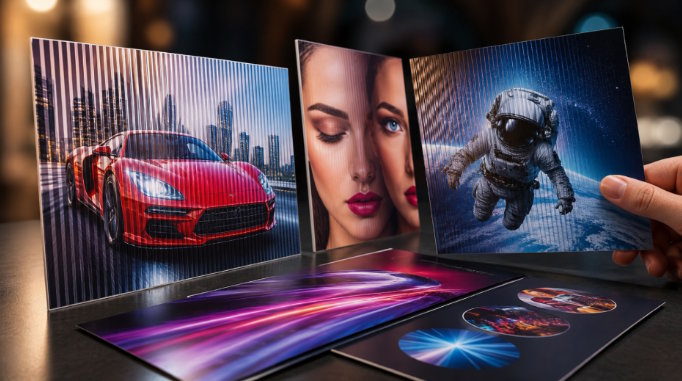
Being noticed has become one of the greatest challenges in print marketing. Traditional printed materials, whether promoting a product, campaign, or appearing in an event, usually have to struggle with a plethora of other visuals in order to capture attention.
Consequently, a well-designed brochure or poster can be missed in a few seconds. However, visual experiences that invite interaction naturally encourage people to stop, look closer, and remember what they have seen.
That's where lenticular printing changes the equation. It takes the ordinary print and makes it an interactive experience by blending artistic design with movement, depth, and transition of images.
This article explores how smart lenticular design can elevate any print campaign and help your marketing materials leave a lasting impression.
1. Capture Attention Before Your Message Is Read
The success of any print campaign begins with one goal: earning a second look. Even the most powerful message becomes powerless as the people pass by your display and do not pay attention to it.
Professional lenticular design enables printed materials to shine without necessarily using bold colors or oversized graphics. Lenticular printing instead adds motion, depth, or transition of the image, which is naturally appealing. Whether someone tilts a postcard or walks past a retail display, the changing visuals encourage curiosity and interaction.
In addition, the visual impression also becomes an element of the message. Before-after transformation can be shown in a product launch, whereas movement can be simulated in a promotional display, which makes the story of a campaign stronger. Instead of requesting people to listen, the design motivates them to do so themselves.
Consequently, the lenticular printing assists the marketing materials to be visible in the crowded space like a retail store, trade show, exhibition, or even a direct mail campaign.
2. Turn Static Print Into Interactive Experience
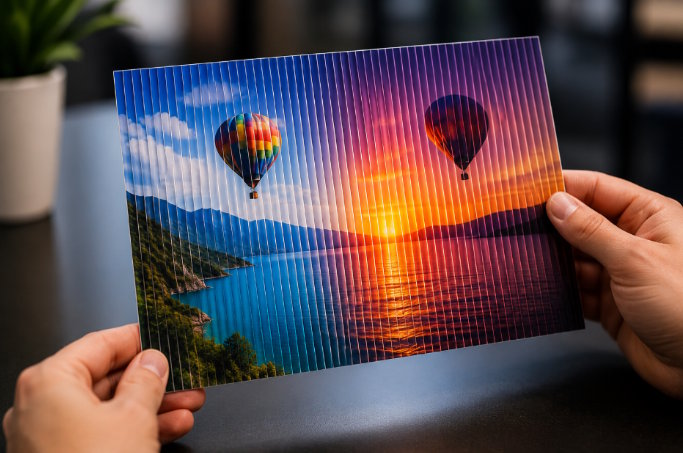
Individuals tend to recall an experience compared to a typical advertisement. Therefore, the engagement with printed materials can be greatly promoted to increase the interest of the audience.
This interaction is achieved through lenticular printing without any digital screens or electronic elements. The artwork also reacts to the viewers by moving, adding depth, or changing images according to the viewing angle. The mere change makes passive viewing an active visual experience.
Moreover, various lenticular effects facilitate various communication objectives. Flip effect may be used to compare two products or to emphasize a transformation. Motion effects may illustrate a process, and 3D effects add visual depth, making products appear more realistic. These effects can also be used by businesses in packaging, promotional materials, retail displays, and signage to produce a more interest-creating campaign.
Since viewers have a natural tendency to spend more time exploring the visual effect, they also spend more time digesting the marketing message. That additional attention increases both brand recall and message retention.
3. Smart Design Choices Improve Final Print Quality
The success of a lenticular print starts way before it gets on a press. In fact, the quality of the final piece depends heavily on careful planning during the design stage.
To illustrate, high-resolution artwork, appropriate color settings, and correct bleed specifications also help in cleaner printing output. Similarly, the use of bright colors as opposed to extremely light backgrounds assists in minimizing undesirable ghosting and enhancing image clarity. When doing motion effects, it is best to have a constant background between frames to create a smooth flow of animation. Likewise, textual significance is placed closer to the focal layer in 3D compositions to enhance readability.
Lens orientation is also a factor. Postcards and other handheld products may have a different lens direction than posters mounted on the wall or huge retail displays. These technical considerations at the initial stage are useful in making sure that the final work completed is going to work as expected.
Finally, the integration of innovative ideas and sound design principles yields a professional output that improves both the looks and the functionality.
4. Bring More Value to Every Print Campaign
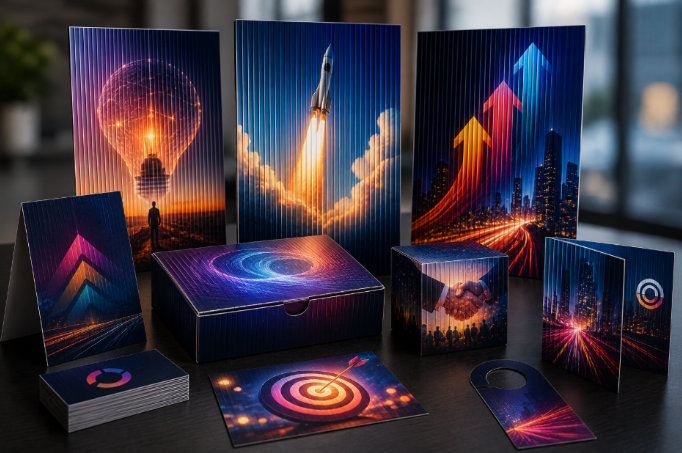
One of the greatest advantages of lenticular printing is its versatility. Instead of limiting the technology to a single marketing piece, you can incorporate it throughout an entire campaign.
For example, postcards can encourage recipients to interact with promotional offers, while product packaging can highlight features through animated effects. Retail displays can capture shoppers' attention from a distance, and event materials can leave a memorable impression long after the event ends.
Additionally, lenticular printing works well for both small promotional items and large-format graphics. Businesses use it for posters, point-of-purchase displays, trade show exhibits, packaging, signage, book covers, and promotional merchandise. This flexibility allows marketers to maintain a consistent visual style across multiple customer touchpoints.
As a result, every printed piece contributes to a stronger and more cohesive brand experience. Instead of functioning as separate marketing materials, they work together to reinforce the same message in a visually engaging way.
Conclusion
Standing out in today's competitive marketing environment requires more than attractive graphics. Your print materials need to capture attention, encourage interaction, and communicate your message in a memorable way. Every element of your campaign should work together to create an experience that resonates with your audience and reinforces your brand.
Smart lenticular design helps achieve those goals by transforming static print into a dynamic visual experience. Whether you're creating retail displays, promotional packaging, direct mail, event materials, or point-of-purchase signage, thoughtful design decisions can significantly improve your campaign's impact.
More importantly, interactive visuals encourage people to spend more time engaging with your message, increasing brand recall and audience interest. By combining creativity with sound design practices, you can produce printed materials that stand out and leave a lasting impression.

