

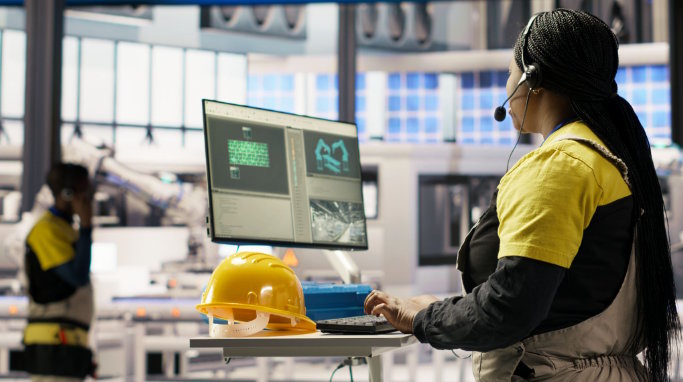
Creating a safe industrial workplace takes more than following basic safety rules. Modern technologies are helping businesses identify risks earlier, monitor equipment in real time, and improve communication across teams. From smart sensors and connected devices to data-driven maintenance and automated alerts, these tools make it easier to prevent accidents and respond quickly when issues arise.
The Current State of Industrial Workplace Safety
Industrial safety now depends on more than written procedures. Data, automation, connected devices, and real-time visibility are becoming part of the everyday safety toolkit. Before choosing the right tools, though, you need to understand the risks pressing on today’s industrial teams.
Key Challenges Facing Modern Industrial Environments
Industrial sites are busy, noisy, and constantly changing. Heavy machinery, confined spaces, chemical exposure, heat, dust, vibration, forklifts, cranes, and moving parts all create hazards that can shift by the hour.
A checklist completed at 7 a.m. may not reflect conditions at 11 a.m. A paper report sitting on a clipboard does not warn a worker walking into a high-risk area. That delay matters.
Shifting Regulatory Demands and Tech-Driven Controls
When teams search for what is maximo, they are often trying to understand how better asset management can improve control across maintenance, inspections, work orders, and compliance records. For safety leaders, that visibility is incredibly useful. It helps you quickly see whether equipment is safe to use, overdue for service, locked out, under repair, or tied to an open inspection issue.
Evolution of Industrial Safety Standards
Safety standards have also changed. It is no longer enough to say a procedure exists. Companies are expected to prove work was completed, show records, track corrective action, and keep improving.
That pressure is pushing more organizations toward connected systems that document work as it happens. Manual methods still have a place, but on fast-moving sites, they often cannot keep up.
Emerging Technologies Transforming Industrial Safety
Wearables, AI, robotics, computer vision, and connected sensors are changing how teams spot risk. These tools do not replace experience or good judgment. Let’s be honest, no device can replace a seasoned worker who knows when something “just feels off.” But technology can give that worker better signals sooner.
Smart Wearables and IoT Devices for Hazard Monitoring
Wearables can monitor location, falls, heat stress, fatigue indicators, gas exposure, and movement patterns. If a lone worker stops moving or enters a restricted zone, alerts can go out quickly.
IoT sensors add another layer. They can track vibration, pressure, humidity, air quality, temperature, and other conditions around critical assets. Instead of waiting for failure, teams get early warnings.
Artificial Intelligence and Predictive Analytics
AI can scan maintenance logs, sensor readings, incident reports, near misses, and inspection notes to find patterns people may miss. Maybe one asset fails more often after temperature spikes. Maybe a certain area shows repeated close calls during night shifts.
Used carefully, AI supports workplace safety solutions that flag likely problems before they turn into incidents.
Cloud-Based Safety Management Systems: Streamlining Safety Compliance
Once safety data is easier to collect, teams need a practical way to use it. Cloud-based safety platforms help connect incidents, permits, inspections, tasks, audits, and corrective actions without chasing emails or digging through filing cabinets.
Unified Platforms for Real-Time Risk Assessment
A cloud system can show open hazards, active permits, equipment status, and overdue actions in one shared view. Supervisors do not have to wait until the end of the shift to understand where risk is building.
That kind of visibility can change the mood on a site. Instead of scrambling after something goes wrong, teams can step in earlier.
Integration with EHS and ERP Solutions
EHS tools, ERP systems, and asset platforms become far more valuable when they share information. For example, a failed inspection can automatically trigger a maintenance task, pause a permit, and create a compliance record.
That is where technology starts to feel less like “extra admin” and more like a safety net.
Centralized Reporting and Mobile Access
Field workers can submit photos, notes, inspection details, and incident reports right from the job site. That cuts delays and improves accuracy because people capture details while they are still fresh.
Once data is easier to see and act on, the next piece is improving the tools workers use every day.
Innovative Safety Products and Solutions Elevating Industrial Workplaces
Smarter PPE and connected equipment can reduce daily risk, but many serious incidents are prevented through better control of work. This is where industrial safety innovations become practical, not flashy.
Advanced PPE and Connected Lone-Worker Devices
Smart helmets, connected badges, AR glasses, and wearable sensors can warn workers about heat, falls, gas exposure, restricted areas, or unsafe proximity to equipment.
For lone workers, connected devices can send alerts if someone stops moving, falls, or presses a panic button. That simple connection can make a huge difference when every minute counts.
Environmental Sensors and Digital Permit-to-Work
Sensors can monitor toxic gas, air quality, dust, noise, and other environmental conditions in real time. Digital permit-to-work tools help ensure approvals, checks, and controls are completed before work begins.
In one railway workshop deployment, “functional evaluation in a railway workshop‑oriented deployment scenario demonstrated measurable operational improvements, including a reduction in permit processing time by approximately 35%, improved incident reporting response time by nearly 40%, and enhanced workflow traceability across multiple safety modules.”
Digital Twin Technology: Virtualizing Workplace Safety Improvements
A digital twin gives teams a virtual version of a facility, asset, or process. That means you can test changes, emergency plans, layouts, and hazard scenarios without putting people in danger.
Simulating Emergency Scenarios
Teams can model fires, gas leaks, evacuations, equipment failures, and blocked routes. It is much better to discover a slow evacuation path in a simulation than during a real emergency.
Predictive Hazard Analysis
Digital models can combine equipment data, traffic routes, worker schedules, and environmental readings. This helps safety teams see where people, vehicles, and hazards may overlap.
That kind of insight is easy to miss when you are only looking at static floor plans.
Safer Facility Layouts
Sometimes the safest fix is not expensive or dramatic. It might be moving a walkway, reducing a blind spot, changing a storage area, or separating people from vehicle traffic.
Small layout changes can remove daily risks workers have simply gotten used to.
Improving Employee Engagement and Training Through Technology
Technology only works when people trust it and know how to use it. Better training tools can improve retention, standardize procedures, and help workers practice before they face real danger.
VR and AR Training for Safe Operations
VR can place workers inside simulated confined spaces, crane zones, emergency scenes, or high-risk maintenance tasks. They can make mistakes safely and learn from them.
AR can guide workers step by step during maintenance or inspection work, keeping instructions visible at the point of need.
Gamification and Mobile Learning
Short quizzes, scenario-based challenges, and quick refreshers are easier to fit into the workday than long classroom sessions. Nobody loves a three-hour training deck after lunch. Mobile learning keeps safety reminders practical and close to the job.
Knowledge Sharing in the Field
When workers can report a hazard with a photo and a few taps, participation usually improves. The easier the process, the more likely people are to use it.
Training creates useful behavior data, and that data becomes powerful when leaders turn it into action.
Data-Driven Decision Making for Safer Industrial Workplaces
Continuous safety data helps organizations reduce incidents, cut delays, and make better decisions. The point is not to create more dashboards. The point is to act faster and smarter.
Industrial IoT and Big Data
Sensor readings, permit history, inspection results, maintenance records, and incident reports can reveal recurring risks. If one pump room keeps triggering gas alarms, that pattern deserves more than a note in a logbook.
AI-Powered Dashboards
Dashboards can rank hazards by severity, location, age, and urgency. That helps leaders focus on what needs attention now instead of what looks tidy in a monthly report.
Machine Learning for Continuous Improvement
Machine learning can compare past incidents with current conditions and suggest early warnings. Used well, technology for safer workplaces improves timing, not just paperwork.
The same monitoring that protects people can also support cleaner and more efficient operations.
Sustainability and Safety: Achieving Both in Industrial Settings
Safety and sustainability are more connected than many teams realize. Cleaner processes often mean less exposure, less waste, less heat, less noise, and fewer manual handling risks.
Technology’s Role in Reducing Environmental Impact
Environmental sensors can detect leaks, emissions, and poor air quality early. That protects nearby workers while also helping companies prevent spills, waste, shutdowns, and compliance problems.
Green Innovations That Improve Safety
Electric material-handling equipment can reduce indoor exhaust exposure. Automated chemical dosing can limit manual contact. Predictive maintenance can catch leaks before they spread.
Shared Value for ESG and Safety Teams
Safety and sustainability teams may track different metrics, but many improvements serve both groups. Better visibility, better controls, and better maintenance create safer, cleaner operations.
Those gains last when technology is introduced thoughtfully, not dumped on workers overnight.
Best Practices for Implementing Modern Safety Technologies
Even great tools fail without a clear plan, worker buy-in, and proof that they solve real problems. Start with hazards, not gadgets. The shiniest device at a trade show may not be what your team needs.
Designing a Roadmap for Safety Tech Adoption
Begin with your riskiest tasks, most common near misses, and biggest reporting gaps. Then pilot one or two tools where results can be seen quickly.
A small win builds confidence.
Overcoming Barriers to Workforce Adoption
Workers need to know what data is collected, why it matters, and how it helps them. If technology feels like surveillance, trust disappears fast.
Be clear. Ask for feedback. Adjust when something does not work in the real world.
Measuring ROI of Safety Innovation
Track leading indicators, response times, downtime, claims, audit findings, and corrective-action closure. The strongest case for industrial safety innovations usually combines worker protection with operational savings.
With the basics in place, companies can prepare for the next wave of safety tools.
Final Thoughts on Building Safer Industrial Workplaces
Modern safety is no longer just a binder, a checklist, and a monthly meeting. The strongest programs bring together people, planning, connected tools, and useful data. From wearables and AI to digital twins and cloud platforms, modern safety technologies help companies protect workers while improving compliance and uptime.
Start with the hazards that matter most. Test what works. Listen to the people closest to the job. Then build from there. Safer workplaces are not created in one grand move. They are built one clear decision at a time.
Common Questions About Safer Industrial Workplaces
Which new technologies are most effective in reducing industrial accidents?
Wearables, IoT sensors, AI analytics, computer vision, and digital permit systems are often the most useful. They help teams detect hazards sooner, reduce manual exposure, and act before small issues become serious incidents.
What are the main barriers to adopting modern safety technologies?
Common barriers include cost concerns, old systems, worker mistrust, poor data quality, and lack of training. A small pilot, clear communication, and worker feedback can reduce resistance and prove value before wider rollout.
How do digital twins improve facility safety and risk assessment?
Digital twins let teams test layouts, emergency routes, equipment changes, and hazard scenarios virtually. That means problems can be found and fixed before workers face them on the actual floor.

