

Hybrid and virtual events have transformed how businesses connect with audiences, partners, and employees. Organizations now host conferences, webinars, product launches, and training sessions that reach participants across multiple locations.
Managing these events, however, involves coordinating registrations, live sessions, attendee engagement, communication, and post-event analysis through a single streamlined process. Event management software addresses these challenges by bringing every aspect of event planning into one platform.
From scheduling sessions to tracking attendee participation, these solutions help organizers improve efficiency while delivering consistent experiences for both in-person and online audiences. As hybrid events continue to grow in popularity, businesses need technology that simplifies operations and adapts to changing event formats.
How Event Management Software Simplifies Event Planning
Successful hybrid and virtual events depend on efficient planning, seamless coordination, and real-time communication.
Event management software brings these processes together in a centralized platform, allowing organizers to manage every stage of the event lifecycle while improving the experience for attendees, speakers, and event teams.
A] Planning the Right Solution for Your Event
Understanding how to make an event management app starts with identifying business goals, target audiences, and event formats. Defining these requirements early helps businesses build software that supports current needs while remaining flexible for future growth.
B] Simplifying Registration and Ticketing
Automated registration and ticket management eliminate repetitive administrative work. Attendees can register, purchase tickets, and receive confirmations through a single streamlined process, improving convenience for both organizers and participants.
C] Managing Speakers and Event Schedules
Coordinating multiple speakers and sessions becomes easier with centralized scheduling tools. Organizers can publish agendas, assign sessions, update schedules instantly, and notify participants about any changes in real time.
D] Managing Hybrid and Virtual Attendees
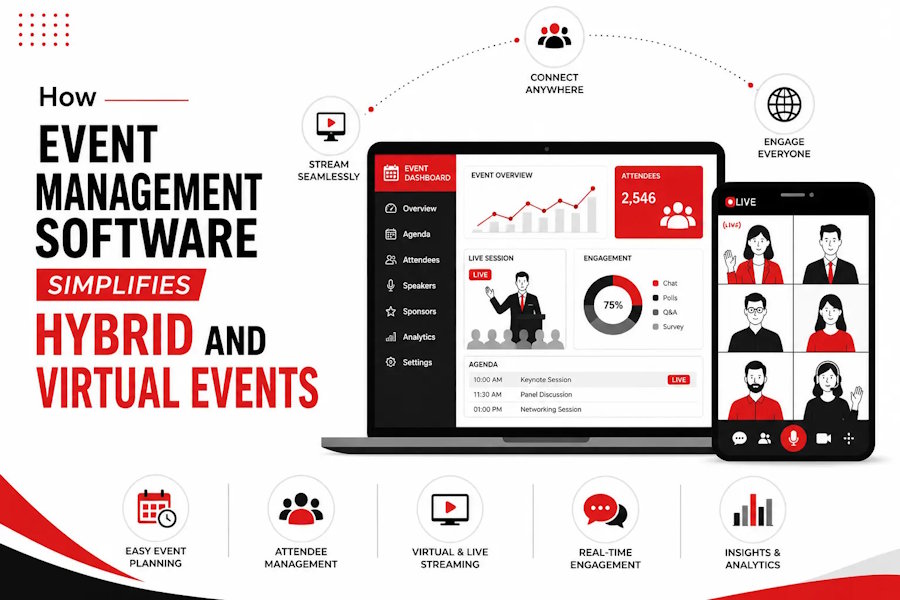
A unified platform allows organizers to manage virtual and in-person attendees from one dashboard. It synchronizes session access, attendee lists, and event updates to deliver a consistent experience across every event format.
Choosing the right event management software makes this synchronization possible, giving organizers a single source of truth for attendee data across both audiences.
E] Improving Communication and Notifications
Built-in communication tools keep attendees, speakers, and organizers informed throughout the event. Automated reminders, announcements, and instant notifications reduce confusion and improve overall coordination.
F] Enhancing Audience Engagement
Interactive features such as live polls, Q&A sessions, chat, and networking spaces encourage participation throughout the event. These tools help maintain attendee interest while creating more meaningful interactions.
G] Automating Administrative Tasks
Businesses planning a custom platform often collaborate with an event management software development company to build solutions that centralize registrations, scheduling, attendee communication, and event analytics in one place.
H] Tracking Event Performance
Integrated analytics provide insights into registrations, attendance, engagement, and session popularity. Organizers can evaluate event success using real-time data and apply these insights to improve future events.
Must-Have Features of Event Management Software
The effectiveness of an event management platform depends on the features it offers. Modern solutions should simplify event operations while improving attendee engagement and providing organizers with complete visibility into event performance.
The following capabilities help businesses deliver seamless hybrid and virtual event experiences.
1. Event Scheduling and Agenda Management
Managing multiple sessions, speakers, and venues can become challenging without a structured schedule.
Event management software enables organizers to create detailed agendas, assign speakers, schedule breakout sessions, and publish updates in real time.
A centralized scheduling system helps attendees access the latest event information while reducing scheduling conflicts.
2. Live Streaming and Video Integration
Live streaming is a core component of virtual and hybrid events. Integrating reliable video conferencing and streaming platforms allows organizers to host keynote sessions, panel discussions, workshops, and live demonstrations without requiring attendees to switch between multiple applications.
Stable streaming and recording capabilities also improve accessibility by allowing participants to watch sessions on demand.
3. Networking and Audience Engagement
Keeping attendees engaged is essential for a successful event. Event management software includes features such as live chat, polls, Q&A sessions, discussion forums, and virtual networking spaces that encourage interaction throughout the event.
These tools create opportunities for meaningful conversations and help participants connect regardless of their location.
4. Analytics and Performance Tracking
Understanding attendee behavior helps businesses measure event success and improve future planning. Event management platforms collect valuable insights such as registration numbers, session attendance, audience engagement, participation rates, and feedback.
These analytics enable organizers to evaluate performance, identify improvement areas, and make data-driven decisions for upcoming events.
5. Secure Payments and Ticket Management
For paid events, secure payment processing and efficient ticket management are essential. Event management software supports multiple payment methods, automated invoicing, digital ticket generation, and refund management through a unified system.
This simplifies financial operations while providing attendees with a smooth and secure booking experience.
Challenges in Hybrid and Virtual Events
Although hybrid and virtual events offer greater flexibility, they also introduce operational and technical challenges.
Businesses can overcome these obstacles by adopting event management software that simplifies coordination, enhances communication, and supports reliable event delivery.
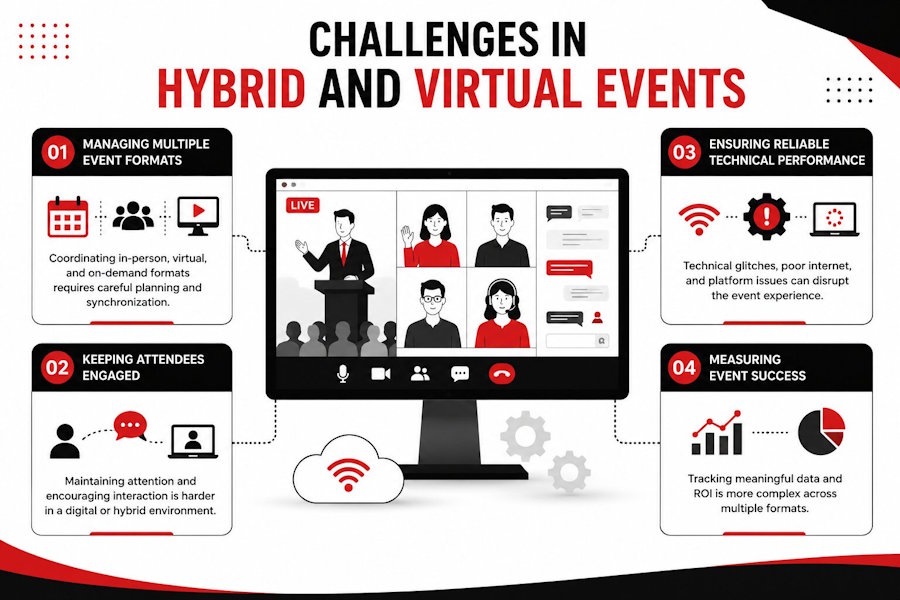
A] Managing Multiple Event Formats
Coordinating in-person and virtual experiences simultaneously requires careful planning.
Event management software centralizes scheduling, attendee management, speaker coordination, and communication, ensuring both audiences receive a consistent experience without creating additional administrative work.
B] Keeping Attendees Engaged
Maintaining audience attention during virtual sessions can be difficult, especially during longer events.
Interactive features such as live polls, Q&A sessions, networking lounges, gamification, and personalized agendas encourage active participation and create a more engaging event experience.
C] Ensuring Reliable Technical Performance
Technical issues can disrupt event sessions and affect attendee satisfaction.
Cloud-based infrastructure, real-time monitoring, automatic backups, and scalable streaming services help maintain platform stability and reduce the risk of downtime during live events.
D] Measuring Event Success
Without accurate reporting, it becomes difficult to evaluate an event's effectiveness.
Event management software provides detailed analytics on attendance, engagement, session popularity, and attendee feedback. These insights help organizers measure return on investment and continuously improve future events.
Future Trends in Event Management Software
The future of event management software is focused on creating more personalized, intelligent, and immersive event experiences.
As technology advances, businesses will continue adopting solutions that improve engagement while simplifying event operations.
1. AI-Powered Event Experiences
Artificial intelligence is helping organizers automate attendee support, recommend relevant sessions, personalize agendas, and improve networking opportunities. AI also enables faster event planning by automating repetitive administrative tasks.
2. Data-Driven Personalization
Modern event platforms use attendee preferences and participation history to deliver customized recommendations, targeted notifications, and personalized event journeys. This creates more meaningful experiences and improves overall attendee satisfaction.
3. AR and VR for Immersive Events
Augmented reality and virtual reality are expanding the possibilities of virtual events by creating interactive exhibition halls, virtual networking spaces, and immersive product demonstrations. These technologies help businesses deliver engaging digital experiences that closely resemble physical events.
4. Sustainable Digital Event Strategies
Organizations are increasingly using a virtual event platform to reduce travel requirements, printed materials, and venue-related resource consumption. Hybrid and virtual events support sustainability goals while allowing businesses to reach larger audiences with greater operational efficiency.
Conclusion
Hybrid and virtual events have become an integral part of modern business communication, making efficient event management more important than ever.
Event management software simplifies planning, streamlines operations, and enhances attendee experiences by bringing registration, scheduling, communication, engagement, and analytics into a single platform.
These capabilities help businesses reduce administrative effort while delivering well-organized events across multiple formats.
As technology continues to advance, features powered by artificial intelligence, immersive experiences, and data-driven insights will further improve how events are planned and managed.
Businesses that invest in scalable and feature-rich event management solutions will be better equipped to deliver engaging experiences, improve operational efficiency, and adapt to the evolving expectations of attendees.

