

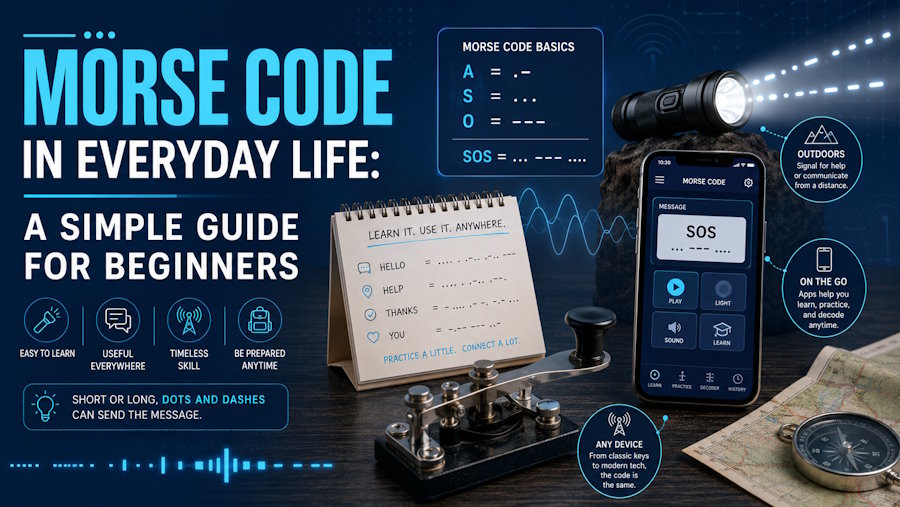
Most people think Morse code belongs in old war films or history books. The truth is that this simple system of dots and dashes is still useful today, and almost anyone can pick up the basics in an afternoon. You do not need a radio, a license, or years of practice. You just need a little curiosity and a few spare minutes here and there. This guide walks you through why Morse code is still worth knowing, how to use it without memorizing a thing, and the one message everyone should keep in their back pocket.
Turn Any Message into Morse Code in Seconds
Here is the good news: you do not have to memorize the whole alphabet to get started. If you want to see your name, a short message, or an emergency word written in dots and dashes, you can use an online morse code translator to do the work for you. You type in plain text, and it shows you the code and plays the sound so you can hear the rhythm. This is the easiest way to begin, because you get instant feedback. Try your first name, then a short word like HELP, and listen to how each one sounds. Hearing the pattern is what makes it stick in your memory.
Why Morse Code Still Matters Today
Morse code has been around for more than 150 years, and it has quietly outlived most of the technology that came after it. It works when your phone battery is dead, when there is no signal, and even when you cannot make a sound. A flashlight, a whistle, a car horn, or a simple tap on a pipe can carry a message. Sailors, pilots, hikers, and rescue teams still recognize it on sight or by ear. For a regular person, that makes it a small but genuine safety skill, the kind of thing you hope you never need but are glad to have.
Learn a Little at a Time
The people who actually remember Morse code do not sit down and cram it. They learn it in small pieces. Start with the letters in your own name, then add the vowels, since they show up in almost every word. A few minutes a day beats an hour once a month. Say the sounds out loud as "dit" for a dot and "dah" for a dash, because your ear will hold on to the rhythm long after your eyes forget the chart.
Make It a Family Game
Morse code is a surprisingly good activity for children. You can flash a torch across a dark room, tap it on the table, or clap it out and let them guess the letter. Give each family member a code name and send short messages at dinner. It quietly teaches patience, listening, and pattern recognition, all without a screen. Kids who treat it as a game often pick it up faster than adults who treat it as a test.
The One Message Everyone Should Know: SOS
If you learn only one thing in Morse code, make it this. SOS is three short signals, three long signals, and three short signals, sent together as a single group. It is the international call for help, and it works by sound, by light, or by movement. You can learn the exact rhythm and hear how it should sound on this simple guide to SOS in Morse code. Practice it a few times until you can tap it out without thinking. It takes about two minutes to learn, and it could matter one day on a trail, out on the water, or in any moment where you cannot call out loud.
Keep It Simple and Have Fun
You do not need to become an expert to enjoy Morse code or to get real value from it. Start small, let a translator help you along, learn SOS by heart, and turn the rest into a game. It is one of those rare skills that is genuinely useful, easy to practice, and fun to share with the people around you. Give it a try this week, and you might be surprised how quickly the dots and dashes start to feel like a second language.

