

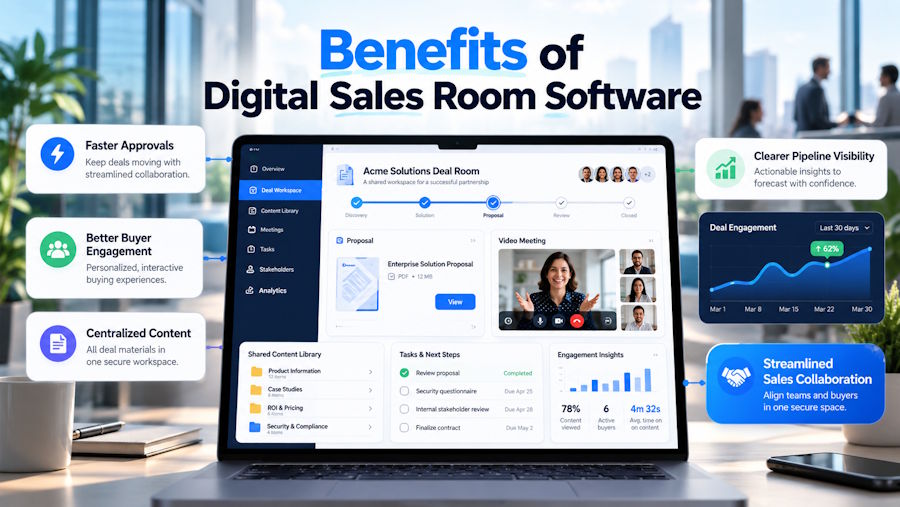
B2B deals no longer move in a straight line. Buying committees keep growing. Stakeholders review content on their own schedule. Email threads and scattered attachments cannot keep up with that pace.
A digital sales room (DSR) is a shared, branded workspace built around one deal. Good sales room software gives buyers and sellers a single place to review content, ask questions, and track progress. The sections below cover what that setup delivers in practice.
Centralized Deal Content
Without a DSR, deal assets live in inboxes, shared drives, and chat apps. Version control breaks down. Buyers miss files. Sellers resend the same PDF three times.
A DSR puts everything behind one secure URL. A typical room holds:
- Proposals and pricing sheets
- Product demo recordings
- Security and compliance documents
- Mutual action plans
- Case studies and references
Updates reach every viewer at once. Nobody works from an outdated file. This also helps new stakeholders. A late-joining CFO can catch up in minutes instead of reading a 40-message thread.
Buyer Engagement Analytics
Sellers rarely know what happens after they hit send. A DSR closes that gap. The platform logs activity at the content level, not just at the email level.
Say a finance lead opens the pricing page twice in one day. That is a real buying signal. It tells the rep where to focus the next call.
Useful metrics include:
- Time spent on each page
- Document opens and downloads
- Video watch duration
- Link shares to new viewers
- Return visits per stakeholder
Analytics also expose risk. If no one opens the security document, a blocker may be forming elsewhere in the account. Reps can step in early.
Faster Alignment Across Buying Committees
Complex deals involve finance, IT, legal, procurement, and end users. Each group needs different information. A DSR supports role-based sections. Each person finds relevant material fast.
Mutual action plans sit inside the room. Both sides see tasks, owners, and due dates. Delays show up early. Nobody has to ask for a status update by email.
This structure shortens the back and forth that stretches sales cycles. It also gives champions inside the buyer's company a clean asset to share. They can forward one link instead of rebuilding a deck.
Support for Self-Serve Buying
Buyers want more control. Gartner research reports that 75% of B2B buyers prefer a rep-free sales experience. It also finds that 40% of B2B purchases complete without a rep.
A DSR fits that behavior. Buyers review material at their own pace. They share it internally without booking another meeting. Reps still guide the deal, but they stop being the only path to information.
Gartner also found that buyers report more purchase regret with self-service digital commerce than with rep-led buying. Structured content inside a room gives them the context to decide with confidence.
Security and Access Control
Deal documents often hold pricing, contracts, and technical details. Email attachments offer almost no control after delivery.
DSR platforms add several layers of protection:
- Role-based access
- Link expiration dates
- Email or password verification
- Audit logs of every view
- Download limits and watermarking
These controls help during vendor security reviews. They also lower the risk of leaked documents. Legal teams tend to like the audit trail, since it records who saw what and when.
Integrations and Workflow Fit
Software should reduce admin work. It should not add to it. Strong platforms connect with CRM systems such as Salesforce or HubSpot. Engagement data syncs to the opportunity record. Room creation can trigger when a deal reaches a set stage.
E-signature tools can close the loop inside the same space. That means fewer tabs and cleaner reporting.
Before you buy, check for API access, SSO support, and webhooks. These details decide how well the tool fits your stack. Ask about data export too. You do not want engagement history locked inside one vendor.
How to Start
Run a pilot first. Pick one team and one room template. Set clear metrics before launch.
Track average deal cycle length, win rate, stakeholders engaged per deal, and content views per room. Compare results against deals handled the old way.
Keep rooms simple. Too much content hurts usability. Start with the five assets buyers ask for most, then add more based on view data.
Final Thoughts
A digital sales room turns scattered deal activity into one structured process. Content stays organized. Engagement becomes measurable. Committees stay aligned. Security stays under your control.
The payoff is a clearer view of each deal and less friction for the buyer. Start small, measure results, and expand from there.

