

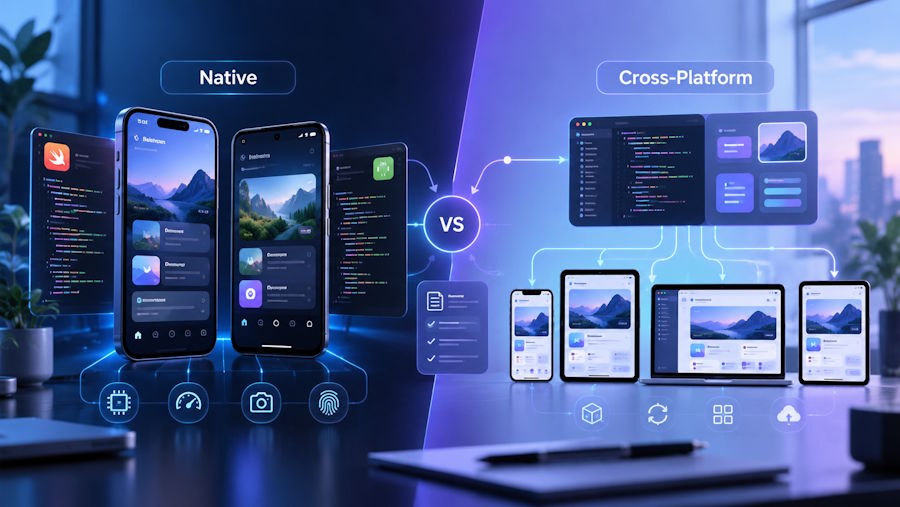
Choosing how to build a mobile application is one of the earliest technical decisions a business needs to make. The framework you select can influence development time, performance, user experience, maintenance requirements, and the cost of future improvements.
Two common approaches are native development and cross-platform development. Native apps are built for a particular operating system, while cross-platform frameworks allow developers to share much of the code across multiple platforms.
Neither approach is automatically better. A small business launching a customer loyalty app may have different priorities from a company building a graphics-intensive product or an application that relies heavily on device hardware.
Understanding the differences helps you invest in technology that supports your goals instead of creating unnecessary complexity.
What Does Native App Development Mean?
Native development involves building an application specifically for an operating system. Android applications commonly use Kotlin or Java, while iOS applications often use Swift.
Because native applications are designed for their target platforms, developers can work directly with the relevant operating system APIs, interface components, and device capabilities.
This approach can be valuable when an app requires specialised hardware access, advanced animations, complex background processing, or platform-specific behaviour.
Native development also allows teams to follow the conventions users already recognise on their devices. However, maintaining separate iOS and Android codebases may require additional engineering effort, particularly when the two applications share similar business logic.
A good technology decision weighs these benefits against the project's scope, available expertise, and long-term maintenance needs.
How Cross-Platform Development Works
Cross-platform frameworks make it possible to build applications for multiple operating systems while sharing a significant amount of code.
React Native is one example. It enables developers to build mobile interfaces using React and JavaScript or TypeScript, with native platform capabilities available where needed. Other frameworks follow different architectural approaches, so their performance characteristics and development workflows should be evaluated individually.
The biggest attraction is code reuse. A team may be able to implement common features once and deliver them to both Android and iOS users.
That does not mean every component will be identical across platforms. Notifications, permissions, payment integrations, camera access, and other features may require platform-specific adjustments.
Cross-platform development is most effective when the framework fits the app's requirements, and the team understands where shared code works well and where native implementation is necessary.
When Is Native the Better Choice?
Native development deserves serious consideration when performance, hardware access, or deep operating system integration is central to the product.
Examples may include advanced camera applications, certain augmented reality experiences, graphics-heavy games, and products that depend on specialised device capabilities.
A business may also choose native development when it has separate platform teams or needs extensive customisation of platform-specific interactions.
An experienced Android App Development Company can evaluate Android device behaviour, platform compatibility, permissions, and performance requirements. Likewise, a team experienced in iOS app development can address Apple's interface conventions, privacy controls, and release requirements.
The key is to identify the actual technical need. Choosing native simply because it sounds more powerful can lead to additional expense without a meaningful benefit to users.
When Does Cross-Platform Make More Sense?
Cross-platform development can be attractive for businesses that want to reach iOS and Android audiences with a shared development team.
Consider a retail company introducing a mobile shopping experience. Product listings, account management, order history, and many checkout workflows may share the same underlying business rules across platforms.
A cross-platform framework can help the team reuse code, coordinate releases, and maintain consistent functionality. It may also be useful for startups that need to validate a product concept before investing in more specialised platform-specific engineering.
However, the total savings depend on the app. If the product needs numerous native modules or extensive platform-specific interfaces, the advantages of code reuse may shrink.
A qualified Mobile App Development Company should estimate the trade-offs using your real feature requirements rather than relying on general claims about development speed.
Understanding React Native in Practical Terms
React Native is often considered when teams want to build mobile apps with a shared JavaScript or TypeScript codebase. Developers familiar with React may find its component-based approach approachable, although mobile development still requires knowledge of platform behaviour, navigation, testing, and deployment.
A React Native App Development Company should be able to explain how the framework would support your specific features, including any required native modules.
For example, a business application with user profiles, dashboards, forms, notifications, and API integrations may be a reasonable candidate for React Native. A project with highly specialised device functionality may need more investigation before the framework is selected.
Ask prospective developers how they manage platform differences, handle framework upgrades, test on real devices, and diagnose performance issues. These practical details are more informative than a general statement that the framework supports both platforms.
Compare the Main Decision Factors
Before choosing a framework, evaluate your project against several criteria.
- Performance: Native development offers direct access to platform capabilities, while cross-platform performance depends on the framework, implementation, and workload. Many business applications can perform well using either approach.
- Development effort: Cross-platform frameworks can reduce duplicated work, but the amount of reuse varies. Native development may require separate implementation for some shared features.
- User experience: Native interfaces can closely follow platform conventions. Cross-platform applications can also provide polished experiences when designers and developers account for differences between operating systems.
- Maintenance: Shared code can simplify certain updates, but framework dependencies and native modules still need attention. Native apps require maintenance for each platform's codebase.
- Team skills: Existing expertise matters. A team that already has strong React Native experience may deliver a suitable cross-platform product more efficiently than a team learning the framework during a complex project.
- Future requirements: Consider planned integrations, new features, accessibility, offline functionality, and the possibility of expanding to additional platforms.
How Backend Architecture Fits into the Decision
The mobile framework is only one part of an application. Most business apps also need a backend for authentication, data storage, business rules, notifications, reporting, or third-party integrations.
For example, a delivery app might use a mobile interface to display orders while its backend assigns drivers, processes status changes, and updates customers.
A thoughtful custom app development strategy considers how the frontend communicates with backend services, how data is protected, and how systems will scale if usage increases.
The same backend APIs may support native and cross-platform clients. This separation can make it easier to change the mobile interface later without rebuilding every business process.
Teams should also plan for monitoring, error handling, data validation, and secure authentication. A technically impressive interface cannot compensate for unreliable backend services.
What About Budget and Time to Market?
Businesses often compare native and cross-platform development by looking at the initial build cost. That is useful, but incomplete.
The total cost of ownership may include design, implementation, testing, app store preparation, hosting, analytics, third-party services, support, and future improvements.
Cross-platform development may reduce duplicated work when features are shared. Native development may be justified if specialised functionality makes implementation more direct or reduces technical limitations.
A custom mobile app development project should therefore begin with an estimate based on features, platform requirements, integrations, and quality expectations.
If you want to hire app developer talent, ask for a breakdown of responsibilities and assumptions. Make sure the estimate includes testing on relevant devices and accounts for ongoing maintenance rather than focusing exclusively on the first release.
How to Plan for Security and App Store Releases
Security should be designed into the architecture regardless of framework. Sensitive information should be protected in transit and at rest where appropriate, access should follow the principle of least privilege, and authentication should be implemented carefully.
Avoid storing secrets in the app itself. Use secure backend services, appropriate session management, and platform-supported mechanisms for protecting sensitive device data.
Before launch, test permissions, error handling, offline states, accessibility, and behavior across relevant device sizes and operating system versions.
Both Android and iOS releases have platform-specific submission requirements. A development partner should help prepare store listings, signing configurations, privacy disclosures, and release testing.
These steps may seem less exciting than designing features, but they help reduce launch problems and protect the user experience.
Selecting a Development Partner for Your Technology Stack
A suitable App Development Company should be able to connect technical choices to the needs of your product. It should explain why one framework fits better than another, identify risks early, and provide a clear plan for testing and maintenance.
When comparing providers, ask for examples of relevant projects, an explanation of their architecture, and details about how they manage updates. A mobile app development agency may be useful if your project needs coordinated design, engineering, testing, and release support.
The scope of mobile app development services should be clear, including which tasks are included and which may require additional work. For some businesses, an experienced mobile app development company can manage the project end to end, while others may prefer a smaller team working alongside internal engineers.
At MetaTech Official, technology selection should begin with your product goals and constraints. The right approach is the one that provides a reliable experience today while leaving room for sensible growth tomorrow.
Frequently Asked Questions
1. Is native development better than cross-platform development?
Not in every case. Native development can be useful for specialised platform features and performance-intensive workloads. Cross-platform development can be effective for products that share many features across iOS and Android.
2. Is React Native suitable for business applications?
React Native can suit many business apps, including dashboards, booking platforms, customer portals, and retail applications. Suitability depends on the required integrations, device features, performance needs, and team expertise.
3. Does cross-platform development reduce costs?
It can reduce duplicated work when substantial code can be shared. However, native modules, testing, platform-specific behaviour, and maintenance still contribute to the total cost.
4. Can one backend support native and cross-platform apps?
Yes. A backend built around well-designed APIs can often serve multiple mobile clients. Authentication, permissions, data validation, and API security must still be implemented correctly.
5. How do I choose the right mobile development framework?
Start with your target users, required features, performance expectations, integrations, budget, and long-term plans. Ask an experienced development team to compare realistic options against those requirements.

