

Follow the Energy From Sunlight to the Battery
Solar Panels Start the Energy Journey
Solar panels contain photovoltaic cells that generate direct-current electricity when exposed to sunlight. That electricity travels through the compatible solar connection toward the power station. Panel output depends on factors such as available sunlight, panel orientation, and the connected solar configuration. The power station then manages the incoming energy within its supported input limits. The Anker SOLIX S5000, for example, supports up to 3,000W of solar input and is offered with a 400W solar panel or 400W bifacial solar panel. Anker lists a 2.1-hour full-charge time when the S5000 receives the maximum 3,000W solar input under its specified conditions. This first stage explains why solar panel capability and power-station input capacity are separate but closely connected specifications.
The Battery Turns Incoming Power Into Stored Energy
Solar electricity becomes more useful when it can be stored for later. Inside the power station, a battery holds the collected energy so appliances do not depend on sunlight at the exact moment they operate. Battery capacity is measured in watt-hours, which represents an amount of stored energy. The S5000 has a base capacity of 5,024Wh and uses 314Ah LFP battery cells. Its storage is expandable from 5kWh to 30kWh, allowing the available energy reserve to grow for larger backup requirements. This storage stage is what separates portable power stations from a direct solar-to-device arrangement. Energy collected during one period can remain available for evening activities, household backup, or another time when connected equipment needs electricity.
Charging Does Not Have to Begin With the Sun
The word “solar” describes an important charging source, but modern systems may accept energy through several paths. This gives the battery more ways to return to a useful charge level. The S5000 supports six recharge methods. In addition to solar, its supplied information includes AC wall charging, alternator charging, and generator charging. Anker lists a 3.1-hour full charge through 1,800W AC input and a 7.3-hour full charge through 800W alternator charging under the stated conditions. Some supported charging combinations can reduce the full-charge time to 99 minutes. The underlying process remains similar regardless of source: electricity enters the power station, the system manages that input, and the battery stores energy for later delivery.
See What Happens When Stored Energy Leaves the Station
The Inverter Makes Stored Energy Useful for AC Appliances
The battery stores DC energy, while many household appliances operate on AC electricity. An inverter handles the conversion between those forms. This is why a power station's AC output rating matters separately from its battery capacity. The S5000 provides 4,500W rated output and 8,000W peak output. It also supports both 120V and 240V output, broadening the range of appliances it is designed to serve. Capacity determines the available energy reserve, while output determines how much power the system can deliver at a given moment. A large battery therefore answers “how much energy is stored,” while inverter and output specifications answer “what electrical demand can the station support.” Reading these specifications separately reveals how the delivery stage actually works.
Power Management Directs Energy Where It Is Needed
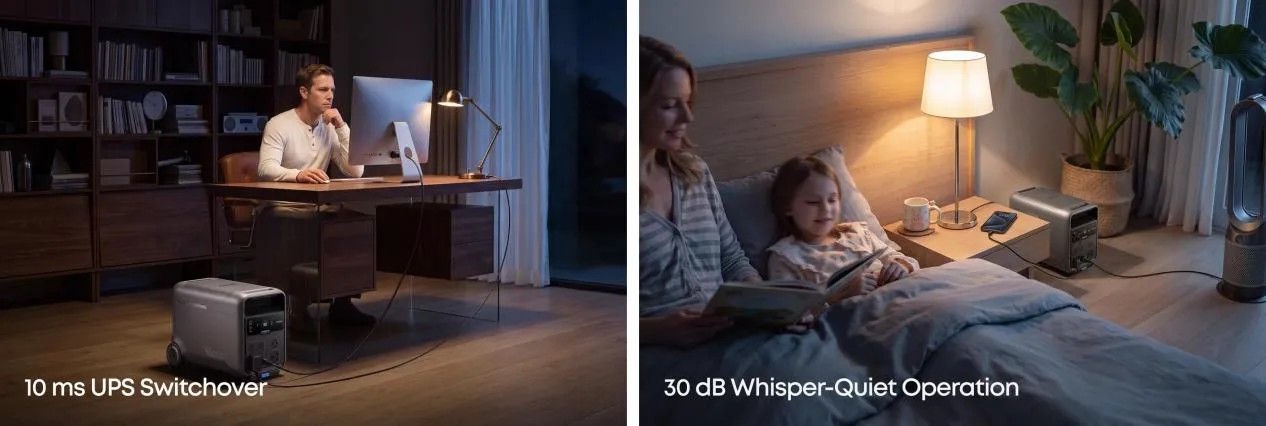
A modern power station does more than store and release electricity. Its internal power-management system coordinates charging, discharging, and operating status as conditions change. The S5000 includes OptiSave 2.0 technology and has a stated active idle power of 8.8W. Anker also lists 96% power efficiency and 512 hours of idle standby time under its specified conditions. Users can monitor and control the system through the Anker app, adding visibility into the energy moving through the station. This management layer matters because the system may spend hours supplying a steady appliance, switch between different loads, or remain ready during periods of light demand. The electronics continuously manage those operating states while the battery serves as the central energy reserve.
Stored Solar Energy Becomes Backup Power
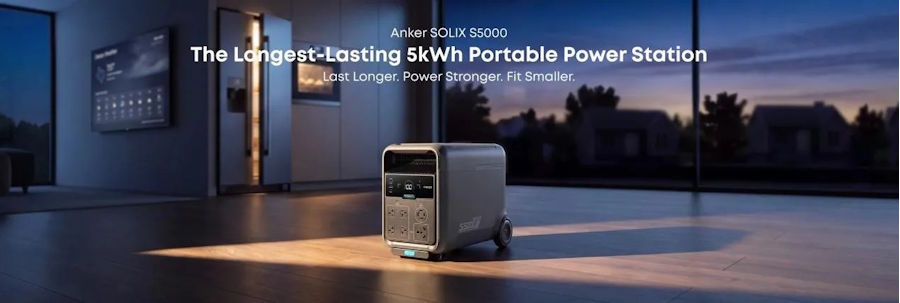
Once energy is stored, the same system can support applications beyond an outdoor solar setup. During a power interruption, the station can supply electricity from its battery to connected household equipment. Anker positions the S5000 for up to 48 hours of home backup under its stated scenario. The unit is also UL9540 and UL9540A certified. With suitable equipment and configuration, its 120V/240V output and 4,500W rated power make the stored energy available to a wider range of home applications. This completes the solar generator cycle: energy enters from solar or another supported source, stays in the battery until needed, and then leaves through the appropriate output to serve connected equipment.
Conclusion
A portable solar power generator works by connecting energy collection, battery storage, power conversion, and controlled delivery inside one system. Solar panels produce electricity, the power station manages and stores it, and an inverter prepares that stored energy for AC appliances. Additional charging methods make the same system adaptable beyond sunny conditions. With 5,024Wh base capacity, up to 3,000W solar input, 4,500W rated output, and 120V/240V support, the Anker SOLIX S5000 provides a clear example of this complete energy path.

