

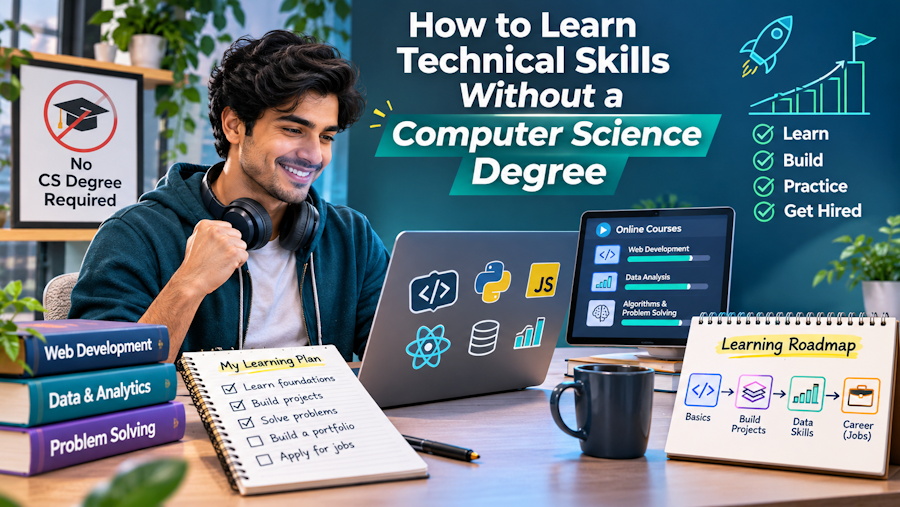
You don't need a computer science degree to learn programming, data analytics, or other technical skills. Many people enter the tech industry after working in completely different fields. Some learn through online courses, while others teach themselves by building projects and solving problems.
The challenge isn't always understanding technology. It's knowing where to start, what to study, and how to turn what you've learned into skills employers value.
The good news? You don't have to learn everything at once. With a clear plan and consistent practice, you can build technical knowledge without spending years in a university classroom.
1. Start With Skills That Match Your Interests
Technology covers many fields, and each requires a different set of skills. Before signing up for courses, think about the kind of work you'd enjoy doing.
Find Your Starting Point
If you like solving puzzles and building things, programming could be a good fit. If you enjoy working with numbers and spotting patterns, data analytics is worth exploring.
Here are some common technical fields and their basic skills:
- Programming: Python, JavaScript, HTML, and CSS
- Data Analytics: Microsoft Excel, SQL, and Power BI
- Cloud Computing: AWS, Microsoft Azure, and Google Cloud
- Artificial Intelligence: Python, machine learning, and data processing
- Cybersecurity: Networking, operating systems, and security basics
You don't need to master several fields at once. Choose one and focus on understanding its core concepts.
Learn What the Job Actually Involves
Job descriptions can tell you a lot about the skills employers expect.
Search for entry-level positions in your chosen field. Look at the tools mentioned most often and the tasks employees handle.
For example, junior data analysts often work with spreadsheets, databases, and reports. Knowing this helps you focus on useful skills instead of studying topics you won't need right away.
2. Use Online Courses to Build Your Foundation
Online learning has made technical education more accessible. You can study from home, practice at your own pace, and revisit lessons whenever something doesn't make sense.
Choose Courses With Practical Exercises
Platforms such as EDUCBA, freeCodeCamp, Coursera, and Microsoft Learn offer resources for beginners.
Look for courses that explain concepts clearly and include hands-on activities.
Watching someone write code is useful, but writing it yourself teaches you much more.
For instance, if you're learning Python, practice creating simple calculators, working with lists, or organizing information from a spreadsheet.
Small exercises help you understand how individual concepts work together.
Create a Study Routine You Can Maintain
Consistency matters more than spending several hours studying once a week.
Try setting aside 30 to 60 minutes each day. You can use that time to watch a lesson, complete an exercise, or review a topic you found difficult.
Still, learning isn't always straightforward. Career changes often happen alongside personal challenges, financial pressure, or health concerns.
Some learners also manage conditions that affect concentration and daily routines. For people experiencing both mental health and substance use disorders, professional services such as dual diagnosis treatment address those conditions together.
Recognizing when you need support is important. A realistic learning schedule should leave room for your health, responsibilities, and rest.
3. Build Projects Instead of Collecting Certificates
Completing a course feels good. But can you use what you've learned without following a tutorial?
That's where personal projects come in.
Turn Basic Knowledge Into Something Useful
You don't need to create a complicated application to show your technical abilities.
Start with projects that solve everyday problems.
If you're learning web development, build a personal website. If you're studying data analytics, create a dashboard that tracks monthly expenses.
Other beginner projects include:
- A simple task management application
- A sales report using Excel or Power BI
- A website for a fictional small business
- A Python program that organizes files
- A basic chatbot using an existing AI API
These projects give you opportunities to make mistakes, find solutions, and understand how technical tools work outside a classroom.
Keep Your Work in a Portfolio
A portfolio shows what you can do.
Developers often use GitHub to store code and document their projects. Data analysts can share dashboards, reports, and explanations of their findings.
For each project, explain the problem, the tools you used, and how you approached the solution.
Don't hide every mistake, either. Explaining how you fixed a problem can demonstrate your ability to troubleshoot.
A few well-documented projects often tell employers more about your practical skills than a long list of completed tutorials.
4. Learn With Others and Take Care of Yourself
Studying alone gives you flexibility, but it also has drawbacks. When you get stuck, even a small technical problem can take hours to solve.
Join Communities That Help You Improve
Online communities give beginners a place to ask questions and learn from experienced professionals.
GitHub discussions, Stack Overflow, Reddit programming communities, and study groups are useful places to connect with other learners.
You can also attend local technology events or join virtual workshops.
Don't worry about asking basic questions. Most experienced developers remember what it felt like to struggle with their first programming language.
Avoid Turning Learning Into Another Source of Stress
Technical learning requires patience. Some concepts take longer to understand, and comparing your progress with others rarely helps.
Take breaks when you're tired. Review old lessons when you forget something. If your schedule becomes overwhelming, reduce your study hours rather than abandoning your goals.
For learners facing ongoing emotional difficulties, resources such as mental health treatment programs provide information about professional support and care.
Learning a new skill is a long-term commitment. Protecting your well-being helps you maintain the focus and energy needed to continue.
Progress doesn't have to look impressive every day. Sometimes understanding one confusing concept is enough.
5. Prepare for Real Job Opportunities
Once you've developed basic skills and completed a few projects, start preparing for employment.
You don't need to wait until you feel like an expert.
Use Certifications to Support Your Skills
Some technical fields offer certifications that help demonstrate knowledge of specific tools.
For example, AWS Certified Cloud Practitioner introduces cloud concepts, while Microsoft's Power BI certification focuses on data analysis and visualization.
Certifications can support your resume, but they don't replace practical experience.
Choose credentials that relate directly to the positions you're interested in.
Apply for Jobs and Keep Improving
Look for internships, junior positions, freelance projects, and volunteer opportunities.
Read job descriptions carefully. If you meet most of the core requirements, consider applying even when you don't have every listed skill.
Career changes also involve personal adjustments. You may need to balance job applications with family responsibilities, financial concerns, or recovery from difficult circumstances.
Someone receiving support through services such as recovery housing Colorado may need to plan education and employment around their recovery needs. A flexible learning path can make that process more manageable.
As you prepare for interviews, practice explaining your projects in simple terms.
Employers want to understand how you approach problems, not just which programming languages you've studied.
Be ready to discuss mistakes, solutions, and what you learned along the way.
Conclusion
Learning technical skills without a computer science degree takes effort, but there's no single path you must follow.
Start by choosing a field that interests you. Learn the fundamentals through structured courses, practice with small projects, and gradually build a portfolio that shows your abilities.
Don't rush to collect certificates or master every new technology. Focus on skills you can explain and apply.
Most importantly, keep learning even after you've completed your first course or landed your first job.
Technology changes, and professionals continue learning throughout their careers. Your starting point matters far less than what you're willing to learn and build from there.

