

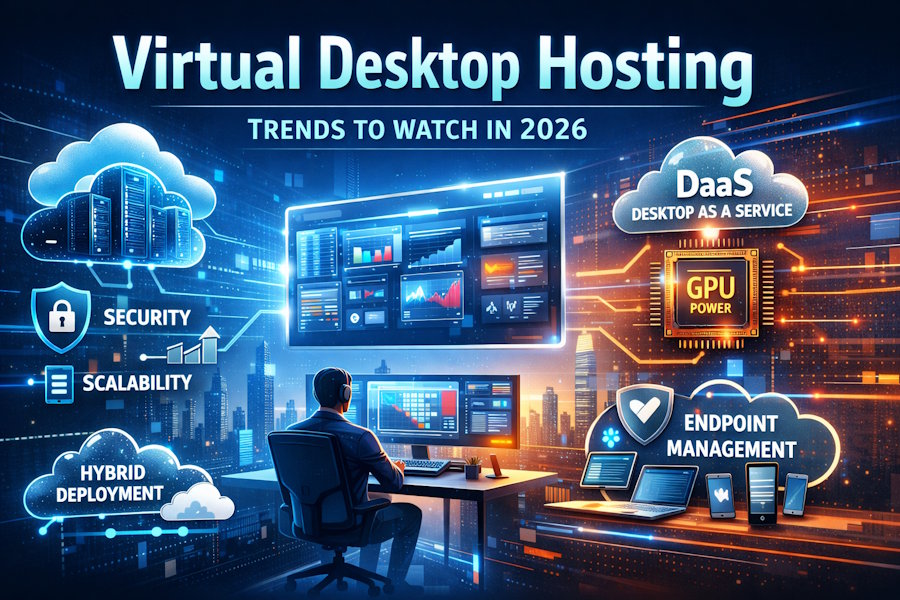
Virtual Desktop Hosting continues to evolve as companies rethink how work environments are designed and managed. The focus in 2026 does not stop at remote access only. It is now possible to think of virtual desktops as the future of digital workspaces. As cloud infrastructure improves and user expectations rise, the best virtual desktop services have to align with your business needs. So, let's look at the developments that will shape virtual desktop hosting this year.
Cloud-Matured Virtual Desktop Architectures
It is now in a mature phase where cloud-based platforms provide reliable performance and operation. Cloud infrastructure has been specifically designed for long-term work, rather than intermittent remote access services.
- Cloud stability focus.
- Predictable performance delivery.
- Persistent workload design.
- Regional infrastructure expansion.
- Workload balancing efficiency.
- Hybrid deployment flexibility.
Cloud vendors are currently maximizing virtual desktops through specialized availability zones, load balancers, and better resource allocation. It ensures that virtual desktops operate effectively during peak usage.
Security by Design Rather Than an Add-On
The expectations for security around web-based desktops have evolved drastically. By 2026, security will be integrated into the system rather than added on. The firms are witnessing a significant focus on identity-based access, continuous authentication, and behaviour-based monitoring.
- Embedded security architecture.
- Identity-driven access.
- Reduced endpoint exposure.
Lower the Risks of Traditional Setups
Centralized desktops minimize the risks of data storage locally on devices. Your users can use applications and documents without downloading them to endpoints.
- Centralised data protection.
- Compliance-focused design.
- Continuous access monitoring.
This reduces the risk of data loss or theft. Virtual desktops today closely integrate with identity management platforms to ensure access is granted based on verified context rather than traditional identities.
User Experience Becomes a Primary Metric
Improvements in display protocols and session optimization have led to faster logins, smoother app behavior, and consistent visual output. In roles that depend on design tools, GPU acceleration should be a standard feature rather than an optional choice.
- Improved session responsiveness.
- Near local performance.
- Faster login experiences
- GPU workload support.
- Cross-device consistency.
- Higher user adoption.
It is essential to ensure that users can use the system consistently across all groups. Virtual desktops that feel comfortable to use, reduce resistance, and increase efficiency.
Desktop as a Service Gains Strategic Importance
It will become an ideal choice for companies seeking predictability in IT budgets and lower administrative costs. There is no need to make considerable investments in refreshing your hardware or in complicated infrastructure plans.
- Predictable cost structure.
- Centralised desktop management.
- Reduced IT overhead.
- Rapid user scaling.
- Enterprise environment access.
- Flexible workforce support.
Desktop service updates, security patches, and performance tuning are centrally managed. This will enable the internal teams to focus on operational activities rather than maintenance.
The Best Virtual Desktop Services
Modern desktop services provide role-based custom configurations. Developers, knowledge workers, and administrative personnel can all have customized environments that meet their specific requirements.
- Flexible service models.
- Role-based desktops.
- Performance-aligned resources.
- Cost efficiency focus.
- Proactive technical support.
- Strong service reliability.
The level of support is also a crucial parameter. Firms that provide timely monitoring, fast response times, and well-established service-level guarantees stand out in a very competitive market.
Integration of Endpoint as well as Workspace Management
Virtual desktops have become separate platforms. This integration lets you oversee policies, applications, and user access in both physical and digital environments from a single screen.
- Unified workspace control.
- Centralised policy management.
- BYOD security consistency.
Reduce Compliance Costs and Posed Risks
In organizations that support bring-your-own-device policies, integrating this feature is vital. This will allow you to implement consistent security and usage rules regardless of which device is used.
- Reduced endpoint risk.
- Usage analytics insights.
- Resource optimization visibility.
Analytics may also be a larger factor. User activity data can be used to help you decide how the desktops are utilized, which bottlenecks in performance to work on, and how you can optimize the allocation of resources over time.
Scalability Without Operational Complexity
The ability to scale is among the most significant benefits of using virtual desktop hosting. Automated provisioning, resource adjustment, and load balancing will ensure that computers respond to changing user requirements.
- Automated resource scaling.
- Dynamic workload response.
- Cost-efficient utilization.
- Performance consistency maintained.
- Minimal administrative effort.
- Business-aligned configuration.
It is beneficial to have environments that increase capacity during peak usage intervals and then scale back as demand declines. This also guarantees consistent efficiency without the need for manual adjustment.
Choosing a Reliable Virtual Desktop Hosting Partner
When adoption increases, picking the correct service provider becomes essential. Look for providers with years of experience, transparent pricing, solid security structures, and a flexible support model.
- Proven hosting expertise.
- Secure cloud infrastructure.
- Flexible desktop configurations.
- Industry-specific solutions.
- Round-the-clock support.
- Simplified desktop deployment.
Apps4Rent is a full-service virtual desktop hosting service designed to help companies of all sizes. The hosted desktops they offer are built on a secure cloud platform, with safe access and flexible configurations. Therefore, to explore how their solutions align with your operational requirements, visit Apps4Rent.
Conclusion
The best virtual desktop services will be a step towards reliability, stability, and strategic value. As cloud-based platforms mature and security frameworks improve, the virtual desktop becomes a practical foundation for future work environments. However, the best choice of virtual desktop solutions requires little experimentation.
Finally, offering a variety of options tailored to various industries and work environments, Apps4Rent lets you install and manage virtual desktops without any unnecessary hassle.

