

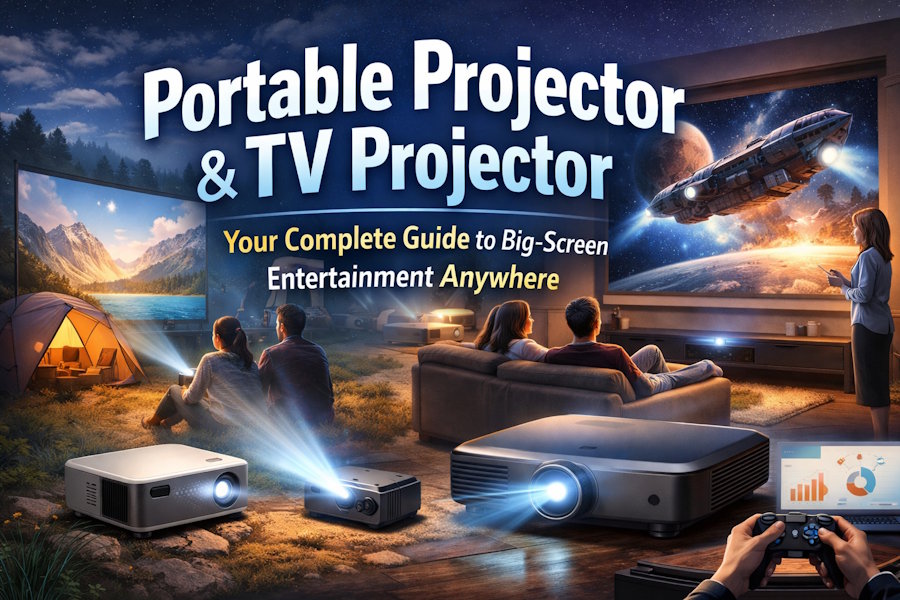
Imagine being able to turn any blank wall into a cinematic spectacle in seconds, whether you’re camping under the stars, hosting backyard movie nights, or delivering a presentation on the go. That’s the magic of the portable projector: compact, flexible, and powerful enough to transform small spaces into immersive viewing environments. From streaming movies in the living room to displaying slides in a meeting room, modern projectors bridge the gap between mobility and big‑screen entertainment.
In the world of projectors, there’s an exciting spectrum from lightweight, travel‑friendly designs to larger home setups that rival traditional TV screens. Some users prefer the freedom of portable devices, while others look for something closer to a TV projector experience that brings a theater vibe into your home without requiring a bulky setup.
Whether you’re a casual viewer, a remote worker, a gamer, or a frequent traveler, understanding how today’s projection tech works and which features matter most can help you choose the perfect system for your needs.
In this guide, we’ll explore how these devices work, what differentiates them, real‑world use cases, and data‑backed insights to help you decide how best to bring big‑screen visuals into your life.
Why Portable Projector Technology Is Taking Off
The projection landscape has shifted dramatically over the last decade. Gone are the days when projectors were massive machines tethered to desktops and bulky media centers. Advances in LED and laser projection, battery tech, and mobile connectivity have given rise to compact devices that can be carried in a backpack.
In fact, modern portable projector models now offer features that just a few years ago were reserved for high‑end home theater setups.
According to a recent report by Grand View Research, the global projector market, including portable and fixed units, is expected to grow at a compound annual growth rate (CAGR) of over 5% through 2030, driven by demand for flexible display solutions in education, business, and home entertainment
This growth highlights a shift in how people consume visual media: mobility, convenience, and versatility are no longer optional they’re expected.
What Makes Portable Projectors So Versatile?
When you compare traditional TV screens with portable projection systems, several key advantages stand out:
1. Mobility That Fits in Your Hand
Portable devices are lightweight and battery‑powered, allowing you to set up a big screen anywhere no power outlet required in many cases.
2. Bigger Display for Less Space
Instead of being limited to the size of your TV, a portable projector can cast an image as big as 100″ or more, depending on the distance and surface.
3. Flexible Viewing Options
Whether you’re outdoors, in a bedroom, or in a professional setting, projectors adapt to environments in ways TVs simply can’t.
4. Cost‑Effective Big Visuals
Large TVs command premium prices as size increases. Portable or even home‑oriented tv projector solutions may offer bigger visuals at a lower cost.
These advantages make projection systems ideal for modern lifestyles that demand mobility and performance.
How Projection Tech Works: A Quick Breakdown
At their core, projectors are light engines. They work by shining a focused beam through imaging chips or using lasers/LEDs to produce an image that’s cast onto a surface. Most portable devices today utilize LED or small light engines that balance power consumption with brightness.
Three key specs affect your viewing experience:
- Brightness (measured in lumens): Higher lumens result in clearer images in brighter environments.
- Resolution: Determines detail and sharpness higher resolutions are essential for full‑length movies and text clarity.
- Contrast ratio: Affects the difference between dark and bright parts of the image.
Understanding these factors helps you choose a projector that matches your environment and use case.
Portable vs. TV Projector: What’s the Difference?
While both projection styles share the same basic principle, their design goals differ.
Portable Projectors
- Designed for mobility and convenience
- Compact size, often battery‑powered
- Ideal for travel, on‑the‑go presentations, and camping movies
TV Projectors
- Built for home cinema and larger venues
- Generally brighter, higher resolution
- Often paired with dedicated screens
- Designed for regular use in living rooms or media rooms
Both have their place, but knowing how and where you’ll use your device helps you choose the right fit.
Real‑World Use Cases: Projectors in Everyday Life
1. Outdoor Movie Nights
Portable projectors make it easy to host backyard film screenings, casting media onto walls, sheets, or inflatable screens.
2. Work and Education
In classrooms or meetings, projectors allow larger visuals than laptops alone, improving engagement and collaboration.
3. Travel and Adventures
Compact devices transform hotel walls or tents into media hubs for entertainment or presentations while on the move.
4. Gaming Marathon Sessions
Gamers appreciate the large display area, lending console and PC titles a truly immersive feel without investing in a giant TV.
User communities on platforms like Reddit show how travel‑friendly projectors have become go‑to devices for frequent flyers and remote workers alike, highlighting convenience and adaptability as major benefits.
Market Insights: How Projection Devices Compare
According to Statista, the average consumer preference is shifting toward flexible display solutions that go beyond traditional screens, with many households now considering projection systems as alternatives to large TVs especially where space is limited.
Another key report from Fortune Business Insights notes that the rise of flexible work arrangements and digital education has expanded demand for projectors across sectors, underlining how these tools are no longer just “nice to have” but part of everyday tech ecosystems.
These data points reinforce the broader trend: projection systems are becoming central to how people work, play, and connect visually.
Graph: Projector Adoption Trends (Estimated)
Below is a simplified visual representation showing projected adoption of portable and TV‑oriented projectors over recent years:
|
Year |
Portable Projector Adoption |
TV Projector/Home Cinema Adoption |
|
2019 |
15% |
25% |
|
2021 |
22% |
31% |
|
2023 |
30% |
40% |
|
2025 (Projected) |
38% |
47% |
Data estimated from industry growth projections and market reports.
Choosing the Right Projector for Your Needs
When evaluating whether to buy a portable projector or a more traditional tv projector, consider the following factors:
Picture Size and Resolution
If your priority is ultra‑crisp detail and cinematic quality, a higher‑resolution setup may be worth investing in.
Brightness Needs
If you plan to use your projector in lit environments, higher lumens ensure clearer visibility.
Portability vs. Power
Portable devices win on convenience but may not match home‑cinema power outputs. Choose based on usage patterns.
Connectivity Options
Look for Bluetooth, HDMI, USB, or wireless streaming support, depending on how you want to cast your content.
These considerations help narrow down the choices to match lifestyle and environment.
Set Up Tips for the Best Viewing Experience
Whether indoors or outdoors, getting the most out of your projector involves a few smart setup moves:
- Choose a flat, neutral surface – This improves image clarity.
- Control ambient light – Darker spaces yield better contrast.
- Mind the throw distance – Adjust projector placement to optimize screen size without distortion.
- Use audio solutions – Pair with speakers or soundbars for immersive sound.
These simple actions elevate your experience and help your visuals feel bigger and more vibrant.
Big Screen Experiences for Every Lifestyle
Projection tech has evolved into a flexible, dynamic tool that enhances entertainment, education, and productivity. Whether you lean toward the convenience and mobility of a portable projector or the high‑power visuals of a TV projector, modern projection solutions can adapt to your needs without restricting you to living room setups or expensive TV screens.
From backyard cinemas to professional presentations and weekend travel entertainment, projectors bring big‑screen experiences to life in ways once only imagined.
When you’re ready to take your visuals beyond the limits of standard screens, will you choose the freedom of portable projection or the immersive depth of home cinema displays?
FAQs About Portable and TV Projectors
What is a portable projector?
A portable projector is a compact display device that projects video onto surfaces like walls or screens. These are easy to carry and are designed for versatile use on the go.
How does a TV projector differ from other projectors?
A tv projector is generally used for fixed home setups with higher resolution and brightness, making it ideal for consistent movie nights or larger screen environments.
Do projectors work without external speakers?
Basic projectors include built‑in audio, but pairing with external speakers improves sound quality significantly especially for movie watching.
Can I use a portable projector outdoors?
Yes portable projectors are ideal for outdoor use, provided you control lighting and choose appropriate surfaces.
Are mini and portable projectors suitable for presentations?
Absolutely. Their flexibility and compact form make them excellent tools for business pitches, educational sessions, or team collaborations.

