

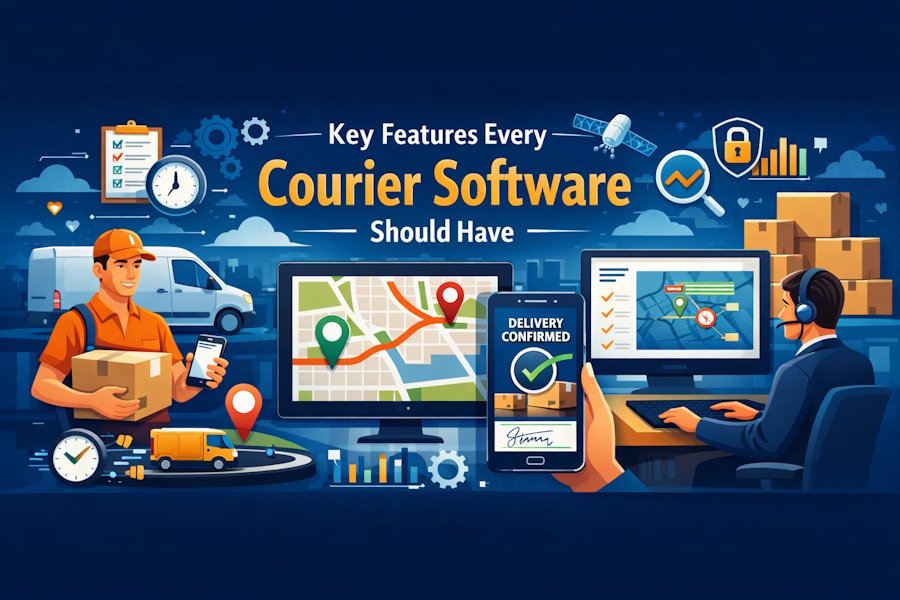
Courier operations depend on speed, accuracy, and real-time coordination. Without structured systems, dispatching becomes inefficient, delivery times increase, and operational costs rise. Courier software must address these challenges through automation, data integration, and optimized workflows.
The following features define a robust system capable of supporting modern delivery operations.
Real-Time Dispatch and Route Optimization
Dispatching is the core function of any courier system. Manual assignment of deliveries leads to delays and inefficient resource usage.
Advanced courier dispatch software uses algorithms to assign jobs based on proximity, driver availability, and delivery priority. Route optimization minimizes travel distance while accounting for traffic conditions and delivery windows.
Effective dispatch systems provide:
- Automated job assignment to reduce manual intervention
- Dynamic route adjustments based on real-time conditions
- Efficient allocation of drivers to maximize utilization
Optimized dispatch reduces delivery time and operational costs.
Live Tracking and Visibility
Real-time tracking is essential for both operational control and customer transparency. Courier software must provide continuous updates on driver location and delivery status.
Tracking systems typically use GPS data to monitor movement and progress. This information is shared with dispatchers and customers.
Key capabilities include:
- Live location tracking of delivery vehicles
- Status updates for each delivery stage
- Integration with customer-facing interfaces for visibility
Visibility improves coordination and reduces uncertainty.
Automated Order Management
Courier operations often involve high volumes of orders from multiple sources. Manual entry increases the risk of errors and delays.
Automated order management systems capture and process orders from various channels, including APIs, web platforms, and point-of-sale systems. These systems standardize data and ensure consistent processing.
Automation ensures that:
- Orders are captured accurately without duplication
- Data flows seamlessly into dispatch systems
- Processing time is reduced
Efficient order management supports scalability.
Driver Management and Performance Monitoring
Managing drivers requires visibility into performance, availability, and workload distribution. Courier software should provide tools to monitor and evaluate driver activity.
Performance metrics may include delivery times, route efficiency, and completion rates. This data allows managers to identify inefficiencies and improve operations.
Driver management features include:
- Scheduling and shift management
- Performance tracking and reporting
- Communication tools for real-time coordination
Effective management improves productivity and accountability.
Proof of Delivery and Verification Systems
Verification of completed deliveries is critical for reducing disputes and ensuring accountability. Courier software must support digital proof of delivery.
This typically includes capturing signatures, photos, or timestamps at the point of delivery. These records are stored within the system for future reference.
Proof of delivery systems provide:
- Confirmation of successful delivery
- Documentation for dispute resolution
- Increased trust between service providers and customers
Verification ensures transparency and reliability.
Integration with External Systems
Courier software must integrate with other business systems to ensure seamless data flow. This includes accounting platforms, inventory systems, and customer management tools.
Integration eliminates the need for duplicate data entry and ensures consistency across systems. APIs are commonly used to connect different platforms.
Integrated systems support:
- Unified data across departments
- Improved reporting accuracy
- Reduced manual workload
Interoperability is essential for efficient operations.
Scalability and Multi-Location Support
As courier businesses grow, software must support increased volume and geographic expansion. Systems should handle multiple locations, fleets, and service areas without performance degradation.
Scalability features include:
- Support for multiple depots or hubs
- Flexible configuration for different regions
- Ability to handle high transaction volumes
Scalable systems ensure long-term usability.
Real-Time Communication Tools
Communication between dispatchers and drivers is critical for handling changes and resolving issues. Courier software should include integrated communication tools.
These may include messaging systems, alerts, and notifications. Real-time communication allows immediate response to delays, route changes, or customer requests.
Communication features improve:
- Coordination between teams
- Response time to operational issues
- Overall service reliability
Efficient communication supports dynamic operations.
Analytics and Reporting Capabilities
Data analysis is necessary for continuous improvement. Courier software should provide detailed reporting on key performance indicators.
Reports may include delivery times, cost per delivery, and route efficiency. Analytics tools help identify trends and areas for optimization.
Data-driven insights enable:
- Improved decision-making
- Identification of inefficiencies
- Strategic planning for growth
Reporting transforms operational data into actionable insights.
Security and Data Protection
Courier systems handle sensitive data, including customer information and delivery details. Security measures must protect this data from unauthorized access.
Key security features include:
- Data encryption for storage and transmission
- User authentication and access controls
- Compliance with data protection regulations
Strong security ensures trust and regulatory compliance.
Courier software is a critical component of modern logistics operations. Features such as real-time dispatch, tracking, automation, and integration define system effectiveness. By implementing software with these capabilities, courier businesses can improve efficiency, reduce costs, and maintain reliable service in increasingly complex delivery environments.

