

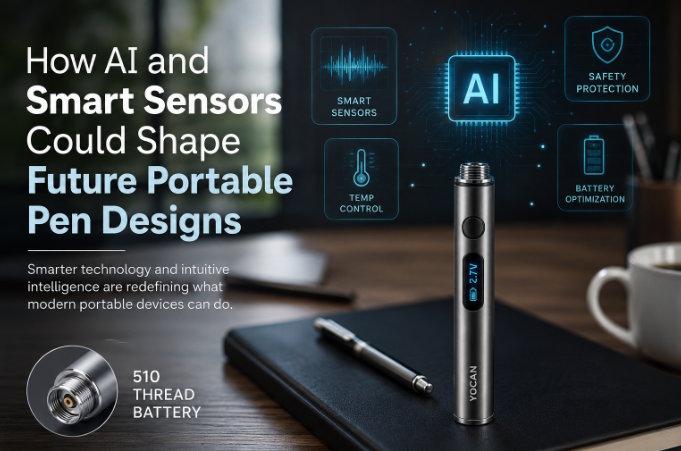
Portable electronic devices have become significantly more sophisticated over the past decade. What once relied on simple batteries and manual controls is now benefiting from intelligent software, precision sensors, and connected technologies. From wearable fitness trackers to smart home devices, artificial intelligence is steadily influencing the way products are designed and used.
One category experiencing this technological evolution is the portable pen-style device market. Compact form factors, advanced battery systems, and sensor-driven performance are redefining what users can expect from these products. While today's devices already offer impressive functionality, future designs may become even smarter thanks to developments in AI and embedded sensor technology.
The Rise of Intelligent Portable Devices
Consumers increasingly expect technology to adapt to their preferences rather than requiring constant manual adjustments. This shift has encouraged manufacturers across multiple industries to explore intelligent systems capable of learning from user behavior.
Artificial intelligence excels at identifying patterns and making small adjustments that improve efficiency. In portable electronic devices, this could mean automatically optimizing power output, preserving battery life, or adjusting performance based on environmental conditions.
As processors become smaller and more energy-efficient, integrating AI-powered features into compact pen-style devices becomes increasingly practical.
Smart Sensors Are Becoming Smaller and More Capable
Modern sensors are capable of collecting a surprising amount of information within an extremely limited space. Temperature sensors, pressure sensors, motion detectors, and airflow monitoring systems are already common across consumer electronics.
Future portable devices could use combinations of these sensors to create a more responsive experience. Instead of relying solely on manual controls, devices may continuously analyze operating conditions and make real-time adjustments.
For example, a sensor network could detect changes in temperature and automatically modify performance parameters to maintain consistency while reducing unnecessary energy consumption.
This approach not only improves reliability but may also contribute to longer component lifespan.
AI-Powered Battery Optimization
Battery technology remains one of the most important aspects of any portable electronic device. Consumers consistently prioritize longer runtime, faster charging, and improved efficiency.
Artificial intelligence offers several opportunities in this area.
Future systems could learn how and when a device is typically used, allowing battery resources to be allocated more effectively. Rather than delivering maximum power at all times, intelligent battery management could dynamically balance performance and efficiency.
Many compact devices already utilize advanced battery platforms such as the 510 mini battery, which provides a standardized and convenient foundation for portable designs. As AI integration advances, future generations of battery-powered devices may become even more efficient and adaptive.
Predictive Maintenance and Device Health Monitoring
One of the most promising applications of AI involves predictive maintenance.
Instead of waiting for performance issues to appear, intelligent systems can monitor device health continuously. Small variations in temperature, power consumption, or electrical resistance can provide early indicators of potential problems.
Future portable devices may notify users when components require attention, helping reduce unexpected failures and improving overall reliability.
This technology is already being implemented in industrial equipment, electric vehicles, and consumer electronics. Its expansion into compact personal devices appears increasingly likely.
Enhanced Safety Through Real-Time Monitoring
Safety systems have evolved considerably across the electronics industry.
Smart sensors can detect unusual operating conditions almost instantly. Combined with AI analysis, future devices may be capable of responding to potential issues before they become noticeable to the user.
For example, integrated monitoring systems could identify overheating trends, unusual power fluctuations, or charging irregularities and automatically adjust operating parameters.
These proactive safety measures could become standard features as intelligent hardware continues to advance.
Personalization Without Complexity
One challenge facing manufacturers is balancing advanced functionality with simplicity.
Many consumers prefer products that are easy to use rather than requiring extensive configuration. Artificial intelligence can help solve this problem by automating many of the adjustments that would otherwise require manual intervention.
Instead of navigating complicated settings menus, users may simply interact with a device while the software gradually learns preferred operating patterns in the background.
This combination of personalization and convenience is likely to become a defining characteristic of next-generation portable electronics.
Connectivity and the Future of Smart Ecosystems
As connected ecosystems continue to expand, portable devices are expected to become more integrated with smartphones and cloud-based platforms.
Future systems may provide usage analytics, battery diagnostics, firmware updates, and performance recommendations through dedicated applications.
The result is a more connected experience where hardware and software work together seamlessly.
Even compact devices built around platforms such as the 510 mini battery could eventually benefit from AI-driven diagnostics, predictive alerts, and intelligent performance optimization.
Looking Ahead
Artificial intelligence is gradually moving beyond smartphones and computers into virtually every category of consumer electronics. Portable pen-style devices are well positioned to benefit from this transition due to their reliance on battery efficiency, compact engineering, and precision control systems.
As sensor technology becomes more advanced and AI processing grows more accessible, future designs may become smarter, safer, and more responsive than ever before. Rather than focusing solely on hardware improvements, the next generation of portable devices will likely be defined by their ability to understand, adapt, and optimize performance in real time.
The combination of intelligent software, advanced sensors, and efficient battery systems represents an important step toward a new era of truly adaptive portable technology.

