

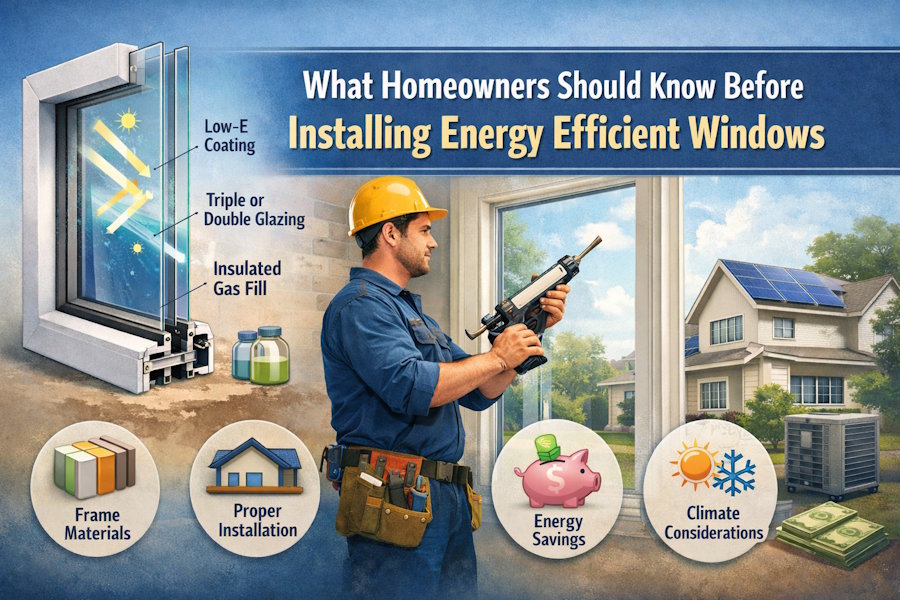
Energy-efficient windows have become one of the most popular home upgrades for improving comfort, reducing energy bills, and increasing property value. However, before investing in new windows, homeowners should understand how these systems work, what factors affect performance, and what to expect during installation. Choosing the right energy-efficient windows is not just about appearance it is about long-term savings, insulation performance, and installation quality.
Understanding What Makes Windows Energy Efficient with Energy Efficient Windows
Energy-efficient windows are designed to reduce heat transfer between indoor and outdoor environments. Unlike older single-pane options, modern systems use double or triple glazing, insulated gas fills, and Low-E coatings to improve performance. These technologies help maintain stable indoor temperatures and reduce the workload on heating and cooling systems.
With proper Energy Efficient Windows, homeowners can experience better comfort throughout all seasons while lowering energy consumption.
The Importance of Frame Materials in Energy Efficient Windows
The frame plays a major role in insulation performance. Different materials offer different levels of efficiency and durability.
Vinyl frames are widely used due to their affordability and insulation properties. Fiberglass frames offer superior strength and thermal performance. Wood frames provide natural insulation but require maintenance, while aluminum frames are less efficient unless they include thermal breaks.
Choosing the right frame ensures that Energy Efficient Windows perform optimally in different weather conditions.
Why Installation Quality Matters for Energy Efficient Windows
Even the best windows will fail if they are not installed correctly. Poor installation leads to air leaks, moisture problems, and reduced insulation efficiency. This can significantly affect performance and increase energy bills.
Professional installation ensures a tight seal and proper alignment, allowing Energy Efficient Windows to deliver maximum insulation and long-term reliability.
Energy Savings and Long-Term Value from Energy Efficient Windows
One of the biggest advantages of upgrading is long-term cost savings. By reducing heat loss in winter and minimizing heat gain in summer, Energy Efficient Windows help HVAC systems run more efficiently.
This leads to lower utility bills over time and increases overall property value. Although the initial investment may be higher, the long-term financial benefits make it a practical upgrade.
Climate Considerations for Energy Efficient Windows
Different climates require different window features. In colder regions, insulation and heat retention are priorities. In warmer climates, solar control and heat reflection are more important.
Selecting the right Energy Efficient Windows based on local climate ensures maximum performance and comfort year-round.
Noise Reduction Benefits of Energy Efficient Windows
Another advantage is improved sound insulation. Multi-pane glass and tight seals help reduce outside noise, making indoor environments quieter and more comfortable.
This is especially useful for homes located near busy streets, markets, or urban areas where noise pollution is common.
Common Mistakes to Avoid
Many homeowners focus only on price and overlook performance ratings. Choosing low-quality windows may lead to poor insulation and higher long-term costs.
Another mistake is ignoring professional installation, which is essential for ensuring Energy Efficient Windows perform as intended. Warranty details should also be reviewed carefully before purchase.
Conclusion
Installing energy-efficient windows is a smart investment that improves comfort, reduces energy bills, and enhances property value. By understanding frame materials, installation quality, and climate suitability, homeowners can make informed decisions. When properly selected and installed, Energy Efficient Windows deliver long-term performance, better insulation, and a more comfortable living environment.

