

For resellers, inventory only has value when it is actively listed and available for buyers. Until that happens, every product sitting on a shelf represents money that is tied up instead of working. Many sellers focus heavily on sourcing because it feels productive, but sourcing without listing creates a bottleneck that slows profit. The faster inventory moves from acquisition to sale, the stronger the cash cycle becomes.
Listing speed has become one of the most important factors in modern resale success. A seller who lists quickly can capture buyer demand, react to trends, and reinvest profits faster. In contrast, slow listing creates delays that weaken momentum and reduce turnover.
Artificial intelligence has changed this process by shortening the time needed to build listings. Tasks like title writing, pricing research, item specifics, and category selection can now be handled more efficiently. This means sellers can focus less on repetitive work and more on inventory movement. In resale, speed is not just about convenience. It is a financial advantage that directly impacts growth and long-term profitability.
Understanding Inventory Turnover in Reselling
Inventory turnover is one of the most important concepts in reselling because it measures how quickly products are converted into cash. High turnover means items are moving consistently, while low turnover often signals slow listing, weak demand, or pricing issues. For resellers, turnover is often more valuable than simply holding a large inventory.
Fast turnover improves cash flow. When products sell quickly, sellers can reinvest profits into fresh inventory. This creates a cycle of continuous movement instead of stagnant stock. For thrift flippers, this cycle is essential because opportunity depends on available capital.
One common mistake is confusing inventory size with business growth. A storage room full of unlisted products may look impressive, but it produces no income. The real measure of efficiency is how quickly those products reach buyers.
Tracking listing efficiency can help improve turnover. Measuring the average number of days between sourcing and listing reveals workflow strengths and weaknesses. Sellers who reduce this timeline often increase profitability without sourcing more items. Faster turnover means inventory works harder, creating stronger momentum for business growth.
Why Traditional Listing Methods Slow Profit Growth
Traditional listing methods often create hidden inefficiencies that slow profit growth. While manual listing may seem manageable at first, it becomes a major bottleneck as inventory volume increases. Every extra minute spent building a listing delays the moment an item becomes available for sale.
Writing titles manually is one of the biggest time drains. Sellers often spend several minutes deciding how to structure keywords and product details. This repeated decision-making adds up across dozens of listings.
Research creates another bottleneck. Looking up comparable sales, pricing trends, and category placement for every item can consume hours. While research is important, inefficient processes can slow momentum significantly.
Decision fatigue is another overlooked issue. Repeating the same listing decisions throughout the day reduces focus and consistency. Over time, this mental exhaustion can lead to procrastination or rushed listings.
Manual data entry also creates avoidable friction. Entering item specifics, shipping details, and return policies repeatedly makes the process feel longer than necessary. As inventory grows, these inefficiencies multiply.
Traditional methods may work for casual sellers, but resellers focused on speed and growth often need faster systems to maintain strong profit momentum.
The Rise of AI-Powered eBay Listing Automation
AI-powered listing automation has transformed how resellers approach eBay. Instead of treating listing as a slow, manual task, sellers can now use intelligent tools to accelerate the process. This shift has made speed-to-market a major competitive advantage.
Automation began with basic templates, but modern tools have evolved into advanced systems capable of generating titles, descriptions, and item specifics based on product data or images. These systems save time by reducing repetitive decisions.
Image recognition has become one of the most practical developments. Sellers can upload photos and receive category suggestions, product identification, and draft listing details. This reduces the time spent researching and entering information manually.
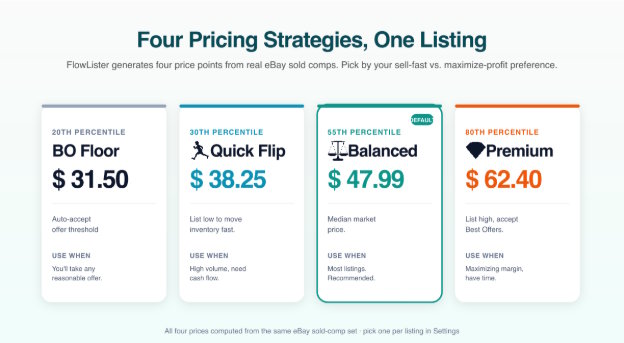
For resellers evaluating automation tools, platforms like FlowLister have gained attention because this AI listing tool for ebay was built around real seller workflows rather than generic automation systems. The website FlowLister focuses on reducing listing friction by automating practical tasks that slow inventory turnover.
As more sellers adopt automation, listing speed becomes less about effort and more about efficiency. AI has moved from a luxury tool to a practical necessity for serious resale growth.
Turning Photos Into Listings in Minutes
Product photography has always been a core part of reselling, but it now plays an even bigger role in speeding up listings. Instead of starting with research or manual writing, many sellers now begin with photos and build listings from there.
Image-based workflows are faster because they create a natural first step. Taking photos immediately after sourcing creates digital inventory, making it easier to process products later. This reduces handling and keeps items organized.
AI tools can now analyze photos to identify brands, styles, and product categories. This cuts down on manual searching and simplifies listing creation. It also reduces the risk of choosing incorrect categories.
Photos improve accuracy because sellers can review product conditions and features visually while drafting. This minimizes mistakes that can happen when relying on memory.
Faster publishing systems also benefit from photo-first workflows. Once images are uploaded, AI-assisted listing tools can generate titles and descriptions quickly, reducing the gap between sourcing and publishing.
For resellers handling multiple items each week, turning photos into listings saves time and builds consistency. It creates a smoother process that moves inventory closer to active sales faster.
Creating High-Converting Titles Without Wasting Time
Titles are one of the most important parts of an eBay listing because they directly affect visibility in search results. A strong title helps buyers find products faster, but writing effective titles manually can take time.
Keyword optimization is essential. Buyers search using specific terms such as brand names, sizes, model numbers, and product types. Including these keywords increases search visibility and improves click potential.
Good title structure matters just as much as keyword selection. The most important details should appear early in the title because buyers scan quickly. Clear structure improves readability and search performance.
AI-assisted optimization helps sellers build better titles faster. Instead of spending time deciding what to include, automation tools can suggest strong keyword combinations based on item details.
Search visibility also depends on avoiding unnecessary filler words. Titles should focus on product-relevant details instead of decorative phrases that add little value.
A well-built title increases the chance of attracting qualified buyers. Faster title creation does not mean lower quality when AI is used strategically. For high-volume resellers, this balance between speed and visibility is essential for maintaining strong turnover.
Writing Better Descriptions Faster
Descriptions play a major role in converting interested buyers into actual buyers. While titles attract attention, descriptions provide the details buyers need before making a decision. Strong descriptions build trust and reduce uncertainty.
Efficient description writing often depends on structure:
- Focus on condition first: Buyers want to know the condition immediately. Mentioning wear, flaws, or signs of use early builds transparency. This reduces misunderstandings and improves buyer confidence.
- Include product-specific details: Measurements, model numbers, and notable features help buyers evaluate fit and compatibility. Specific details answer common questions before they are asked. This can reduce message volume.
- Use simple and clear language: Descriptions should be easy to read and direct. Complicated wording can create confusion. Clear writing improves trust and decision-making.
- Automate repetitive wording: AI-generated drafts can handle common product details quickly. Sellers can review and personalize them instead of writing from scratch. This saves time while maintaining quality.
Well-structured descriptions improve conversions and reduce returns. Faster writing methods allow sellers to maintain quality while increasing listing output.
Listing More Consistently as a Side Hustler
Consistency is one of the biggest challenges for side-hustle resellers because listing competes with work, family responsibilities, and personal time. Without a structured routine, inventory can pile up quickly.
Many part-time sellers focus on sourcing whenever they find free time, but listing often gets postponed. This creates uneven business activity. A consistent listing habit keeps products moving and sales flowing.
Time management is critical. Short listing sessions can be more effective than waiting for long blocks of free time. Even thirty focused minutes can create progress when repeated regularly.
Consistency often matters more than volume. Listing five items every day may produce better results than listing thirty items once a month. Search algorithms and buyer activity often reward active seller accounts.
Weekly listing goals improve accountability. Setting realistic targets helps sellers maintain discipline without creating unnecessary stress. Clear goals create measurable progress.
Avoiding inconsistency keeps inventory fresh and visible. For side-hustlers, the goal is not perfection but sustainable momentum. Regular listing habits create stronger turnover and improve the speed at which inventory turns into cash.
Managing High-Volume Thrift Flips Efficiently
Handling high-volume thrift inventory requires strong organization. Without systems, large amounts of inventory can quickly become overwhelming and reduce profitability. Efficient processing keeps the business manageable.
Several systems help maintain control:
- Bulk intake sorting: Inventory should be sorted immediately after sourcing. Categories such as clothing, electronics, and collectibles create order. Organized intake reduces confusion later.
- Fast categorization systems: Grouping similar items speeds up listing because required fields often overlap. This reduces repetitive thinking and improves efficiency. Similar products can be processed together.
- Storage labeling systems: Every listed item should have a clear storage location. Labels prevent lost inventory and reduce shipping delays. Organized storage supports smoother fulfillment.
- Quick outbound preparation: Packaging supplies and shipping materials should be ready before sales happen. This reduces fulfillment time and keeps operations moving. Faster shipping also improves customer satisfaction.
High-volume selling depends on reducing friction. Strong intake and storage systems allow sellers to handle more inventory without increasing stress or slowing turnover.
Comparing Manual Listing vs AI Workflow
Comparing manual listing with AI-assisted workflows highlights how much efficiency has changed in reselling. Manual listing often requires writing, researching, and entering every detail from scratch. While this provides control, it consumes time.
Time savings are the biggest difference. A manual listing may take fifteen to twenty minutes, while AI-assisted systems can reduce that significantly. Across dozens of listings, the time difference becomes substantial.
Error reduction is another advantage. Manual entry increases the risk of mistakes such as incorrect categories, missing item specifics, or poor keyword selection. AI can reduce these issues by suggesting structured information.
Productivity also improves because AI reduces repetitive decisions. Instead of spending mental energy on every listing step, sellers can focus on quality checks and pricing strategy.
Scaling becomes easier with automation. A reseller managing ten items per week manually may struggle to handle fifty without workflow changes. AI supports higher volume without requiring proportional increases in time.
The comparison shows that automation is not replacing seller judgment. It is improving speed, consistency, and scalability in practical ways.
Creating a Faster Cash Cycle for Resellers
The reseller cash cycle depends on speed. The faster an item moves from sourcing to sale, the faster profits return for reinvestment. This cycle creates momentum and determines how quickly a business can grow.
The process is simple: source inventory, list quickly, sell efficiently, and reinvest profits. Delays in any stage slow the entire cycle. Listing is often the biggest bottleneck.
Faster reinvestment creates stronger growth because it increases buying power. Instead of waiting weeks for products to go live, sellers can generate sales sooner and use that cash for new inventory.
Compounding growth happens when turnover remains consistent. Selling and reinvesting repeatedly builds inventory volume without requiring extra outside capital. This is one of the strongest financial advantages in reselling.
Speed also creates flexibility. Sellers can adapt faster to changing trends, seasonal demand, and new sourcing opportunities. Faster inventory movement reduces risk and improves cash availability.
A faster cash cycle creates stronger stability. Resellers who shorten the timeline between sourcing and selling often build healthier businesses because their capital stays active instead of sitting in storage.
Conclusion
In reselling, inventory only creates value when it reaches buyers. Products sitting unlisted are not assets in motion. They are delayed opportunities. The speed at which inventory moves from sourcing to sale directly affects cash flow, growth potential, and long-term stability.
Traditional listing methods often slow this process through repetitive tasks, manual research, and decision fatigue. AI-powered tools help reduce those delays by automating core listing functions and improving efficiency. From title creation to photo-based listing systems, automation shortens the path to active sales.
For side-hustle sellers and thrift flippers, speed is one of the most overlooked profit strategies. Faster listing creates faster turnover, which leads to quicker reinvestment and stronger business momentum. In a competitive resale market, the sellers who move inventory efficiently often build the most sustainable growth over time.

