

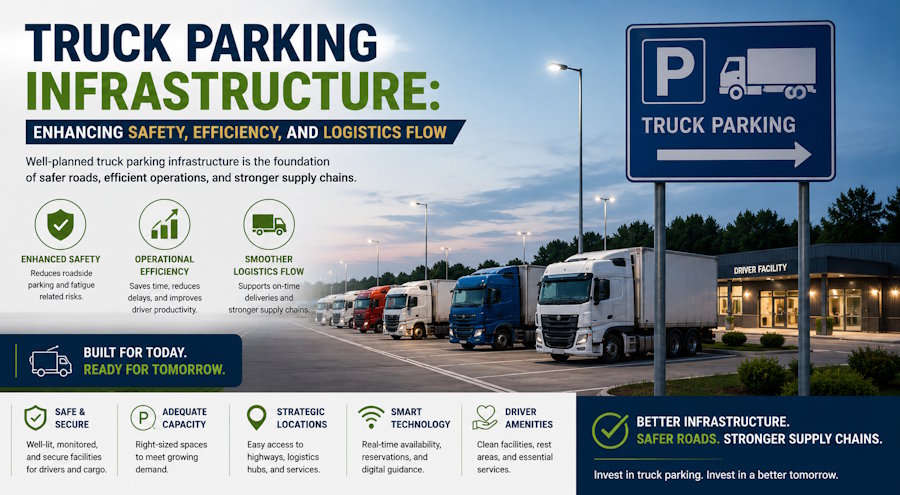
Introduction to Truck Parking and Its Growing Importance
Truck parking is a critical component of the transportation and logistics industry because it directly supports the movement of goods across cities, regions, and countries. As freight transportation continues to expand due to rising consumer demand and global trade, the need for safe, organized, and well-managed truck parking facilities has become increasingly important. These spaces are not just resting points for drivers but essential infrastructure that ensures road safety, regulatory compliance, and efficient supply chain operations.
Heavy-duty trucks require designated parking areas that can accommodate their size, weight, and operational needs. Without proper parking infrastructure, drivers are often forced to park in unsafe or unauthorized locations, which increases the risk of accidents, theft, and traffic congestion. Well-planned truck parking facilities help address these challenges by providing secure, accessible, and fully equipped resting and service areas.
Why Truck Parking Is Essential for Transportation Systems
Truck parking plays a vital role in maintaining the efficiency and safety of transportation networks. Long-haul drivers spend many hours on the road, and regulated rest periods are required to prevent fatigue-related accidents. Proper parking facilities allow drivers to comply with legal driving hour regulations while ensuring they have access to safe rest environments.
In addition to safety, truck parking supports supply chain efficiency by reducing delays. When drivers have access to designated parking areas, they can plan routes more effectively and avoid unnecessary detours. This improves delivery timelines and helps logistics companies maintain operational reliability.
Truck parking also contributes to road safety by reducing illegal roadside parking, which often creates hazards for other vehicles. Organized parking facilities help maintain traffic flow and reduce congestion on highways and urban roads.
Key Features of Modern Truck Parking Facilities
Modern truck parking areas are designed to meet the diverse needs of drivers and logistics operators. These facilities go beyond simple parking spaces and include a range of services that improve comfort, safety, and efficiency.
Spacious Parking Layouts
Truck parking areas are designed with wide lanes and large parking bays to accommodate heavy-duty vehicles, trailers, and long combinations. Proper spacing ensures easy maneuverability and reduces the risk of collisions.
Security Systems
Security is a top priority in truck parking facilities. Many locations are equipped with CCTV surveillance, gated access, lighting systems, and on-site security personnel to protect vehicles and cargo from theft or vandalism.
Rest and Accommodation Facilities
Drivers often spend extended hours on the road, so rest areas are essential. Many truck parking facilities include restrooms, showers, sleeping areas, and food services to support driver well-being.
Fuel and Maintenance Services
Some truck parking locations offer fuel stations, tire repair services, oil changes, and minor mechanical assistance. These services help drivers maintain their vehicles without leaving the facility.
Importance of Safety in Truck Parking Areas
Safety is one of the most important aspects of truck parking because large vehicles require careful handling even when stationary. Poorly designed parking areas can lead to accidents, damage to vehicles, and injuries.
Proper lighting, clear signage, and well-marked lanes are essential for preventing accidents during nighttime or low-visibility conditions. Security monitoring systems help deter criminal activity and ensure that both drivers and cargo remain protected.In addition, well-maintained surfaces reduce risks associated with uneven ground or poor drainage, which can cause vehicles to become unstable or damaged.
Challenges in Truck Parking Infrastructure
Despite its importance, truck parking infrastructure faces several challenges in many regions. One of the most common issues is limited availability of designated parking spaces, especially near highways and industrial zones.Overcrowding often forces drivers to park in unauthorized areas, which increases safety risks. Another challenge is uneven distribution of parking facilities, where some regions have insufficient infrastructure compared to demand.Maintenance is also a concern, as poorly maintained facilities can become unsafe and less attractive for drivers. Lack of basic amenities such as restrooms and food services further reduces usability.
Technological Advancements in Truck Parking Systems
Technology is transforming the way truck parking facilities are managed and utilized. Digital platforms now allow drivers to locate available parking spaces in real time, reducing time spent searching for safe parking.Smart parking systems use sensors and automated tracking to monitor space availability and optimize usage. Mobile applications provide reservation options, allowing drivers to book parking spots in advance.Some advanced facilities also use automated entry and payment systems, improving efficiency and reducing waiting times. These innovations help improve overall logistics planning and reduce operational stress for drivers and companies.
Economic Importance of Truck Parking Facilities
Truck parking infrastructure contributes significantly to the economy by supporting the logistics and transportation sector. Efficient parking systems help reduce delivery delays, improve supply chain reliability, and increase productivity.These facilities also generate employment opportunities in security, maintenance, hospitality, and fuel services. Additionally, they support local businesses by attracting drivers who spend money on food, repairs, and other services during rest stops.In industrial regions, well-developed truck parking areas enhance trade efficiency by ensuring smooth movement of goods and reducing transportation bottlenecks.
Environmental Considerations in Truck Parking Design
Modern truck parking facilities are increasingly designed with environmental sustainability in mind. Efficient lighting systems, such as LED technology, reduce energy consumption while maintaining safety standards.Proper waste management systems help minimize environmental pollution, while water conservation systems ensure responsible usage of resources. Some facilities also incorporate green spaces and eco-friendly materials to reduce their environmental footprint.In addition, reduced engine idling in designated parking areas helps lower emissions, contributing to cleaner air quality in surrounding regions.
Role of Truck Parking in Driver Health and Well-Being
Driver health is a critical factor in transportation safety, and truck parking facilities play an important role in supporting it. Long hours of driving can lead to fatigue, stress, and physical strain, making rest periods essential.Well-equipped parking areas provide drivers with opportunities to rest, eat, and recover before continuing their journey. Comfortable sleeping facilities and clean restrooms improve overall well-being and reduce the risk of fatigue-related accidents.Access to food services and relaxation areas also helps improve mental health and job satisfaction among drivers, contributing to better performance on the road.
Future Trends in Truck Parking Development
The future of truck parking is expected to be shaped by automation, sustainability, and smart infrastructure. Electric vehicle charging stations will become more common as the transportation industry shifts toward cleaner energy solutions. Artificial intelligence and data analytics will be used to optimize parking space management and predict demand patterns. Automated systems will further streamline operations, improving efficiency and reducing human error.There is also a growing trend toward integrating truck parking facilities with logistics hubs, creating centralized centers that combine storage, transportation, and rest services in one location.
Conclusion
Truck parking is an essential part of the transportation ecosystem, ensuring safety, efficiency, and comfort for drivers while supporting the smooth movement of goods across regions. Well-designed facilities reduce road congestion, improve logistics performance, and enhance driver well-being.With advancements in technology and increasing focus on sustainability, truck parking infrastructure is evolving into smarter, safer, and more efficient systems. Proper investment and planning in this area will continue to play a key role in strengthening global transportation networks and supporting economic growth.

