

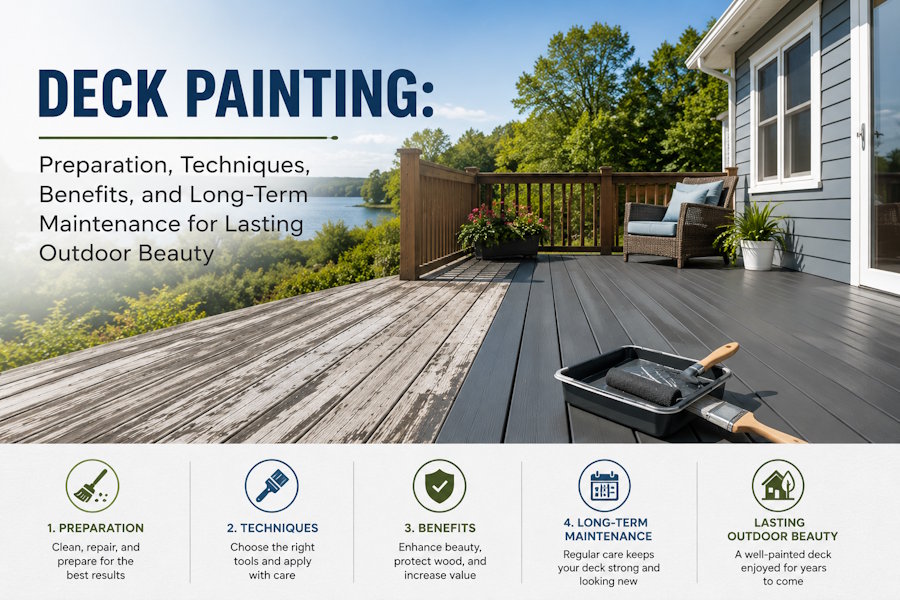
Deck painting is one of the most effective ways to restore, protect, and enhance the appearance of outdoor wooden surfaces. Over time, decks are exposed to harsh sunlight, rain, humidity, temperature changes, and general wear from daily use. Without proper protection, wood can fade, crack, rot, or become unsafe. A well-executed painting process not only improves visual appeal but also extends the structural life of the deck, making it a valuable investment for any property.
Understanding the process, materials, and maintenance involved in deck painting helps ensure long-lasting results and prevents costly repairs in the future.
Understanding Why Deck Painting Is Essential for Protection and Durability
A wooden deck is constantly exposed to environmental stress. Sunlight breaks down wood fibers, moisture leads to swelling and rot, and temperature fluctuations cause expansion and contraction. Over time, these natural forces weaken the structure and degrade its appearance. Deck painting creates a protective barrier that shields the surface from moisture penetration and UV damage. It seals the wood, reduces absorption of water, and minimizes the risk of mold and mildew growth. In addition to protection, paint also enhances the aesthetic appeal of the deck, giving it a fresh, clean, and well-maintained look.
Without proper coating, even high-quality wood can deteriorate quickly, leading to expensive repairs or replacement.
Difference Between Deck Painting, Staining, and Sealing
Before starting a project, it is important to understand the difference between painting, staining, and sealing. Each method serves a different purpose and offers different levels of protection and appearance.Painting provides a solid, opaque color finish that completely covers the wood grain. It offers strong protection and allows for a wide range of color options. Staining, on the other hand, penetrates the wood and enhances its natural grain while offering moderate protection. Sealing focuses mainly on moisture protection without significantly altering appearance.
Among these options, deck painting is often preferred when homeowners want maximum protection along with a refreshed, uniform appearance.
Proper Surface Preparation Before Deck Painting and Why It Matters
Surface preparation is the most important step in achieving a long-lasting paint finish. Even the highest quality paint will fail if applied to a poorly prepared surface. The deck must first be cleaned thoroughly to remove dirt, dust, grease, algae, and old peeling paint.Pressure washing is commonly used to deep clean the surface, ensuring that all contaminants are removed. Once cleaned, the deck must be allowed to dry completely before any painting begins. Moisture trapped in the wood can prevent proper adhesion and cause bubbling or peeling later.Sanding is another critical step. It smooths rough areas, removes old finishes, and opens the wood pores so that paint can adhere more effectively. Skipping preparation often leads to uneven coating and reduced durability.
Choosing the Right Paint for Deck Painting and How It Affects Performance
Selecting the right type of paint plays a major role in the final outcome and longevity of the deck surface. Exterior-grade acrylic latex paint is commonly used because of its durability, flexibility, and resistance to weather conditions.High-quality deck paints are designed to withstand UV rays, foot traffic, and moisture exposure. Some products also include anti-slip properties, making the surface safer during wet conditions.Color selection also matters. Lighter shades reflect heat and keep the surface cooler, while darker shades may absorb more heat but provide a richer appearance. The right choice depends on both aesthetic preference and environmental conditions.Using low-quality paint may lead to early fading, cracking, or peeling, reducing the effectiveness of the entire project.
Step-by-Step Process of Professional Deck Painting for Best Results
The deck painting process involves several carefully executed steps to ensure a smooth and durable finish. After preparation, a primer may be applied to improve adhesion and create a uniform base surface.
Once the primer is dry, the first coat of paint is applied evenly using brushes, rollers, or sprayers depending on the deck size and texture. It is important to apply thin, even layers rather than thick coats to avoid dripping and uneven drying. After the first coat dries completely, a second coat is usually applied to enhance durability and color depth. This layering process ensures better protection and a more polished appearance. Drying time between coats is essential and should not be rushed, as proper curing determines the strength of the finish.
Common Mistakes to Avoid During Deck Painting Projects
Many deck painting projects fail due to avoidable mistakes. One of the most common errors is skipping surface preparation, which leads to poor adhesion and early peeling. Painting over damp wood is another frequent mistake that traps moisture and damages the finish.Applying paint in extreme weather conditions, such as very hot or humid environments, can also affect drying and bonding. Using low-quality brushes or rollers may result in uneven coverage and visible streaks.Another mistake is applying a single thick coat instead of multiple thin layers, which reduces durability and increases the risk of cracking.Avoiding these mistakes significantly improves the lifespan and appearance of the painted deck.
Maintenance Practices to Extend the Life of a Painted Deck
After deck painting is complete, proper maintenance is necessary to preserve its condition. Regular cleaning helps prevent dirt buildup and keeps the surface looking fresh. Sweeping debris and washing the deck periodically reduces wear and tear.It is also important to inspect the surface for signs of peeling, cracking, or fading. Small damaged areas should be repaired quickly to prevent further deterioration. Reapplying a protective coat every few years helps maintain durability and appearance. Furniture placed on the deck should have protective pads to prevent scratches, and heavy objects should be moved occasionally to avoid pressure marks. Consistent care ensures that the deck remains strong, attractive, and safe for long-term use.
Environmental and Functional Benefits of Deck Painting
Deck painting provides more than just visual improvement. It plays a significant role in protecting wood from environmental damage, including moisture, sunlight, and pests. This protection helps reduce wood waste by extending the lifespan of existing structures.A well-painted deck also enhances outdoor usability by creating a clean and comfortable surface for relaxation, gatherings, and recreational activities. It improves safety by reducing splinters and surface damage.From an environmental perspective, maintaining and restoring existing decks is more sustainable than replacing them entirely, making deck painting a responsible choice.Investing in deck painting is cost-effective compared to frequent repairs or full replacement of wooden structures. A properly painted deck requires less maintenance and lasts significantly longer when maintained correctly.It also increases property value by improving curb appeal and outdoor aesthetics. A visually appealing and well-maintained deck creates a positive impression and enhances overall outdoor living space.
Over time, the cost of painting is far lower than the expense of rebuilding or replacing damaged wood structures, making it a practical long-term solution.
Final Thoughts on Achieving Durable and Attractive Deck Painting Results
Deck painting is a highly effective way to protect, restore, and enhance outdoor wooden surfaces. When done correctly, it provides long-lasting protection against environmental damage while improving visual appeal and usability.Success depends on proper preparation, high-quality materials, careful application, and consistent maintenance. By following the correct process and avoiding common mistakes, a painted deck can remain strong, attractive, and functional for many years.Ultimately, deck painting is not just a cosmetic upgrade but a long-term investment in the durability, safety, and beauty of outdoor living spaces.

