

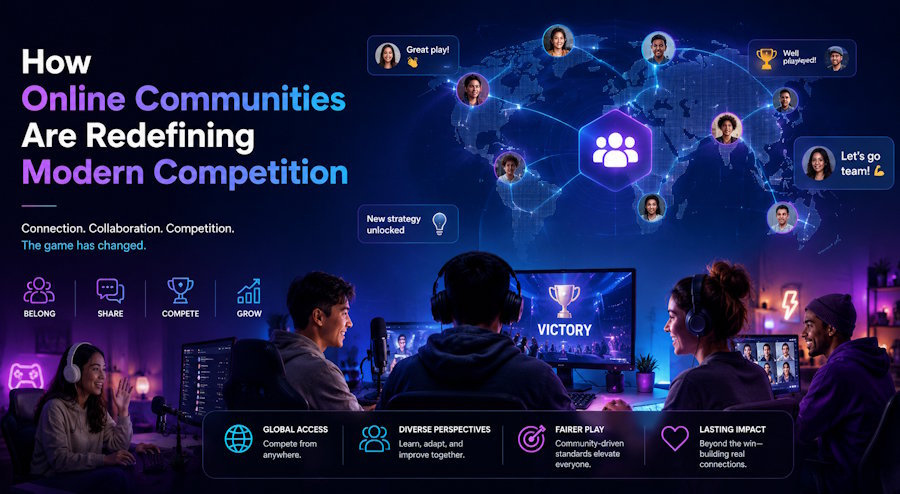
Competition has changed dramatically over the last decade. What once existed mostly in physical spaces has now expanded into digital communities that connect people across the world instantly. Online communities are no longer just places for discussion or entertainment. They have become environments where people compete, collaborate, build identities, and create cultures of recognition that feel more personal than ever before.
The modern competitive landscape is no longer limited to traditional sports or formal tournaments. Today, online groups, gaming communities, learning platforms, and social networks are shaping entirely new forms of competition that revolve around participation, engagement, creativity, and status within a digital environment.
The Shift From Traditional Competition to Digital Communities
In the past, competition was often structured around fixed systems. Organized sports, school rankings, and workplace performance created clear boundaries around who competed and how success was measured. Online communities changed that structure completely.
Now, competition can emerge naturally around shared interests. A gaming server, a discussion forum, or even a learning platform can create its own competitive culture. These environments encourage participation because they feel more accessible and personal than traditional systems.
Accessibility Changed Everything
One of the biggest reasons online competition has grown so quickly is accessibility. People no longer need to be physically present to compete or engage with others. Anyone with internet access can become part of a competitive community.
This accessibility has opened the door for people who may never have participated in traditional competitive environments. It has also created more diversity in the types of competition people engage in, from gaming and fitness to content creation and collaborative problem solving.
Competition Became More Continuous
Traditional competition usually happens at scheduled moments. Online communities operate differently. Competition now feels constant because interaction never fully stops.
Leaderboards update in real time. Discussions continue throughout the day. Achievements are shared instantly. This creates an environment where participation itself becomes part of the competitive experience.
Identity and Recognition in Online Spaces
Modern online competition is deeply connected to identity. People no longer compete solely for prizes or rankings. They compete for visibility, recognition, and social value within their communities.
The Importance of Personalized Recognition
Generic recognition no longer creates the same emotional impact. Online communities thrive on identity, which is why personalized forms of recognition have become increasingly important.
This can be seen in the growing popularity of items like custom wrestling belts within fan leagues, gaming groups, and online tournaments. These forms of recognition stand out because they feel connected to the personality and culture of the community itself. They create a stronger emotional response than traditional awards because they symbolize belonging and status.
Recognition as Social Currency
In online communities, recognition often functions as a form of social currency. Achievements are visible to others, which increases their value within the group.
People want recognition that feels memorable and visually meaningful because these rewards become part of how they present themselves within the community. A meaningful reward becomes more than a prize. It becomes part of personal identity.
The Role of Technology in Modern Competitive Culture
Technology has not only made online competition possible. It has changed the way people experience competition itself.
Real Time Interaction and Engagement
Online communities thrive because interaction happens instantly. Participants receive immediate feedback, recognition, and responses from others.
This creates stronger engagement and keeps people emotionally connected to the competitive environment. The speed of interaction makes achievements feel more visible and more rewarding.
Gamification Beyond Gaming
Gamification is no longer limited to video games. Many platforms now use competitive elements to increase participation and engagement.
Educational systems like sparx reader use structured progression and achievement based interaction to encourage consistency and motivation. These systems show how competition can exist in environments beyond entertainment, creating engagement through challenge and recognition.
Community Driven Competition
One of the most important changes brought by online communities is the shift toward community driven competition. Instead of being controlled entirely by institutions, many modern competitive environments are shaped by the participants themselves.
Shared Culture and Traditions
Online communities develop their own traditions, language, and systems of recognition. Over time, these traditions create stronger emotional attachment between members.
The competition becomes about more than winning. It becomes about participating in a shared culture that people feel connected to.
Emotional Investment in Communities
People often become emotionally invested in online communities because they spend significant time interacting within them. Friendships, rivalries, and shared experiences strengthen this connection.
This emotional investment makes competition feel more personal and more meaningful than many traditional systems.
The Psychology Behind Digital Competition
Online competition works because it taps into core psychological motivations. Recognition, progression, and belonging all play major roles in why people continue to engage.
The Desire for Visibility
People naturally want their efforts to be acknowledged. Online communities amplify this because achievements are often public and immediately visible to others.
This visibility creates stronger motivation and encourages continued participation.
Progression Creates Engagement
Digital communities are especially effective at creating progression systems. Small achievements, rankings, and milestones give people a constant sense of movement and improvement.
This keeps users engaged over long periods of time because they always feel connected to a larger goal.
How Storytelling Shapes Modern Competition
Modern online competition is not just about results. It is about narratives. Communities thrive when people feel like they are part of an ongoing story.
Turning Achievements Into Shared Moments
Achievements become more powerful when they are shared and discussed within the community. A win is no longer private. It becomes part of a collective experience.
This storytelling aspect increases emotional attachment and strengthens the culture of the community.
Digital Platforms Extend the Life of Competition
The internet allows moments of success to continue existing long after they happen. Discussions, clips, posts, and shared content keep achievements alive within the community.
Platforms like Sparx Reader contribute to this shift by shaping how digital stories and achievements are consumed. Recognition is no longer limited to a single moment. It becomes part of an ongoing narrative that communities continue to engage with.
The Future of Online Competitive Culture
Online communities will continue to redefine competition because they offer something traditional systems often cannot. They create environments where identity, participation, recognition, and storytelling all exist together.
More Personalized Experiences
Future online competition will likely become even more personalized. Communities will continue developing unique systems of recognition that reflect their culture and identity.
Competition Will Become More Social
The social aspect of competition will continue growing. People increasingly value the relationships and shared experiences created through participation, not just the final outcome.
Conclusion
Online communities are redefining modern competition by making it more personal, accessible, and emotionally engaging. Competition is no longer limited to formal events or physical spaces. It now exists inside digital environments where people build identities, create traditions, and share recognition in ways that feel deeply connected to community culture.
As technology continues to evolve, online competition will become even more interactive and community driven. What will remain constant is the human desire to connect, compete, and be recognized in ways that feel meaningful.

