

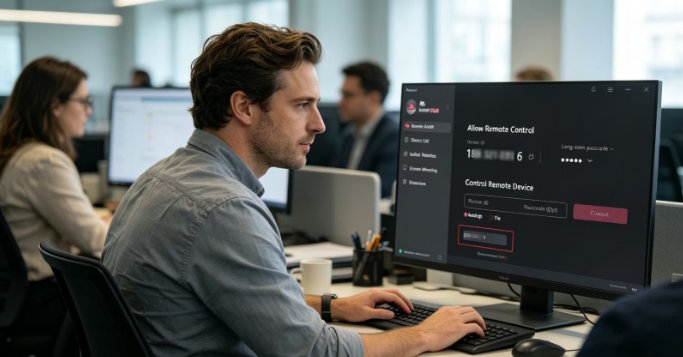
Remote infrastructure management has become a core requirement for developers, system administrators, and homelab enthusiasts in 2026. Whether you are managing self-hosted servers, cloud-connected VMs, NAS devices, or distributed lab environments, secure and reliable remote access is no longer optional — it is essential.
However, many traditional remote desktop tools were not designed with persistent infrastructure management in mind. Frequent authentication prompts, unstable unattended sessions, limited security controls, and performance bottlenecks create unnecessary friction for technical users.
This is why many engineers are now looking for a more reliable secure remote desktop solution that supports stable unattended access, strong encryption, and privacy-focused remote control capabilities.
In modern infrastructure environments, security and reliability matter more than convenience alone. As highlighted by the UK National Cyber Security Centre, remote access systems are one of the most sensitive attack surfaces in distributed computing environments — requiring strong authentication and encrypted connections.
AweSun positions itself as a practical solution for these challenges by combining secure remote management features with stable performance for always-on systems.
Why Homelab and Server Management Needs a Different Approach
Homelabs and small-scale infrastructure setups are no longer just hobby projects. Many developers now use them for:
- Self-hosted applications
- Docker/Kubernetes environments
- Media servers (Plex, Jellyfin)
- CI/CD pipelines
- Network testing environments
- Edge computing experiments
Unlike casual remote desktop usage, these systems require:
- 24/7 availability
- Stable unattended access
- Secure authentication layers
- Minimal downtime
- Remote reboot and recovery capabilities
Traditional consumer-focused remote tools often fail in these scenarios due to session instability or restrictive security policies.
The Problem with Traditional Remote Access Tools
Most legacy remote desktop platforms are optimized for short-term support sessions, not continuous infrastructure control.
Common issues include:
- Session timeout interruptions
- “Commercial use” limitations
- Weak unattended access reliability
- High CPU overhead on host machines
- Limited privacy controls
- Dependency on manual approvals
For sysadmins managing multiple systems, these limitations can become operational risks.
Why Security Is the Core Requirement in 2026
Remote access is now one of the most targeted attack vectors in cybersecurity.
Modern threats include:
- Credential brute-force attempts
- Session hijacking
- Unauthorized access via exposed ports
- Man-in-the-middle attacks
- Weak authentication exploitation
This makes encryption and authentication mechanisms critical for any remote management tool.
How AweSun Handles Secure Remote Management
AweSun is designed to support persistent remote control environments with a focus on both usability and security.
Key features include:
- End-to-end encrypted remote sessions
- RSA/AES-based security layers
- Unattended access mode
- Device authorization controls
- Privacy screen functionality
- Multi-device management support
These features make it suitable for both personal homelabs and small business infrastructure setups.
Understanding Unattended Access in Real Environments
Unattended access is one of the most important features for infrastructure managers.
It allows administrators to:
- Access systems without user confirmation
- Perform maintenance remotely
- Reboot servers after updates
- Troubleshoot headless machines
- Manage systems outside working hours
This is especially useful for:
- Headless Linux servers
- Remote Windows VMs
- NAS devices
- Cloud-connected home labs
A stable unattended access system reduces the need for physical intervention, which is critical in distributed environments.
Privacy Screen: A Feature Built for Sensitive Environments
One often-overlooked feature in remote management is privacy control on physical machines.
AweSun includes a privacy screen function that allows:
- Blacking out the local display during remote sessions
- Preventing on-site visibility of sensitive operations
- Protecting confidential workflows
- Enhancing operational security in shared environments
This is particularly valuable for developers working in shared offices or home environments.
Comparison Table: AweSun vs Traditional Remote Management Tools
|
Feature |
AweSun |
Traditional Tools |
Enterprise RMM Tools |
|
Unattended Access |
Stable & easy setup |
Limited or inconsistent |
Advanced but complex |
|
Encryption Standards |
AES / RSA |
Varies |
High |
|
Privacy Screen |
Yes |
Rare |
Yes |
|
Setup Complexity |
Simple |
Moderate |
High |
|
Resource Usage |
Optimized |
Medium to high |
High |
|
Multi-Device Control |
Yes |
Limited |
Yes |
|
Cost Efficiency |
High |
Moderate |
Expensive |
Real-World Use Cases for Developers and Sysadmins
Homelab Management
Developers running homelabs can remotely manage:
- Docker containers
- Virtual machines
- Network services
- Storage systems
Without needing constant physical access.
Remote Server Maintenance
System administrators can:
- Apply patches
- Restart services
- Monitor logs
- Fix configuration issues
From anywhere in the world.
DevOps and CI/CD Monitoring
For teams running pipelines:
- Build servers can be monitored remotely
- Failures can be debugged instantly
- Deployments can be managed securely
Headless System Control
Many infrastructure systems run without monitors.
Unattended remote access allows full control over:
- Linux servers
- Raspberry Pi clusters
- Cloud edge nodes
Why Simplicity Matters in Infrastructure Tools
One of the biggest issues with enterprise-grade remote management systems is complexity.
While powerful, they often require:
- Heavy configuration
- Dedicated training
- Complex deployment pipelines
- Expensive licensing
AweSun takes a more lightweight approach, making it accessible to:
- Individual developers
- Small DevOps teams
- Startup infrastructure setups
- Independent system admins
Security vs Usability: Finding the Balance
In remote infrastructure management, there is always a trade-off between security and usability.
Too much security = difficult access
Too much simplicity = security risks
AweSun attempts to balance both by offering:
- Strong encryption
- Simple authentication setup
- Controlled device access
- Optional privacy features
This makes it suitable for both technical and semi-technical users.
The Future of Remote Infrastructure Management
As systems become more distributed, remote management tools will evolve toward:
- Zero-trust architectures
- AI-assisted monitoring
- Lightweight remote agents
- Stronger identity-based access control
Homelabs today are often production-grade environments tomorrow. That means the tools used to manage them must be reliable, secure, and scalable.
Conclusion
Remote infrastructure management has become a critical part of modern development workflows. From homelabs to production servers, the need for secure, stable, and always-available remote access continues to grow.
Traditional tools often struggle with the demands of persistent system control and security-sensitive environments.
By combining unattended access, encryption-based security, and privacy-focused controls, AweSun provides a practical solution for developers and system administrators who need reliable remote management without unnecessary complexity.
As infrastructure continues to decentralize, tools like this are becoming a core part of the modern DevOps ecosystem.
Frequently Asked Questions
What is unattended access in remote desktop software?
Unattended access allows users to connect to a remote system without requiring someone on the other end to approve the session.
Is AweSun suitable for server management?
Yes. AweSun supports stable remote access, making it suitable for managing servers, VMs, and homelab environments.
How secure is AweSun for remote infrastructure control?
It uses AES and RSA encryption protocols along with device-based authentication to secure remote sessions.
What is a privacy screen feature?
It allows the remote system’s local display to be blacked out during a session to protect sensitive operations from on-site viewing.
Can developers use AweSun for DevOps workflows?
Yes. It can be used for remote monitoring, maintenance, and control of development and deployment environments.

