

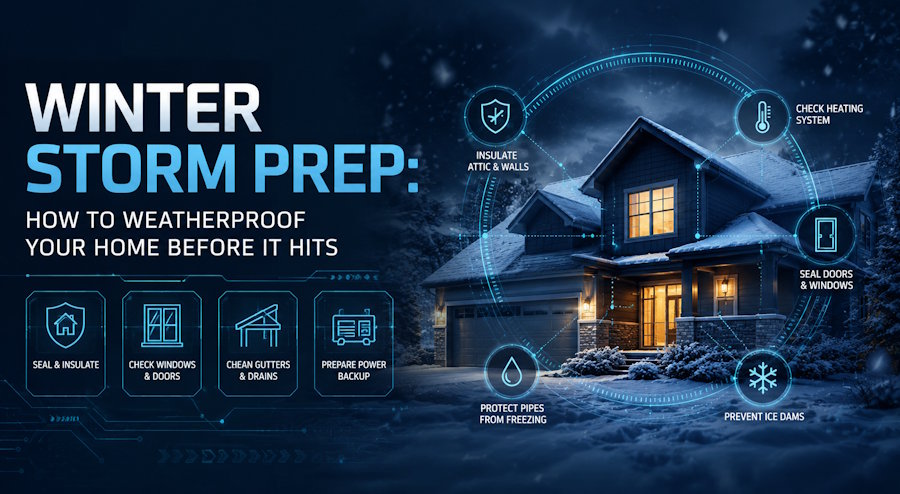
Winter storms stress a house in several ways at once. Snow loads strain framing, ice traps water, wind drives cold air through gaps, and outages can shut down heat for hours. Careful prep lowers the chance of frozen pipes, roof leaks, and indoor temperature drops that threaten health and safety. A home that has been checked early is easier to manage when roads close, stores empty, and repair crews cannot arrive quickly.
Start Outside First
Outdoor work deserves attention before the forecast turns urgent. Ladders become risky in the frost, and simple fixes can turn into dangerous chores once sleet starts. Many households look for clear steps on how to prepare house for winter storm while conditions are still calm, which is the right moment to inspect gutters, siding, vents, and roof edges. Small openings often admit meltwater, drifting snow, or sharp drafts.
Clear the Roofline
Blocked gutters hold meltwater against the roof edge, where it can refreeze and back up under shingles. Clean channels help runoff move away before ice dams form. Flashing near chimneys, skylights, and vent boots also needs a close check. If snowfall is heavy in that area, a roof rake can reduce excess weight after accumulation while keeping feet safely on the ground.
Seal Draft Paths
Cold air often slips in through cracked caulk, worn weatherstripping, and openings around utility entries. Sealing those leaks helps indoor heat stay steady and reduces strain on the furnace. Older windows may benefit from insulating film during the coldest stretch of the season. Door sweeps matter too, because a thin gap at floor level can chill living spaces far more than many people expect.
Guard the Pipes
Frozen plumbing can rupture without warning, then release gallons of water once temperatures rise. Pipes in basements, crawl spaces, garages, and exterior walls need insulation before severe cold arrives. During a hard freeze, cabinet doors under sinks can stay open so warmer room air reaches the supply lines. A slow drip may help in vulnerable areas, though insulation and draft control remain the stronger defense.
Check Heating Equipment
Heating systems need attention before the first serious freeze, not after service calls begin stacking up. Filters should be changed, supply vents kept open, and furnaces or boilers observed for unusual odor, soot, or noise. Fireplaces, pellet stoves, and space heaters require proper clearance from fabric, paper, and furniture. Backup heat is useful only if fuel, batteries, and written operating steps are already in place.
Test Safety Alarms
Tightly sealed homes and longer heater use raise the danger of carbon monoxide exposure during winter. Smoke alarms and carbon monoxide detectors need fresh batteries and to be tested regularly. Units near sleeping areas matter most because early symptoms can be missed overnight. Portable generators must stay outdoors, well away from doors, windows, and attached garages, even during bitterly cold or blowing snow.
Build an Outage Kit
Power failures can develop quickly during wet snow, freezing rain, or strong winds. A practical home kit includes flashlights, extra batteries, blankets, bottled water, shelf-stable food, medications, and a battery-powered radio. Pet supplies deserve space in that container as well. Phones should be charged before any warning, and vehicles need fuel in case warming centers or urgent appointments become necessary.
Trim Trees and Branches
Ice adds surprising weight to weak limbs, and wet snow can bring them down onto roofs, vehicles, or utility lines. Pruning damaged branches before winter lowers that risk and helps keep paths clear around driveways and walkways. Trees leaning near the structure deserve review by a qualified arborist. Outdoor furniture, hoses, and loose tools should also be stored so that the wind cannot send them into the glass.
Add Insulation Where It Counts
Heat loss often begins in attics, crawl spaces, and wall cavities that were never properly insulated. Better coverage helps indoor temperatures stay more even and reduces the chance of roof ice caused by uneven warming. Pipe wrap works best when the surrounding area is insulated, too. Even a modest fix, such as insulating an attic hatch, can improve comfort and reduce heating demand during a long freeze.
Document and Review Coverage
Storm prep includes paperwork as much as caulk, salt, and batteries. Homeowners benefit from reviewing insurance details before winter and keeping current photos of each room. Images of ceilings, floors, appliances, and valuable items can help support a claim after damage. Important records should stay in a waterproof container. Key phone numbers for insurers, utilities, plumbers, and electricians should remain easy to find.
Know the Alerts
Weather alerts help households decide when to finish last checks and stop traveling. A winter storm watch means hazardous conditions are possible within the next day or two, so supplies and home tasks should move up the list. A warning means severe weather is expected soon or already underway. At that stage, people are safer indoors, with heat sources, water, and lighting ready.
Conclusion
Weatherproofing works best as a checklist completed in stages, not a rushed response after the first flakes fall. Clean gutters, sealed leaks, insulated pipes, tested alarms, dependable heat, and stored supplies each reduce a separate hazard. Taken together, those measures help keep a house warmer, drier, and safer through snow, ice, and outages. Early preparation protects property, limits stress, and supports health when winter conditions turn severe.

