

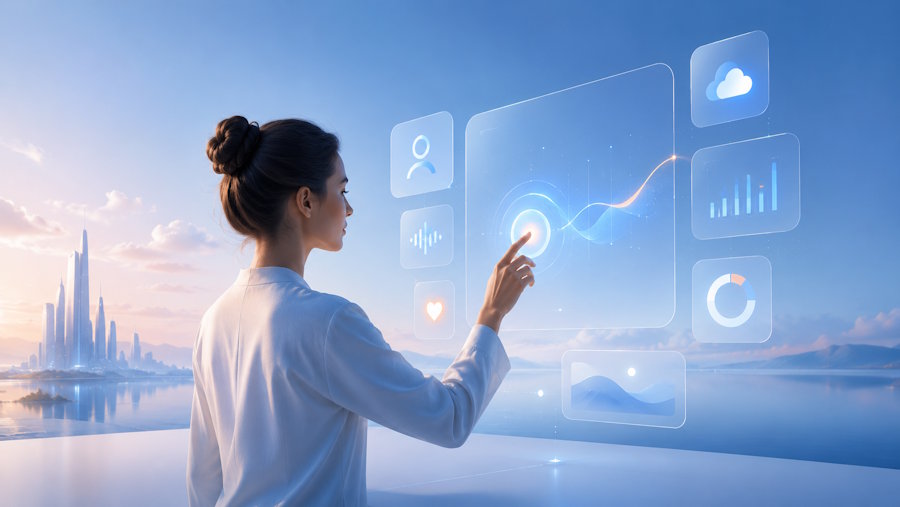
Technology has never been more powerful.
Across manufacturing, automation, transportation, healthcare, and countless other industries, machines are capable of performing tasks that would have seemed impossible only a few decades ago. Yet as systems become more sophisticated, one challenge continues to grow in importance: how people interact with them.
No matter how advanced a machine becomes, humans still need a practical way to monitor, manage, and control it.
This is where Human Machine Interfaces, commonly known as HMIs, play a critical role.
Modern organizations increasingly rely on advanced HMI systems because effective interfaces help bridge the gap between complex technology and the people responsible for operating it.
Complexity Creates New Challenges
As equipment becomes more capable, the amount of information generated by machines continues to increase.
Operators may need access to:
- Performance data
- Diagnostics
- Safety information
- Operational status
- Maintenance alerts
- Process controls
Without an effective interface, managing all of this information can quickly become overwhelming.
More Information Doesn't Always Mean Better Decisions
One of the biggest challenges in modern technology is presenting information clearly.
Users need access to important data without being distracted by unnecessary complexity.
Successful interface design focuses on helping people understand information quickly and efficiently.
Simplicity Has Become a Competitive Advantage
For many years, advanced technology was often associated with complicated interfaces.
Today, the opposite is increasingly true.
The best systems are frequently those that simplify complex tasks.
Modern HMI design emphasizes:
- Clarity
- Accessibility
- Ease of use
- Faster learning curves
- Improved productivity
The goal is helping people work more effectively without requiring extensive technical expertise.
User Experience Is Driving Innovation
The influence of consumer technology has changed expectations across nearly every industry.
People now interact daily with smartphones, tablets, and digital platforms that prioritize intuitive design.
As a result, industrial users expect similar experiences when working with professional equipment.
Good Design Improves Performance
When interfaces are easier to understand, users can focus more attention on their responsibilities.
This often leads to:
- Fewer errors
- Faster response times
- Better efficiency
- Increased confidence
The benefits extend beyond convenience alone.
Human and Machine Collaboration Is Evolving
Automation is sometimes discussed as though machines are replacing people entirely.
In reality, most industrial environments still depend heavily on human oversight and decision-making.
The role of HMIs is to strengthen that relationship.
Effective interfaces allow operators to:
- Monitor systems
- Analyze conditions
- Respond to issues
- Optimize performance
This collaboration helps organizations achieve better outcomes.
The Demand for Better Interfaces Continues Growing
Industries are becoming more connected, data-driven, and automated.
As that trend continues, the importance of interface design will only increase.
Many organizations are investing in solutions developed by Barantech because they recognize that effective interaction between people and machines remains essential regardless of how advanced the technology becomes.
The Future Is Easier, Not Harder
One of the most interesting aspects of modern technology is that increasing sophistication often leads to simpler user experiences. Behind every intuitive interface may be a highly complex system, but users don't need to see that complexity to benefit from it. The future of Human Machine Interfaces isn't about adding more layers of technology—it's about making powerful systems easier, safer, and more intuitive for people to use every day.

