

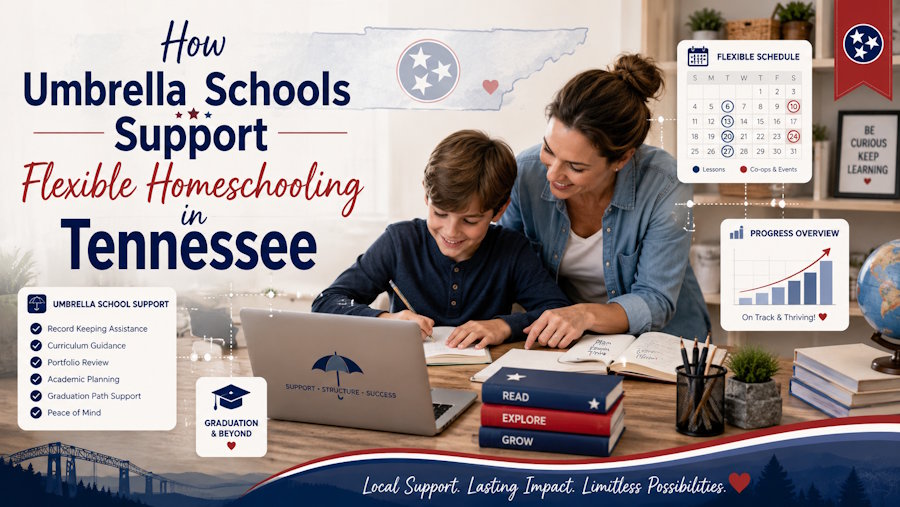
What Are Umbrella Schools?
Umbrella schools, sometimes called cover schools, offer a structured way for families to homeschool in Tennessee. They act as a link between homeschooling families and the state's educational rules. These schools let parents keep control over their child's education while providing support and oversight. Many umbrella schools in Tennessee have ties to churches and follow certain accreditation rules.
How Umbrella Schools Function in Tennessee
These institutions help families meet state homeschooling laws. They handle paperwork, like sending student details to local school districts. Umbrella schools also keep attendance records and might help with other state-required documents, such as test results for certain grades. While they offer guidelines, families often get to pick their own learning materials. This flexibility means parents can adjust their child's schooling to fit individual learning styles and needs.
Key Services Provided by Tennessee Umbrella Schools
Many umbrella schools provide different kinds of help. This can include access to learning materials, advice for parents new to homeschooling, and group activities. These activities help kids socialize through field trips and events. Some umbrella schools might require students to take tests at specific grade levels. This helps make sure educational standards are being met. Partnering with an umbrella school can simplify the homeschooling journey.
Here's a quick look at what they offer:
- Legal Compliance: Handling necessary state reporting.
- Record Keeping: Maintaining attendance and academic records.
- Curriculum Guidance: Assisting with the selection of educational materials.
- Community Support: Organizing events and activities for students and families.
Umbrella schools provide a framework that supports families in their homeschooling efforts while also ensuring they follow Tennessee's educational requirements. They are a popular choice for many families.
Navigating Enrollment and Compliance
The Enrollment Process for Umbrella Schools
Getting started with an umbrella school in Tennessee involves a few key steps. First, families typically select an umbrella school from the state's approved list. Then, they contact the school directly to understand its specific enrollment procedures and any associated fees. This direct communication is important because each umbrella school has its own policies.
The umbrella school acts as your liaison for legal compliance. This means they handle much of the paperwork that independent homeschoolers would manage themselves. Families will need to provide the umbrella school with necessary documentation, which might include student information, proof of parental education, such as a high school diploma or GED, and immunization records or exemptions. For parents preparing for GED-related requirements or reviewing core math skills, a GED Math Practice Test PDF can be a helpful study resource before completing enrollment paperwork. The umbrella school then keeps these records on file.
It's wise to begin this process early. Enrollment deadlines can vary, and starting ahead of time prevents last-minute rushes. This allows ample opportunity to gather all required documents and ask any questions you might have about the umbrella school's requirements or services. This proactive approach makes the transition smoother for everyone involved.
Adhering to Umbrella School Policies
Once enrolled, families must follow the specific policies set forth by their chosen umbrella school. These policies often cover curriculum choices, attendance tracking, and academic progress reporting. While umbrella schools offer flexibility, they also provide a framework to ensure educational standards are met.
Some umbrella schools may offer a recommended curriculum or require families to submit a curriculum plan for approval. Others might be more hands-off, allowing families complete freedom in selecting educational materials. Understanding these guidelines is key to a successful homeschooling year with your umbrella school.
Regular communication with the umbrella school is also a common policy. This might involve periodic check-ins, submitting progress reports, or participating in school events. These interactions help the umbrella school monitor student progress and provide support when needed, making sure you stay on track with your homeschooling goals.
Legal Compliance and Record Keeping
One of the main advantages of using an umbrella school is their role in managing legal compliance. In Tennessee, homeschooling families have specific requirements, such as maintaining records of attendance and instruction. An umbrella school helps simplify this by keeping these records on behalf of the family. Graduates Academy supports families exploring Tennessee umbrella schools by offering legal homeschooling coverage, attendance tracking, academic reporting, and record-keeping tools that help parents stay organized while focusing on instruction.
Families will need to provide the umbrella school with the necessary information for record keeping. This typically includes details about the student's educational progress, attendance logs, and any standardized test results if applicable. The umbrella school then ensures these records meet state requirements.
The umbrella school takes on the responsibility of maintaining official student records, which can significantly reduce the administrative burden on parents. This allows families to focus more on the educational experience itself rather than the administrative details of compliance. This partnership is a core function of how umbrella schools support flexible homeschooling in Tennessee.
Benefits of Partnering with Umbrella Schools
Reduced Administrative Burden for Families
Partnering with an umbrella school can significantly lighten the load for homeschooling families. Instead of managing all the paperwork and compliance details themselves, parents can delegate many of these tasks. This means less time spent on administrative duties and more time focused on the actual education and well-being of their children. It's a practical way to simplify the homeschooling process.
Think of it like this: instead of being the principal, teacher, and registrar all rolled into one, you can focus on being the teacher and parent. The umbrella school handles the official record-keeping and ensures that all state requirements are met. This support is a major reason why many families choose this route for their homeschooling journey.
This reduction in administrative work is a key benefit. It allows families to dedicate their energy to creating a rich learning environment, rather than getting bogged down in bureaucratic details. The umbrella school acts as a helpful partner in this regard.
Access to Guidance and Resources
Umbrella schools offer more than just administrative support; they provide a network of guidance and resources. Families can tap into the experience of educators and seasoned homeschoolers. This access can be invaluable, especially for those new to homeschooling or facing specific educational challenges.
These schools often have a wealth of information on curriculum choices, teaching strategies, and educational tools. They can help parents select materials that best fit their child's learning style and academic goals. This guidance helps ensure a more effective and tailored educational experience.
- Curriculum advice
- Teaching method suggestions
- Access to educational materials
Fostering Community Connections
Homeschooling doesn't have to be an isolated experience. Umbrella schools often serve as hubs for the homeschooling community. They organize events, field trips, and group activities that allow students to socialize and learn together. This helps build a sense of belonging.
These connections are important for both students and parents. Students get opportunities to interact with peers who share similar educational paths, while parents can connect with other homeschooling families. This shared experience can lead to lasting friendships and a strong support system.
Building a community around homeschooling provides a vital social outlet and a shared sense of purpose for families.
Participating in umbrella school activities can provide a structured way for children to engage with others. It offers a balance to the individualized nature of homeschooling, ensuring social development alongside academic progress. This aspect of umbrella schools is often highly appreciated by families.
Choosing the Right Umbrella School
Researching Available Options
Finding the right umbrella school in Tennessee is a big step. It's not a one-size-fits-all situation. You'll want to look at what each school offers. Some might be religiously affiliated, while others are secular. Think about the size of the school and the community it serves. Do your homework to find a good fit.
Consider the types of support they provide. Do they have a list of approved curricula, or do they let you pick anything? What kind of communication do they have with families? It's worth spending time on this initial research phase. This helps make sure you're setting yourself up for a successful homeschooling experience.
Factors to Consider When Selecting a School
When you're looking at different umbrella schools, a few things really stand out. First, check their policies on curriculum. Some schools have specific requirements, while others offer more freedom. This is a big deal for tailoring your child's education. Also, look at the fees involved. Umbrella schools usually have annual tuition, and these costs can vary.
Think about the support services they offer. Do they have academic advisors? Are there opportunities for socialization or group activities? Some umbrella schools are more hands-on than others. It's important to find a balance that works for your family's needs and your child's learning style. Remember, the goal is to find a partner in your homeschooling journey.
Aligning with Your Educational Philosophy
Your educational philosophy is the bedrock of your homeschooling. Does the umbrella school support your approach? For example, if you believe in project-based learning, does the school's structure allow for that? Or if you prefer a classical education model, can the umbrella school accommodate it?
It's also about the school's overall mission. Does it align with your family's values? Some umbrella schools are faith-based, and that might be important to you. Others focus purely on academic structure. Make sure the school's ethos matches your own. This alignment makes the partnership smoother and more effective for everyone involved. Choosing the right umbrella school means finding a place that respects and supports your vision for your child's education.
Curriculum Flexibility and Support
Tailoring Education to Individual Needs
Umbrella schools in Tennessee really shine when it comes to letting families shape their child's education. It's not a one-size-fits-all deal. Parents can pick and choose what works best for their kid's learning style and pace. This means a child who zooms through math can move ahead, while another who needs more time with reading gets that extra attention. This level of customization is a big win for homeschooling families.
It’s all about meeting the student where they are. If a child has a special interest, like dinosaurs or space, the curriculum can be adjusted to explore those topics more deeply. This makes learning feel less like a chore and more like an adventure. The flexibility allows for a truly personalized educational journey.
Guidance in Curriculum Selection
Choosing the right materials can feel overwhelming, but umbrella schools are there to help. They often have staff who can guide parents through the maze of available curricula. Think of them as knowledgeable advisors who can point you toward resources that align with your child's needs and your family's goals.
These schools understand that different subjects might require different approaches. They can suggest resources for core subjects like math and science, as well as for electives or enrichment activities. This guidance helps families build a well-rounded educational plan without the guesswork.
Support Services Beyond Academics
It's not just about books and tests. Umbrella schools often provide support that goes beyond the academic side of things. This can include help with record-keeping, which is a huge relief for many parents. They also might offer advice on educational strategies or connect families with tutors if needed.
Some umbrella schools even help with things like planning for high school graduation or creating official transcripts. This kind of support is super helpful as students get older. It means parents have a partner in the educational process, not just a compliance checker. The goal is to make the homeschooling experience smoother and more successful for everyone involved.
Testing and Accountability Frameworks
Standardized Testing Requirements
For families homeschooling independently in Tennessee, there are specific testing requirements. Students in the 5th, 7th, and 9th grades must take a standardized achievement test. This test can be arranged through your local school district or a third-party provider. The results are important for demonstrating academic progress and must be submitted to the local superintendent by June 30th each year. This requirement helps ensure that students are meeting educational benchmarks.
Assessment Policies of Umbrella Schools
Umbrella schools often have their own assessment policies, which can differ from state requirements for independent homeschoolers. Some umbrella schools might not mandate standardized testing, instead focusing on internal assessments or portfolio reviews. This flexibility is a key benefit for families seeking alternatives to traditional testing. However, it's vital to understand the specific assessment approach of any umbrella school you consider. They may track progress through regular assignments, projects, and teacher evaluations, aligning with their own curriculum standards.
Demonstrating Academic Progress
Regardless of the chosen path, demonstrating academic progress is a common goal. For independent homeschoolers, this means meeting the state's testing requirements. For those under an umbrella school, progress might be shown through submitted work samples, report cards issued by the umbrella school, or participation in their specific assessment framework. Keeping a portfolio of your child's work is always a good practice, offering a tangible record of their learning journey and achievements. This documentation can be useful for various purposes, including future educational transitions.
Conclusion
For families in Tennessee considering homeschooling, umbrella schools present a structured yet flexible path. They help meet state requirements while allowing parents to tailor education to their child's needs. By offering guidance, administrative support, and community connections, these schools can make the homeschooling journey smoother and more rewarding. Careful research into available options will help families find the right fit for their unique educational goals and values.

