

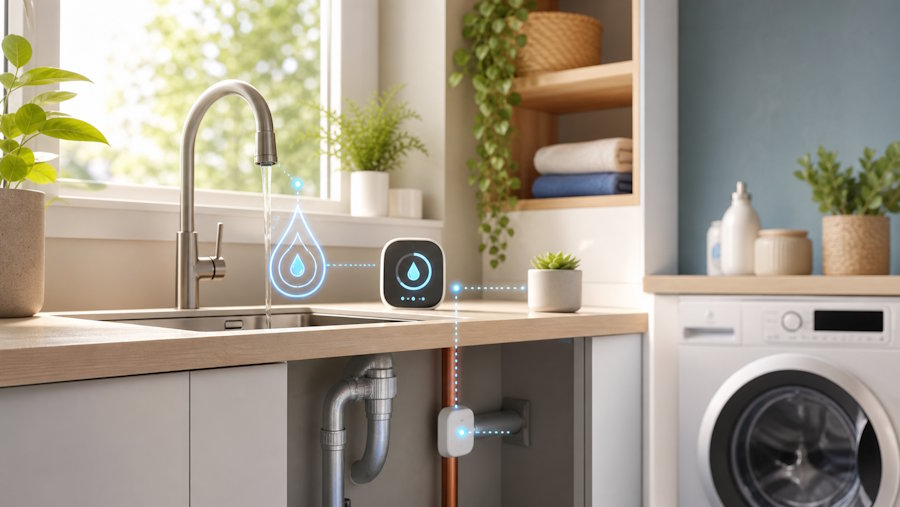
Most people don't think about water waste until the bill arrives. And even then, they blame the lawn, the kids, the dishwasher — anything but the slow drip inside the wall that's been going since March. Water waste at home is invisible by design. Smart technology is finally making it visible.
This article covers what actually works in 2026: the devices, the habits they reinforce and where the real savings are hiding.
Where Smart Monitoring Actually Fits In
The plumbing industry has been slow to digitize. Scheduling a repair used to mean phone tag and guesswork. That's shifting. Teams now use plumbing scheduling software to dispatch faster, track job history per address, and flag recurring issues that point to systemic problems. Faster response times mean less water lost between "something feels off" and "someone actually came to fix it."
The bigger shift, though, is what's happening inside the home itself. Leak detection has gone from "a plumber with a flashlight" to a $40 sensor that texts your phone before the water reaches the floorboards.
Smart Leak Sensors: Small Devices, Real Difference
The basic version is simple. A puck-shaped sensor sits under the kitchen sink or behind the washing machine. Water touches it, your phone buzzes. Done.
Useful, but reactive. You still need water on the floor before anything happens. Flow monitors take a different approach.
They clamp to your main water line and watch the whole system. After a week or so, the software learns your household's patterns — when showers happen, when the dishwasher runs. Anything outside that normal range triggers an alert. Water running at 3 AM when nobody's home? That's a flag.
Moen's Flo Smart Water Monitor works this way. According to Moen, the device can reduce more than 90% of annual household water waste — which sounds like marketing until you realize how quietly most home leaks operate. A stuck toilet fill valve hums in the background for weeks. Nobody notices until the water bill doubles.
Hydrific's Droplet goes further on sensitivity. One unit on the main pipe, and it tracks the entire system without additional sensors scattered around.
The practical difference:
- Point sensors (puck-style, under sinks or near water heaters): catch pooling water fast and cheap. Miss hidden leaks inside walls.
- Flow monitors (clamped to main pipe): watch the full picture for unusual patterns. Take a couple of days to calibrate, but catch what pucks can't.
Both have a place. The flow monitor is what turns a reactive setup into a proactive one.
Smart Irrigation: The Slow Bleed Outdoors
Indoor leaks are dramatic. Outdoor irrigation is the waste most people don't track at all.
A meaningful share of household water use happens outside and a chunk of that gets lost to evaporation, runoff, or watering on a day it's already raining. Smart irrigation controllers fix the last part by pulling local weather data before running any cycle.
Rachio's Gen 3 controller is the best-known option. It skips scheduled watering when rain is coming or soil moisture is already sufficient, and it learns which yard zones consistently get over-watered. The EPA's WaterSense program has certified Rachio controllers — worth noting if you're looking for a utility rebate, since many water districts now offer money back for certified smart controllers.
The less glamorous alternative: a basic soil moisture sensor. Plug it in, connect it to your existing timer, and it won't water if the ground is already wet. No app, no subscription, no learning curve. Costs under $30. Works as promised.
RO Systems and the Efficiency Math
Reverse osmosis filters are popular for a reason — they remove contaminants that other filtration methods miss. The old problem: for every gallon of filtered water produced, traditional systems dump three or four gallons down the drain.
That ratio has improved. Modern countertop RO systems typically achieve a 2:1 or 3:1 pure-to-drain ratio. Top models reach 4:1 or 5:1. The industry now uses "pure-to-drain ratio" as the standard metric — higher numbers mean better efficiency.
If your unit is more than five years old, it's worth checking that number. Current-gen systems with OLED displays also show real-time filter life and water quality, so filters get replaced when actually needed — not too early, not too late.
Efficiency here isn't just about the filter membrane. It's the full loop: water in, clean water out, drain waste. Smart systems surface that information. Older ones just run quietly in the background, wasting more than they should.
Apps and Alerts: The Part That Actually Changes Behavior
Devices don't change habits on their own. Seeing the data does.
Flume's monitor clamps to your water meter — no pipe cutting — and delivers usage breakdowns to your phone. The setup takes minutes. What changes isn't the hardware. It's having a water budget for the first time.
Knowing you used a certain amount last month means nothing without context. Set a target, track against it daily, and something shifts. A Tuesday spike becomes noticeable. Worth checking. Turns out the guest bathroom toilet has been running for three days — the kind of thing nobody catches without monitoring.
That's not magic. That's just visibility. Worth noting: most homes still don't have a single device watching their water. The bill arrives once a month, already a month too late.
What to Actually Install First
Starting from zero, here's a sensible sequence:
- Step 1 — Point sensors in high-risk spots. Under kitchen and bathroom sinks, near the water heater, behind the washing machine. A four-pack of Wi-Fi sensors runs $50–$80. Setup takes 20 minutes.
- Step 2 — A flow monitor on the main line. Give it a week to learn the household patterns. Flume, Moen Flo, and Phyn Plus are solid options in 2026. Expect to spend $150–$400 depending on whether automatic shutoff is a priority.
- Step 3 — Smart irrigation, if there's a lawn. A Rachio controller replaces the existing timer directly. Installation is a 30-minute job. In drier climates, the savings pay for it within a season.
- Step 4 — RO efficiency check. If the reverse osmosis system is older than five years, look at its pure-to-drain ratio. Newer high-efficiency models are meaningfully better.
The Gap Nobody Mentions
Smart devices catch problems. Plumbers fix them. The gap between those two things is where water waste lives longest.
A sensor alert at 11 PM on a Sunday used to mean waiting until Monday morning, hoping the drip didn't become a flood. With modern service dispatch platforms, some plumbing companies can now send someone within hours. The alert from the sensor becomes a job ticket in minutes.
For homes with older pipes, recurring pressure issues, or hard water buildup, that connected workflow matters more than any individual device. A sensor says something is wrong. Proper maintenance history says it's happened before and will again unless the root cause gets fixed.
Does It Pay Off?
Yes. Though the timeline depends on where you start.
Hidden leaks are more common than most homeowners expect. A slow, unnoticed drip wastes thousands of gallons over a year — and typically costs very little to repair once found. A flow monitor that catches it early pays for itself fast.
Smart irrigation tends to show savings within the first season in warm climates. The RO upgrade is slower financially but relevant if water conservation was part of the reason for having the system.
What doesn't pay off: buying five different monitoring apps that don't talk to each other. Fragmented setups create alert fatigue, and alert fatigue means alerts get ignored. One flow monitor. A few point sensors. One irrigation controller. That's a complete setup.
Water waste is mostly invisible, mostly preventable, mostly ignored until something expensive breaks. Smart tech in 2026 doesn't require a renovation or seventeen subscriptions. Start with what you can see. Then install something that shows you what you can't.

