

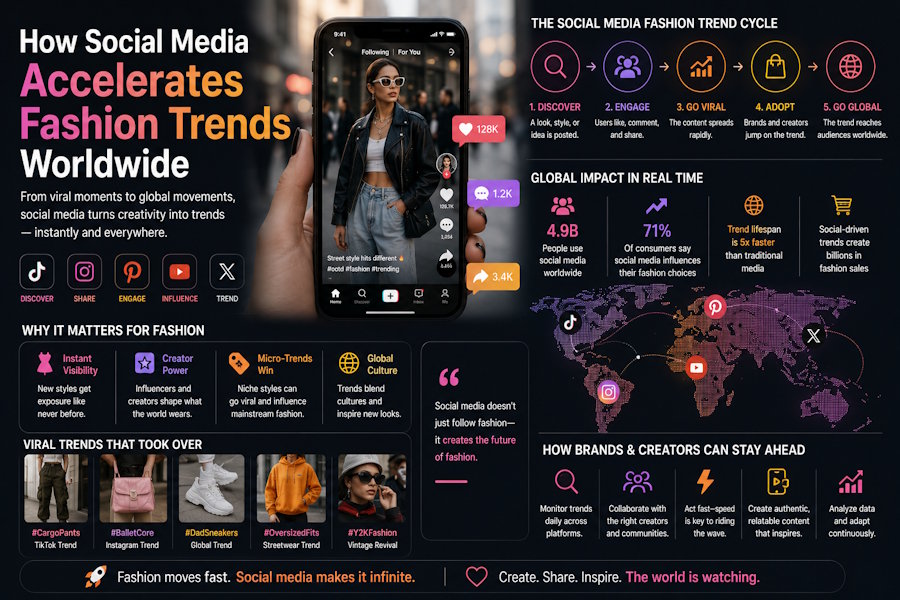
Fashion has always moved through culture, but social media has changed the speed completely. What once took months to travel from a runway in Paris to stores around the world can now happen in a few hours. A celebrity posts a mirror selfie, a creator shares a styling video, or a micro-trend appears on TikTok, and suddenly people across continents are searching for the same jacket, color, pattern, or aesthetic.
This fast movement has transformed fashion into a global conversation. Trends are no longer controlled only by luxury houses, magazines, or seasonal collections. Today, anyone with a phone can influence what people wear, how they style it, and how quickly a look becomes desirable.
Fashion Trends Now Start Everywhere
In the past, fashion trends usually moved from the top down. Designers presented collections, editors wrote about them, celebrities wore them, and stores adapted them for everyday shoppers. That system still exists, but it is no longer the only source of influence.
Now, fashion can start anywhere. A student in Seoul, a vintage seller in London, a stylist in Lagos, or a creator in São Paulo can post an outfit that inspires thousands of people. Social media platforms have made personal style visible on a global scale, which means trends can come from real people as much as from fashion institutions.
This has made fashion feel more democratic. People are not just waiting to be told what is stylish. They are watching, reacting, remixing, and creating trends themselves. A small styling idea can become a worldwide movement simply because it feels fresh, relatable, or easy to recreate.
TikTok, Instagram, and the Power of Repetition
One of the biggest reasons social media accelerates fashion trends is repetition. When users see the same style appear again and again, it starts to feel familiar. Familiarity then becomes desire.
A certain pair of boots, oversized blazer, metallic bag, or animal-inspired print might appear first in one video. Then another creator styles it differently. Then a celebrity wears something similar. Soon, the look feels like it is everywhere.
TikTok is especially powerful because its algorithm can push a trend far beyond someone’s existing audience. A person does not need millions of followers to influence fashion. If a video performs well, it can reach people in different countries almost instantly. Instagram works differently but still plays a major role through reels, outfit posts, shopping tags, and influencer campaigns.
This constant exposure makes trends feel urgent. People do not just want to participate eventually. They want to participate now.
The Rise of Micro-Trends
Social media has also created the era of micro-trends. Instead of one dominant seasonal style, there are dozens of smaller aesthetics moving at the same time. Clean girl, mob wife, coastal grandmother, balletcore, gorpcore, Y2K, quiet luxury, dark academia, and many others have all gained attention through online communities.
These trends are often built around a mood rather than a single item. They include clothes, accessories, interiors, music, attitude, photography style, and lifestyle choices. That is why fashion now often overlaps with home decor, beauty, travel, and personal branding.
Someone interested in bold visual identity may express it not only through clothing, but also through their space. This is where brands like Large Wall Art for statement interiors naturally connect with modern fashion culture. Personal style is no longer limited to what someone wears. It also appears in the rooms they photograph, the backgrounds they choose, and the atmosphere they create around themselves.
Influencers Turn Style Into a Story
Fashion spreads faster when people can imagine themselves inside a story. Influencers are good at doing this because they do not only show clothes. They show context.
A simple outfit becomes more desirable when it appears in a morning routine, a travel vlog, a date-night post, or a “how I styled this” video. Social media turns fashion into a lived experience. People see how a piece moves, how it fits, how it photographs, and how it works in real life. AI tools are also becoming part of this creative process. With an AI cloth changer, creators can experiment with different outfits and visual styles before producing content, making it easier to test fresh looks and participate in fast-moving fashion conversations.
This is very different from traditional advertising. A polished campaign can create aspiration, but creator content often creates trust. Viewers feel like they are getting a personal recommendation rather than a formal sales message.
That trust is one reason trends move so quickly. When a creator with a strong community says a certain look is worth trying, followers may adopt it immediately.
Global Style Is Becoming More Mixed
Social media has made fashion more international than ever. A trend can begin in Tokyo, be adapted in New York, styled differently in Paris, and then reinterpreted in Mexico City or Dubai. The result is not one universal version of a trend, but many local versions.
This global exchange makes fashion richer. People borrow silhouettes, colors, accessories, and styling references from different cultures and subcultures. Streetwear, luxury fashion, vintage clothing, sportswear, and digital aesthetics now constantly influence each other.
Animal motifs are a good example of this global visual language. Leopard, zebra, tiger, snake, and other animal-inspired designs have appeared in fashion for decades, but social media keeps reinventing them. They can feel glamorous, wild, minimalist, playful, or artistic depending on how they are styled. The same visual energy can also appear in interiors through animal art for expressive home style, showing how fashion inspiration often extends beyond the wardrobe.
Speed Creates Opportunity and Pressure
The speed of social media gives fashion brands huge opportunities. A small label can go viral overnight. A new product can sell out after one popular video. A creative campaign can reach international customers without a traditional advertising budget.
But this speed also creates pressure. Brands must react quickly, understand cultural signals, and know when a trend is worth joining. Not every viral moment becomes a long-term opportunity. Some trends disappear almost as fast as they appear.
For consumers, the pressure is also real. Social media can make people feel like they are always behind. There is always a new aesthetic, a new must-have item, or a new way to style something. This can lead to overconsumption if people chase every trend without thinking about what truly fits their personality.
The healthiest approach is to use trends as inspiration, not rules. A trend is valuable when it helps someone express themselves more clearly. It becomes a problem when it replaces personal taste.
Personal Style Still Matters Most
Even though social media moves fashion quickly, personal style remains the foundation. The people who stand out online are often not those who copy every trend perfectly, but those who adapt trends in a way that feels authentic.
The best-dressed people understand what works for them. They may borrow from viral aesthetics, but they do not lose their own identity. They know their colors, preferred shapes, lifestyle, and mood. They choose pieces that feel natural rather than forced.
This is also why timeless style still matters. A viral trend may bring attention, but a strong personal visual identity lasts longer. Whether in clothing, accessories, or interior choices, people remember style that feels intentional.
Final Thoughts
Social media has made fashion faster, more global, and more participatory. Trends can now begin anywhere and reach millions of people in a single day. Platforms like TikTok and Instagram have turned everyday users, influencers, celebrities, and brands into part of the same fashion conversation.
This speed has changed how people discover style, how brands launch products, and how trends travel across countries. But while social media can accelerate what becomes popular, it cannot replace personal taste. The strongest style still comes from knowing what feels true to you.
Fashion trends may move quickly, but the most memorable looks are the ones that feel personal, confident, and connected to a larger visual world.

