

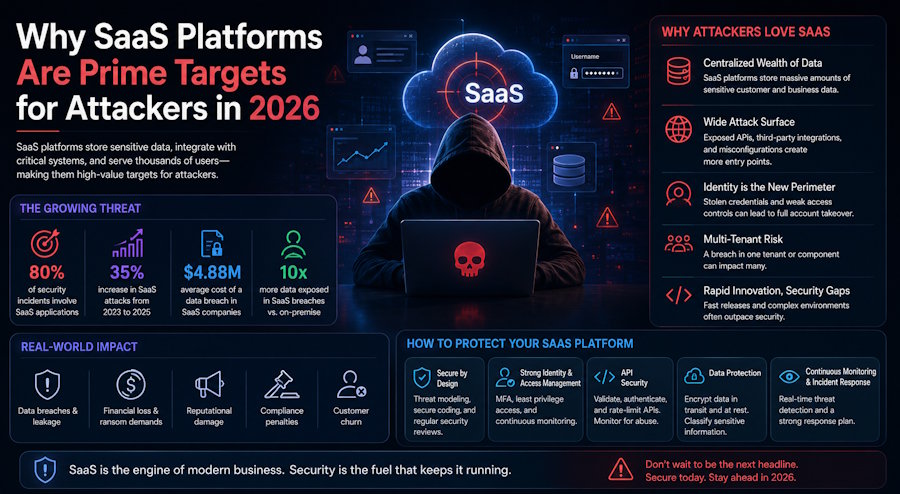
Software-as-a-service platforms now sit at the center of how businesses operate. Financial tools, healthcare applications, project management systems — companies rely on these platforms to store sensitive data and keep critical workflows running. That reliance has made them attractive to attackers. In 2026, SaaS environments are facing a level of threat activity that reflects just how much valuable data these platforms hold and how many ways exist to reach it.
The Expanding Attack Surface
SaaS platforms are built to serve many clients at once. That shared architecture means a single exploited vulnerability can expose data across hundreds of accounts in one move. Attackers understand this math, and they target platforms accordingly.
Security teams feel that pressure every day. Running penetration testing for SaaS applications gives organizations a concrete way to find weaknesses before someone else does. A well-structured test works through authentication flows, access control logic, and API behavior, surfacing the kinds of flaws that automated scanners tend to miss entirely.
APIs as Entry Points
Almost every SaaS product relies on application programming interfaces to function. Those connections, when not properly secured, hand attackers a direct path into backend systems. In SaaS environments, attackers consistently exploit misconfigured keys, excessive token permissions, and weak authentication logic.
Third-Party Integrations
SaaS tools are designed to connect with other services. Every integration that gets added also increases risk. Attackers frequently move through trusted third-party connections to sidestep primary defenses and reach core systems through a side door.
Why Security Testing Lags Behind Deployment
SaaS development does not slow down for security reviews. Features ship on tight cycles, and testing rarely keeps pace. That gap does not go unnoticed; it is precisely the kind of window attackers look for during reconnaissance.
Credential-Based Attacks Are Accelerating
Stolen credentials are still one of the most dependable methods attackers use. SaaS platforms collect login data at scale, which makes them a natural focus for credential stuffing operations running thousands of attempts at a time.
Single Sign-On Risks
Single sign-on systems reduce friction for users across connected applications. They also concentrate risk. One compromised identity provider gives an attacker access to every application tied to it, without needing to break through each one individually.
Weak Multi-Factor Authentication Practices
Multi-factor authentication has become more common, but adoption does not guarantee strong protection. SIM swapping and real-time phishing kits that intercept one-time codes have given attackers reliable methods to work around certain implementations.
Data Concentration Creates Outsized Risk
SaaS platforms hold more data in one place than most on-premise systems ever did. Customer records, payment details, contracts, and internal communications frequently live within a single platform. One successful breach can affect an entire organization, not just a single department.
The regulatory dimension adds further weight. Data protection laws carry real financial penalties, and a platform breach can trigger compliance violations across several jurisdictions at once, turning a security incident into a legal and financial problem simultaneously.
Misconfigurations Remain Underestimated
A significant share of SaaS-related incidents traces back to human error rather than sophisticated attack techniques. Default settings left unchanged, bloated permission structures, and unreviewed alerts all create gaps that basic reconnaissance can surface.
Excessive Permissions
Many users hold access rights well beyond what their role actually requires. That over-provisioning amplifies the damage any single compromised account can cause. Access reviews help close that gap, yet many organizations treat them as occasional tasks rather than routine practice.
Visibility Gaps
Security teams frequently lack a complete picture of their SaaS environments' actual configurations. Unauthorized integrations, forgotten admin accounts, and shadow usage all expand the attack surface quietly, often without anyone tracking the growth.
Conclusion
SaaS platforms deliver real operational value, but that value comes with real risk. The architecture that makes them flexible also makes them attractive to attackers. Credential theft, permission bloat, insecure integrations, and rapid release cycles all feed into an environment that does not manage itself safely.
Organizations that build security review into their regular operating rhythm, rather than treating it as a one-time exercise, will be significantly better placed to catch problems early and contain the damage when incidents occur.

