

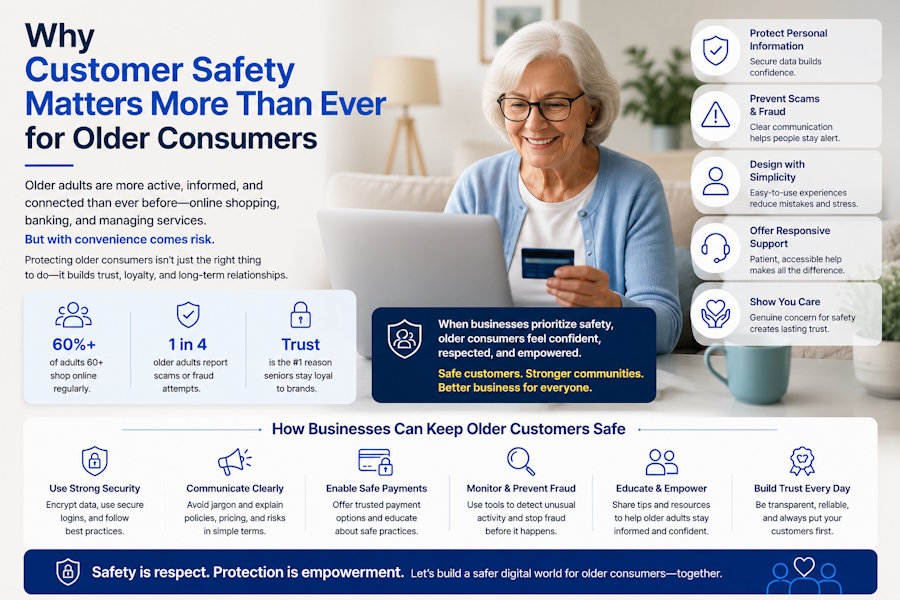
Older consumers are becoming a larger and more influential part of the customer base. They shop, travel, dine out, attend events, use digital services, and stay loyal to businesses that treat them well. Yet many companies still design their customer experience around younger, more mobile adults.
That approach leaves gaps.
A loose entrance mat, a dim stairway, or a cracked parking surface can turn a routine visit into a stressful event. Even when no one gets hurt, older customers notice these details. They remember whether the entrance felt safe, whether staff offered help, and whether they could move through the space without worrying about a fall.
Customer safety is not just a building issue. It shapes trust, reputation, retention, and long-term revenue.
Safety Starts Before a Customer Enters
A customer begins judging a business before reaching the front door. The parking area, pavement, signs, ramps, and lighting all send a message.
Parking Areas Create the First Impression
Older adults often need more time to get out of a vehicle, gather their belongings, and walk toward an entrance. Wide parking spaces help, but they are only part of the picture. Businesses should also check for broken pavement, standing water, steep curbs, and faded markings.
Seasonal conditions add another layer. Rain can make painted surfaces slick. Fallen leaves can hide holes or uneven ground. During colder months, ice creates an obvious risk. Regular inspections help staff catch these problems before customers encounter them.
Clear directional signs matter too. People should not have to wander through a busy parking lot while searching for the entrance. A simple arrow or well-placed sign reduces confusion and limits the time customers spend near moving vehicles.
The Entrance Should Feel Easy
Heavy doors, raised thresholds, and narrow entryways can make access difficult. Automatic doors and level entrances help customers who use canes, walkers, or wheelchairs. They also help parents with pushchairs and delivery workers carrying boxes.
You know what? Good accessibility rarely serves only one group. A safer entrance makes life easier for almost everyone.
Small Interior Details Prevent Serious Problems
Once customers enter, the floor becomes one of the main safety concerns. Slips and trips often happen because of ordinary problems that no one noticed in time.
Floors Need More Than a Quick Cleaning
Slip-resistant flooring gives customers better traction, especially near entrances, toilets, cafés, and other areas where moisture collects. Staff should deal with spills as soon as they appear and use clear warning signs while cleaning takes place.
Loose rugs are another common hazard. Their edges can curl, shift, or catch the tip of a shoe. If a rug must be used, it should lie flat and have a secure backing.
Businesses also need to think about visual contrast. Older adults sometimes find it difficult to judge a step when the floor and stair edge are the same colour. A contrasting strip can make the change in height easier to see.
Walkways Should Stay Clear
Boxes, display stands, extension cords, and promotional signs often creep into customer paths. Each item seems harmless on its own. Together, they create an obstacle course.
Clear walkways let people move at their own pace. They also provide enough room for mobility aids. Staff should inspect customer areas throughout the day, not only before opening.
This matters in technology stores, clinics, banks, supermarkets, hotels, and restaurants. It also matters in offices that welcome clients. A space can look modern and polished while still being hard to navigate.
Lighting and Handrails Build Confidence
Good lighting does more than make a room look inviting. It helps customers read signs, spot changes in floor level, and judge distances.
Bright Does Not Mean Harsh
Businesses need balanced lighting. Dark corners create risks, but harsh glare also causes trouble. Reflections on polished floors can hide steps or make a surface appear wet.
Entrances, staircases, toilets, lifts, and payment areas need consistent light. Burned-out bulbs should be replaced quickly. Motion-sensitive lighting can work well in less-used areas, though it should activate before a customer enters the space.
Digital screens deserve attention as well. Small text, weak contrast, and fast-changing menus can frustrate older users. Businesses that rely on kiosks or self-service systems should offer readable type, clear buttons, and enough time to complete each step.
Handrails Offer More Than Physical Support
Handrails give people stability, but they also provide reassurance. Customers feel more comfortable when they know support is within reach.
Rails should be secure, easy to grip, and placed on both sides of a staircase when possible. Ramps also need suitable rails. A decorative rail that wobbles under pressure does not solve the problem.
Safety features should work, not simply look good in photographs.
Unsafe Conditions Bring Legal and Financial Risk
An injury affects more than the person who falls. It can disrupt families, create medical costs, and damage a customer’s confidence. For a business, the incident can lead to complaints, lost revenue, legal action, and higher insurance costs.
Businesses Have a Duty to Fix Known Hazards
Managers should document inspections, repairs, and staff reports. If someone identifies a loose handrail or damaged paving, the company needs a clear process for dealing with it. Ignoring a known danger creates a larger problem than the original repair.
Liability also extends beyond the most obvious customer accidents. Roads, parking entrances, and poorly managed traffic areas can expose visitors to serious harm. Businesses reviewing their legal responsibilities can learn more about how injury cases are assessed when unsafe conditions or careless actions contribute to an accident.
Clear records help show that a business takes safety seriously. Still, paperwork alone is not enough. The physical problem must be fixed.
Prevention Costs Less Than a Crisis
Repairing a cracked step or installing better lighting costs money. But the cost is usually small compared with an injury claim, an insurance dispute, or lasting damage to the company’s name.
Customers share bad experiences quickly. Online reviews, local social groups, and family conversations can spread the story far beyond the original incident. And honestly, a business does not want to become known as the place where older customers feel unsafe.
Respect Creates Long-Term Customer Loyalty
Older consumers often value consistency. They return to businesses where they know what to expect and where staff treat them with patience.
Staff Behaviour Matters Too
A safe environment includes human support. Employees should know how to offer help without speaking down to someone. They should allow customers enough time to walk, read instructions, and complete payments.
Rushing a person rarely saves much time. It does, however, make the experience feel uncomfortable.
Staff can also watch for hazards during normal work. A waiter who notices a spill, a receptionist who sees a loose mat, or a security guard who spots poor lighting can prevent an accident by acting at once.
Feedback Reveals Problems Managers Miss
Older customers can point out barriers that younger staff do not notice. Businesses should make feedback easy through short surveys, comment cards, email, or a direct conversation.
Ask practical questions. Was the entrance easy to find? Was there somewhere to sit? Were signs readable? Did the customer feel safe moving through the building?
The answers provide useful information for future repairs and service changes.
Safety Includes the People Serving Customers
Businesses cannot create a calm, safe customer experience while ignoring employee wellbeing. Tired, distracted, or unsupported workers miss hazards and struggle to respond well during stressful moments.
Support Programs Strengthen Daily Operations
Employee support can include flexible scheduling, mental health resources, training, and access to confidential care. These programs matter across many settings, including retail shops, hotels, restaurants, and wedding venues where staff work long hours around crowded rooms, temporary equipment, and changing floor layouts.
A venue preparing for a busy wedding season may focus on guest paths, lighting, and stable flooring, but it should also consider the well-being of the team managing those details. Access to services such as Behavioral health treatment in Massachusetts can form one quiet part of a broader employee support plan, especially when a worker needs help beyond what a manager can provide.
Supporting staff is not separate from customer safety. The two are closely linked.
Safer Spaces Send a Clear Message
Older consumers do not expect every business to become a medical facility. They want reasonable care. They want clear paths, steady handrails, readable signs, good lighting, and staff who notice when something is wrong.
These changes are practical. Many are simple. Together, they show respect.
As the population ages, companies that ignore safety will lose trust. Businesses that invest in accessible, well-maintained spaces will build stronger customer relationships and reduce avoidable risk.
A safe visit feels easy. That is the point. Customers should leave thinking about the meal they enjoyed, the product they bought, or the service they received, not the step they nearly missed on the way inside.

