

Introduction: When Electricity Strikes Without Warning
Power surges can strike without warning and leave a trail of damaged electronics and appliances in their wake. For homeowners dealing with the aftermath, finding reliable appliance repair in vancouver bc becomes essential when circuits fail or motors burn out. These sudden spikes in voltage might last only a fraction of a second, yet their effects can last much longer, quietly degrading components until something finally stops working. Understanding how surges happen and what they do to everyday machines helps people protect their investment and avoid costly replacements.
What Exactly Is a Power Surge?
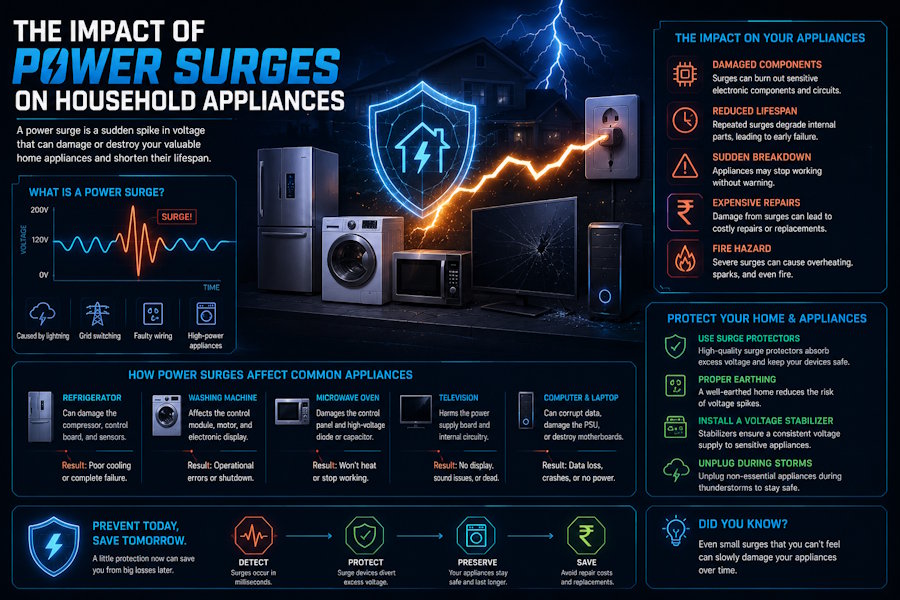
A power surge is simply an unexpected increase in electrical voltage that travels through the wiring in a home. Under normal conditions, household electricity stays close to 120 volts in most North American systems. When that number jumps—sometimes by hundreds of volts—the excess energy has to go somewhere. Sensitive circuit boards, motors, and control panels absorb more current than they were designed to handle. The result ranges from minor glitches to complete failure.
Surges come from several common sources. Lightning is the most dramatic. A strike near a power line, or even a direct hit on a transformer down the street, can send a massive pulse into the grid. Utility companies work hard to limit these events, but they cannot eliminate them entirely. Switching operations at the substation also create smaller surges. When large industrial equipment starts or stops, the sudden change in load causes voltage fluctuations that travel along the same lines feeding residential neighborhoods.
Inside the home, the problem can be self-inflicted. Older refrigerators, air conditioners, or well pumps draw a heavy inrush current when their compressors kick on. That momentary demand can produce a local spike that affects other devices sharing the same circuit.
Not All Surges Are Dramatic – The Hidden Damage
Not every surge is spectacular. Many are small and repeated. These “transient” events wear down insulation and stress electronic components over months or years. A microwave might still heat food, yet its digital display begins to flicker. A washing machine finishes cycles but develops intermittent error codes. People often blame age or manufacturing defects when the real culprit is cumulative electrical stress.
How Specific Appliances Suffer
Different appliances respond in different ways. Refrigerators and freezers contain compressors with start capacitors and electronic control boards. A strong surge can puncture the capacitor or fry the board, leading to warm compartments and spoiled food. The sealed system itself usually survives, but the electronics rarely do.
Clothes washers and dryers rely on control boards that manage water levels, spin speeds, and heat. Once those boards are compromised, the machine may fill but never agitate, or heat without tumbling. Dishwashers face similar risks; their heating elements and pumps are relatively robust, yet the circuit boards that sequence the cycles are not.
Microwaves are particularly vulnerable because they already operate with high voltages internally. An external surge can damage the magnetron or the control panel, leaving the unit dead or producing strange noises. Ovens and ranges with electronic clocks and touchpads often lose their displays first.
Even smaller devices such as coffee makers, toasters, and garage door openers contain microprocessors that can be erased or partially corrupted by a single strong event.
Garburators deserve special mention. Their motors sit under the sink and are exposed to moisture as well as electrical stress. A surge can burn the windings or destroy the start switch. When that happens, the unit either hums without turning or refuses to start at all.
Recognizing the Warning Signs of Surge Damage
The signs of surge damage are not always obvious. Sometimes an appliance simply stops working after a storm. Other times the failure is delayed. A homeowner might notice that the refrigerator runs longer than usual or that the washing machine occasionally skips the spin cycle. Error codes appear without any mechanical problem. Lights on control panels dim or flicker. In severe cases, a burning smell or visible scorch marks on plugs and outlets confirm that excess energy has passed through.
Prevention Strategies That Actually Work
Prevention starts with awareness of the home’s electrical environment. Whole-house surge protectors installed at the main panel divert large spikes before they enter the branch circuits. These devices are not perfect, but they handle the bulk of utility-side events. Point-of-use surge strips offer a second layer of defense for individual appliances.
Proper grounding is another quiet but critical factor. A house with an inadequate ground rod or corroded connections gives surges fewer safe paths to dissipate. Electricians can test the grounding system and improve it if needed. Unplugging sensitive devices during thunderstorms remains one of the oldest and still most effective strategies.
Local Expertise Matters: Finding Help in the Lower Mainland
In the Lower Mainland, where coastal weather patterns bring frequent electrical storms, homeowners in North Vancouver and surrounding communities see these issues regularly. Seeking appliance repair west vancouver services that understand both the local climate and the quirks of common appliance brands can make the difference between a quick fix and a prolonged inconvenience. Technicians familiar with the region’s power grid quirks know which models tend to fail after particular types of surges and keep the necessary parts on hand.
Repair or Replace? Making the Smart Choice
When a surge does cause damage, the question becomes repair versus replacement. Modern appliances contain proprietary circuit boards that manufacturers price high enough to push many owners toward buying new machines. Independent technicians who specialize in board-level repair can often restore function at a fraction of that cost.
Insurance sometimes covers surge damage, especially when lightning is the documented cause. Policies vary widely. Documenting the event with photos, utility company reports, and repair estimates strengthens any claim.
The Bigger Picture: Infrastructure, Efficiency, and Future Risks
Beyond individual homes, the broader electrical infrastructure influences surge frequency. Aging transformers, overloaded feeders, and the increasing presence of solar inverters and electric vehicle chargers all introduce new sources of transient voltages.
Energy efficiency upgrades can unintentionally increase vulnerability. Many new appliances use variable-speed motors and sophisticated electronics to save electricity. Those same features make them more sensitive to voltage irregularities than older, simpler designs.
Climate trends add another layer of concern. Warmer temperatures and more intense storms increase the likelihood of lightning activity in many regions.
Practical Steps and Long-Term Habits
Education remains the most accessible tool. Reading the owner’s manuals for surge-related warnings, understanding the difference between surge protectors and ordinary power strips, and knowing when to call a licensed electrician all reduce risk.
Long-term reliability improves when homeowners treat electrical health as part of routine maintenance. Annual inspections of outlets, cords, and the main panel catch deteriorating insulation and loose connections before they become surge pathways.
Conclusion: Staying Ahead of the Next Surge
Power surges are an unavoidable feature of modern electrical systems. Complete immunity is unrealistic, yet substantial protection is achievable. The difference between a minor inconvenience and a major expense often comes down to preparation and the quality of the response when something does go wrong. For specialized needs such as garburator repair vancouver, working with experienced local technicians ensures that even hard-to-reach components receive proper attention.
By staying informed and proactive, homeowners can significantly reduce the risks and keep their appliances running smoothly for years to come.

