

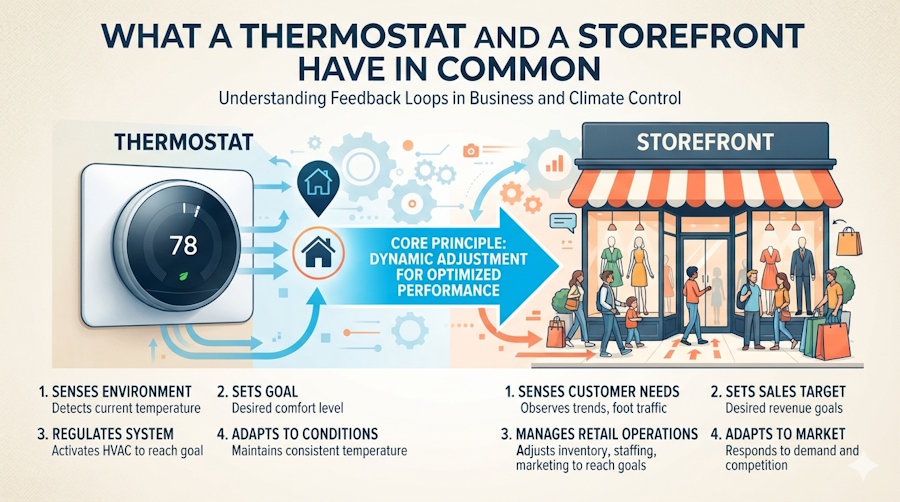
A thermostat quietly monitors temperature, automatically adjusting heating or cooling to maintain comfortable conditions without requiring manual intervention throughout the day. A well-designed online storefront works the same way, monitoring market conditions and adjusting prices automatically to maintain competitive positioning without constant manual attention.
Automatic Response to Changing Conditions
A thermostat does not wait for someone to notice the room feels too warm before adjusting temperature. Instead, it continuously monitors conditions and responds automatically, making small adjustments that keep the environment comfortable without requiring ongoing human attention throughout the day and night.
Modern pricing tools function according to remarkably similar logic. Rather than requiring a person to manually check competitor prices and adjust listings throughout the day, these systems continuously monitor market conditions and automatically respond, making small pricing adjustments that keep a seller's listings competitively positioned without constant human oversight.
Why This Comparison Makes Sense
This comparison helps explain a concept that might otherwise feel abstract. Just as a thermostat translates a simple goal, maintaining comfortable temperature, into continuous automatic action, a repricer translates a similarly simple goal, maintaining competitive pricing, into continuous automatic adjustment based on real-time market conditions.
Both systems share the same underlying philosophy. Rather than requiring constant human monitoring and manual intervention, they establish clear parameters in advance and then handle ongoing adjustments automatically, freeing up human attention for other priorities.
The Comfort of Reliable Automation
Just as most people trust their thermostat to maintain a comfortable temperature without checking constantly, sellers increasingly trust automated pricing tools to maintain competitive positioning without requiring constant manual verification. This trust develops gradually, built through reliable performance over time.
This reliability offers genuine peace of mind beyond convenience. Knowing pricing continues adjusting appropriately, even during hours when no one is actively monitoring listings, allows sellers to focus attention elsewhere, confident this responsibility continues functioning reliably in the background.
A Familiar Concept in an Unfamiliar Context
Recognizing the similarity between household climate control and automated pricing offers a useful way to understand what might otherwise seem like a complicated, unfamiliar technology. Both systems solve essentially the same underlying problem, translating a clear goal into continuous automatic action without requiring constant human intervention.
The next time someone adjusts their thermostat and walks away without a second thought, it may be worth remembering that a remarkably similar logic increasingly governs how online prices adjust as well, quietly working in the background to maintain conditions that would otherwise require constant, exhausting manual attention throughout an entire day.
Why This Analogy Helps Newcomers Understand
For anyone unfamiliar with automated pricing tools, this thermostat comparison offers an accessible entry point into an unfamiliar concept. Most people already intuitively understand how a thermostat works without a technical background, making it a useful bridge toward grasping how similar automation applies to pricing decisions.
This accessible framing matters because automated pricing can otherwise feel abstract to someone encountering the concept for the first time. By anchoring the idea to something already familiar, the underlying logic becomes easier to grasp, reducing hesitation around adopting a tool that functions according to principles most people already understand instinctively.

