

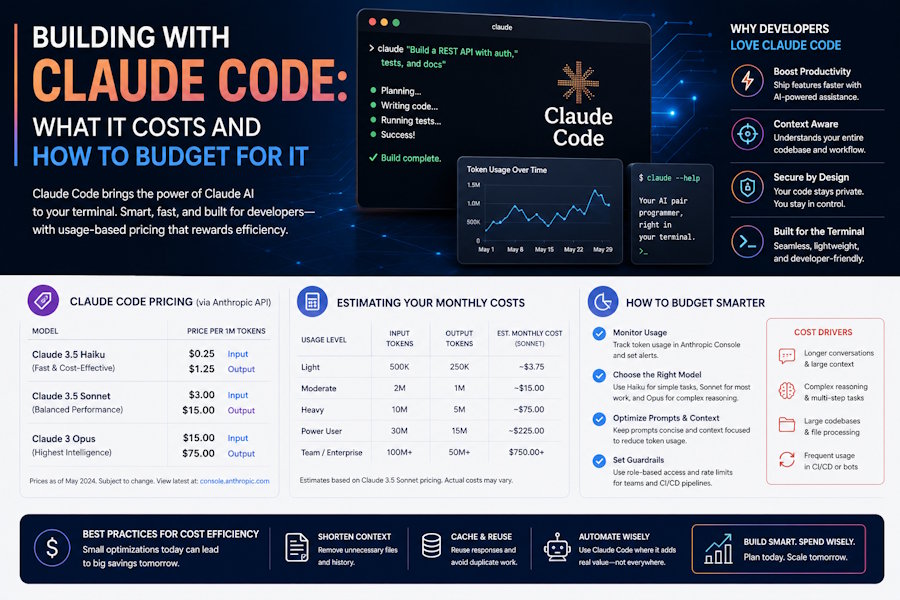
Claude Code changed how a lot of us work. Instead of pasting snippets into a chat window, you point an agent at your repository and let it read files, run tests, and write actual commits. The productivity jump is real. So is the bill, if you're not paying attention.
This article covers how Claude Code billing works, where the tokens actually go, and how to keep costs boring and predictable.
Two Ways to Pay
Through a subscription
Anthropic's paid plans include Claude Code usage within rate limits that reset every few hours. For many developers this is the sweet spot: a flat monthly fee, no per-token anxiety. The entry-level plan handles light daily use; if you run long agentic sessions on a big codebase, you'll bump into limits and probably want a higher tier.
Through the API
Point Claude Code at an API key instead, and you pay per token with no usage cap. Great for teams, CI pipelines, and anyone who needs guaranteed throughput. Dangerous for anyone who doesn't watch their dashboard, because agentic coding is token-hungry in ways chat never was.
Where the Tokens Go
People are often surprised that a single "small" task consumes a large number of tokens. The reason is context. Before writing anything, the agent reads your files - sometimes many of them. Then it reasons, edits, runs commands, reads the output, and iterates. Every round trip re-sends context.
Practical consequences:
- Big monorepos cost more than small services, purely from file reading.
- Vague prompts cost more than precise ones, because the agent explores.
- Letting a session run unattended for an hour can quietly burn through a day's budget.
Keeping the Bill Predictable
Set limits before you need them
On the API side, configure spend alerts and hard caps in the console on day one. On subscriptions, learn where your plan's limits sit and plan heavy sessions around resets.
Scope your prompts
"Fix the failing auth test in tests/auth_test.py" costs a fraction of "figure out why tests fail." Tell the agent where to look and it won't wander.
Use a CLAUDE.md file
A short project-context file saves the agent from rediscovering your conventions in every session. Less exploration, fewer tokens, better output. Win-win-win.
Isolate the payment itself
A habit worth copying from freelancers who bill clients for tooling: keep AI spending on its own dedicated card. Plenty of developers - especially those in countries where local cards get rejected by US merchants - use a vcc for Claude loaded with a fixed monthly amount. The card balance becomes a hard budget ceiling, statements stay clean for accounting, and a declined local card never interrupts a work session again.
A Realistic Monthly Picture
Light users get by on the base subscription. A developer using Claude Code as a daily driver typically lands on a mid tier. API-based team setups vary too much to generalise, which is exactly why alerts matter more than estimates. Whatever your setup, check your first two weeks of real usage data before committing to anything annual.
Wrapping Up
Claude Code is one of those tools that pays for itself when managed and surprises you when ignored. Pick the billing mode that matches your workflow, put guardrails on spending early, and let the agent do what it's good at - shipping code, not shipping invoices.

