

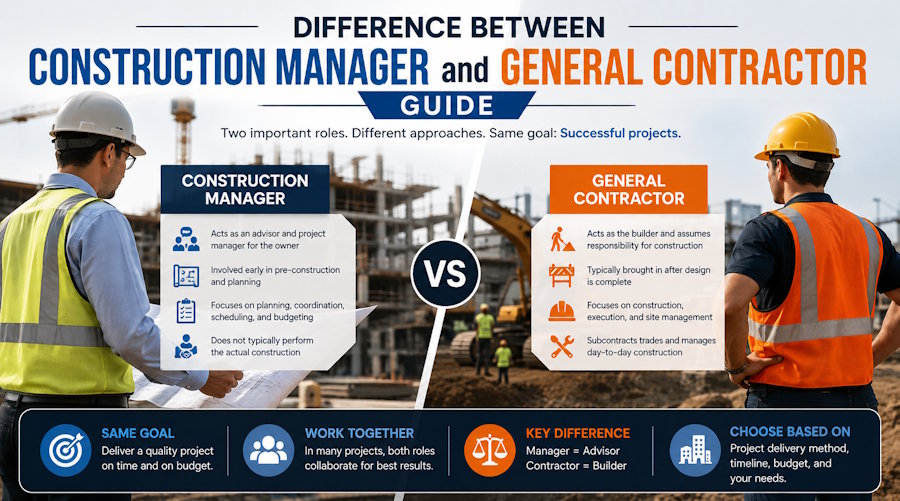
A construction manager usually supports the owner from early planning through completion, while a general contractor focuses more directly on delivering the physical work.
Choosing the right leadership model affects planning, pricing, accountability, and the pace of a build. The best choice depends on how complete the plans are, how much owner involvement is expected, and how risk is assigned.
What Is the Difference Between Construction Manager and General Contractor?
The core difference is timing and responsibility. The owner-side professional may join during the design phase, review constructability, prepare estimates, coordinate purchasing, and advise on scheduling before work begins. The builder usually joins the project after the plans are developed and assumes responsibility for labor, materials, trade coordination, safety, and field execution.
This distinction is not absolute. Delivery methods can change the duties. A construction manager at risk may hold trade contracts and accept responsibilities that closely resemble those of a builder. An agency adviser may only represent the owner and never perform the work. That is why the contract matters more than the job title.
What Is a General Contractor and a Construction Manager?
The first role provides broad oversight for the owner. It tracks the project scope, schedule, budget, procurement, communication, and quality control across the full process. Construction managers work with architects, engineers, consultants, suppliers, and field teams to identify problems before they delay the job.
The second role leads actual construction. It secures labor and equipment, obtains materials, coordinates inspections, maintains safety procedures, and may manage subcontractors for electrical, plumbing, HVAC, concrete, and other trades.
Key responsibilities commonly include:
- Early planning, estimating, scheduling, and design reviews
- Labor, material, equipment, and trade coordination
- Permit, code, safety, and inspection support
- Progress tracking, documentation, and issue resolution
Construction Manager Vs General Contractor at a Glance
The table below shows the practical distinction between the two delivery roles. Before choosing, confirm whether the adviser will hold trade contracts, whether pricing will remain open-book, and who will accept responsibility for delays, defects, or cost increases.
At this stage, A2Z Construction Management can help define responsibilities before bids, contracts, and field activities begin.
|
Construction Manager |
General Contractor |
|
Often joins before plans are complete |
Often joins after plans are complete |
|
Advises the owner on budget and sequencing |
Directs field production and trade performance |
|
May be paid a fee for professional services |
May work under a lump sum or other pricing model |
|
Focuses on broad coordination and owner goals |
Focuses on building to the contract documents |
|
May share risk or act only as an adviser |
Usually carries direct responsibility for completed work |
These differences may vary based on the delivery method and contract terms.
The arrangement can affect transparency. Construction management provides early cost feedback and allows the owner to review procurement options before making major commitments. Fixed prices can provide a clear contract amount, but exclusions, allowances, design changes, and unforeseen conditions still need careful review.
How Timing Changes Project Results
Early involvement gives the team time to test materials, sequencing, lead times, and design choices. This can make decisions more cost-effective because changes made on paper usually cost less than corrections made after installation.
The builder’s value becomes most visible once work starts. The role oversees day-to-day operations at the construction site, coordinates crews, resolves field conflicts, and keeps work progressing in the correct sequence. Strong field leadership can reduce delays and protect workmanship.
Project managers may still oversee reporting, approvals, or internal owner decisions. Their duties can overlap with managers and general contractors, so the owner should document who approves changes, who controls the schedule, and who communicates with each party.
Factors to Consider
Payment structure often reflects the role. An adviser may receive a fixed fee, hourly compensation, or a percentage-based fee. A builder may accept a lump-sum agreement, cost-plus contract, guaranteed maximum price, or unit-price arrangement. Each model changes who carries the risk when construction costs rise.
Contracts should state who:
- Holds agreements with specialty trades
- Purchases materials and approves substitutions
- Controls contingency funds and allowances
- Accepts liability for defects, delays, and safety
General contractors and construction advisers may both participate in procurement, but their authority can differ. In some agreements, contractors and construction managers share information, while only one party has the authority to commit funds. Clear contract language prevents duplicate instructions and disputes.
Which Role Should You Hire?
Choose early management support when the plans are still developing, the schedule is complex, long-lead materials require early ordering, or the owner needs independent guidance. This approach also suits phased construction projects in which design, procurement, and construction overlap.
Choose a builder-led agreement when the documents are complete, the work is well-defined, and the owner wants one party to be accountable for field delivery. It may also fit smaller jobs where adding another management layer would create unnecessary cost.
The decision should consider:
- Design completeness
- Budget transparency
- Schedule urgency
- Owner experience
- Contracting preference
- Risk tolerance
Can Both Roles Work Together?
Yes. On large or complex work, the owner may hire an adviser and contract separately with a builder. The adviser protects the owner’s goals, while the builder directs labor and trade execution. This structure works only when reporting lines are clear.
The relationship between construction managers and general operations should never depend on assumptions. Define who reviews bids, approves changes, accepts completed work, and communicates with the architect. In the construction industry, clear authority is one of the best ways to prevent delays and conflicting directions.
Make the Right Project Choice
The best model depends on timing, complexity, control, and risk. Management advisers and general leadership teams can support the same goal, but they reach it through different contracts and responsibilities. Review the agreement, not just the title, and confirm who controls planning, money, site activity, and final performance before work begins.

