

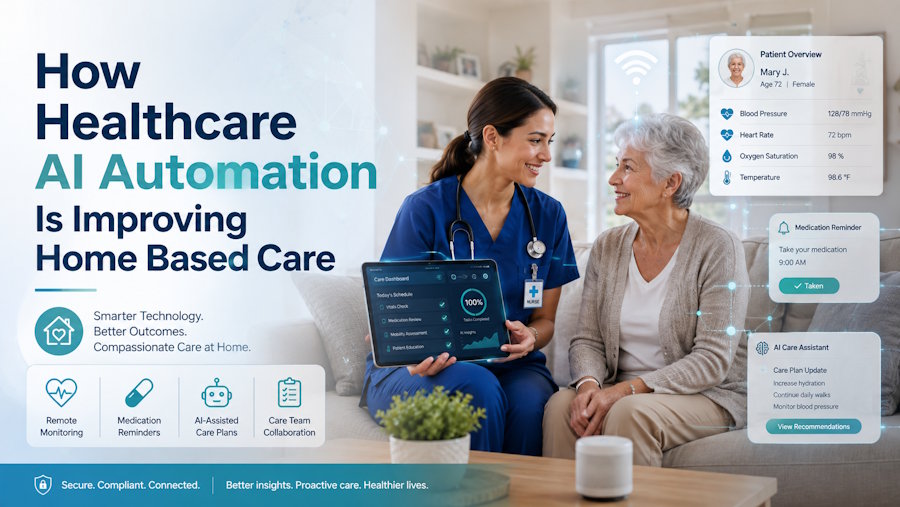
Healthcare is changing in many ways. In the past, most people received treatment only in hospitals or clinics. Today, that is no longer the only option. Many patients can recover, receive regular checkups, or manage long-term health conditions without leaving their homes.
This change has created new opportunities for healthcare providers, but it has also introduced new challenges. Managing patients across different locations requires good planning, clear communication, and accurate records. As the number of people choosing care at home continues to grow, healthcare organizations need better ways to manage their daily work while maintaining high standards of care.
What Is Home Based Care?
Home Based Care is a healthcare service that allows patients to receive medical support in their own homes. Instead of visiting a hospital for every treatment or checkup, trained healthcare professionals travel to the patient's location and provide the care they need.
Home care is often used for:
- Older adults who need regular support.
- Patients recovering after surgery.
- People living with long-term health conditions.
- Individuals who need rehabilitation services.
- Patients who require routine nursing care.
Receiving care at home allows many patients to stay in a familiar environment, which can improve comfort and reduce stress during recovery.
Why More People Are Choosing Care at Home
There are many reasons why home healthcare has become more popular.
For patients, staying at home often feels more comfortable than spending long periods in a hospital. Family members can also stay involved in the patient's care, making communication easier and providing emotional support.
Healthcare providers also see benefits. Home visits can reduce pressure on hospitals by allowing medical teams to care for suitable patients outside busy medical facilities.
As healthcare systems continue to grow, home-based services are becoming an important part of patient care.
The Challenges Behind Home Healthcare
While home care offers many advantages, managing it is not always simple.
Unlike hospitals, where doctors and nurses work in one location, home healthcare teams travel between many different homes every day.
They must:
- Schedule patient visits.
- Update medical records.
- Share information with doctors.
- Track medications.
- Monitor follow-up appointments.
- Stay connected with patients and their families.
When these tasks are handled manually, they take a lot of time. Staff may need to switch between different systems, enter the same information more than once, or spend hours organizing schedules.
As the number of patients increases, these daily tasks become even more difficult to manage.
How Healthcare AI Automation Supports Daily Operations
Healthcare providers are now looking for smarter ways to organize routine work without changing the personal care patients receive.
This is where Healthcare AI Automation plays an important role.
Instead of replacing healthcare professionals, automation helps complete repetitive administrative tasks more efficiently. It reduces the amount of manual work required while keeping important information organized and easy to access.
Healthcare organizations can use automation to:
- Schedule appointments automatically.
- Send reminders before patient visits.
- Update patient records.
- Organize daily care schedules.
- Share important information with healthcare teams.
- Prepare routine reports.
- Track follow-up visits.
These improvements help healthcare workers spend less time on paperwork and more time supporting patients.
Better Communication Across Care Teams
Home healthcare often involves several people working together.
Doctors, nurses, therapists, caregivers, and family members may all need access to the same information.
If updates are delayed or records are incomplete, communication becomes difficult.
Automation helps keep information organized so healthcare teams can quickly access the latest patient details. This reduces confusion and helps everyone work from the same information.
Good communication also helps patients feel more confident because they know their care team is working together.
Saving Time Without Reducing Quality
Every healthcare professional has a limited number of hours each day.
When routine office work takes too much time, there is less time available for patient care.
By reducing repetitive tasks, healthcare organizations can use their time more effectively.
Even saving a few minutes during each patient visit can make a significant difference over weeks and months.
Instead of focusing on paperwork, healthcare professionals can spend more time answering questions, monitoring patient progress, and providing personal support.
Improving the Patient Experience
Patients may never see how appointments are managed or how records are updated.
However, they notice when healthcare services are well organized.
They appreciate receiving appointment reminders on time.
They value clear communication.
They expect healthcare professionals to have accurate information during every visit.
Strong organization behind the scenes creates a smoother experience for patients and their families.
Small improvements in daily operations often lead to better overall healthcare experiences.
Preparing for the Future of Healthcare
The demand for healthcare services continues to grow as populations age and more people require ongoing medical support.
Healthcare providers need systems that can grow with these changing needs.
Technology is becoming an important tool for managing larger workloads while maintaining quality care.
Organizations that improve their daily processes today will be better prepared for future challenges without placing additional pressure on healthcare staff.
Final Thoughts
Home healthcare is becoming an essential part of modern medical services because it gives patients greater comfort while allowing them to receive professional care in familiar surroundings.
As the demand for Home Based Care continues to increase, healthcare providers need reliable ways to manage appointments, patient records, communication, and daily operations.
Healthcare AI Automation helps simplify these routine processes by reducing manual work, improving organization, and supporting better communication across care teams. Rather than replacing healthcare professionals, it gives them more time to focus on what matters most—providing safe, efficient, and high-quality care for every patient.

