

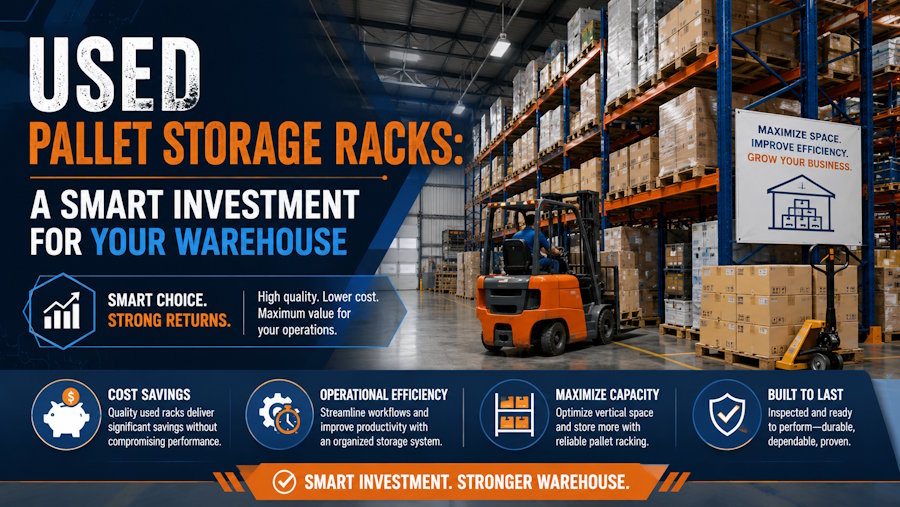
Used pallet storage racks offer businesses a cost-effective way to maximize warehouse space without sacrificing durability or safety. From selective racking to high-density systems, buying used is a practical choice for warehouses of all sizes.
Outfitting a warehouse is a significant investment. Between forklifts, shelving, conveyors, and racking systems, costs can add up fast. That's why so many warehouse managers and business owners are turning to used pallet storage racks as a smart, budget-conscious alternative to buying new.
But is buying used the right call for your operation? And what should you know before making a purchase? This guide covers everything—from the different rack types available to the key factors worth considering before you buy.
Why More Businesses Are Choosing Used Pallet Rack Systems
The warehouse equipment market has matured significantly. High-quality used racking is widely available, often in excellent condition, and sold at a fraction of the original cost. For businesses scaling up quickly or managing tight budgets, this makes a compelling case.
Here's why used racking continues to gain traction:
- Lower upfront cost: Used racks typically cost 40–60% less than new equivalents, freeing up capital for other operational needs.
- Faster availability: Unlike custom or new orders that may take weeks to arrive, used inventory is often in stock and ready to ship.
- Proven durability: Steel pallet racking is built to last. A rack that's been properly maintained can perform just as reliably as a new one.
- Eco-friendly choice: Reusing warehouse equipment reduces manufacturing demand and keeps usable materials out of landfills.
Common Types of Used Pallet Storage Racks
Not all racking systems are built the same. Understanding the different styles helps you choose the right configuration for your specific storage needs.
Selective Pallet Rack
This is the most widely used style in warehouses across the United States. Selective racking gives you direct access to every pallet, making it ideal for operations with a high variety of SKUs. It comes in two primary connector styles—teardrop and keystone—both of which are easy to reconfigure as your inventory changes.
When managing a high volume of diverse inventory, clear organization is a major factor in warehouse efficiency. Workers need to identify locations quickly to keep picking times low and prevent errors. Visual aids on the uprights and beams help differentiate racking levels in multi-tiered setups. This simple addition is especially useful when training new staff on the floor. It keeps the daily workflow moving without unnecessary delays.
Drive-In and Drive-Thru Racking
Drive-in systems allow forklifts to enter the rack bay directly, enabling deep storage of pallets. These are best suited for high-volume, low-SKU environments where first-in, last-out (FILO) inventory management is acceptable. Drive-thru racking offers access from both ends, supporting first-in, first-out (FIFO) flow.
Push-Back Racking
Push-back systems store pallets on inclined rails, allowing each new pallet to push the previous one back. This creates a dense, gravity-fed storage lane that's efficient and easy to operate. It's a popular choice for warehouses looking to maximize floor space without going full drive-in.
Pallet Flow Racking
Pallet flow uses rollers and gravity to move pallets from the loading end to the picking end. It's well suited for perishable goods or any inventory requiring strict FIFO rotation. Like push-back racking, it significantly increases storage density compared to selective systems.
Cantilever Rack
Cantilever racking is designed for long or irregularly shaped items that don't fit on standard pallet racks—think lumber, pipes, or furniture. The open-arm design offers flexible storage without vertical obstructions.
What to Look for When Buying Used Pallet Storage Racks
Buying used requires a bit more due diligence than purchasing new. Keep these factors in mind:
Structural integrity: Inspect uprights and beams for bends, cracks, or significant rust. Minor surface rust is generally cosmetic, but structural damage is a different matter entirely.
Compatibility: Not all racking components are interchangeable. Make sure the uprights and beams you're purchasing are compatible—teardrop components from one manufacturer may not align with those from another.
Load capacity ratings: Every rack system has a rated load capacity. Confirm that the used racks you're considering can safely handle the weight of your inventory.
Accessories and add-ons: Used pallet storage racks often come with or without accessories like wire decking, pallet supports, row spacers, and post protectors. Factor these into your total cost estimate.
Supplier reputation: Purchase from a supplier that inspects and stands behind their used inventory. A knowledgeable team should be able to help you select the right configuration and answer questions about load ratings and compatibility.
New vs. Used: Which Is Right for Your Warehouse?
The choice between new and used racking largely comes down to budget, timeline, and application.
Choose new racking if your load requirements are extremely high, your application is specialized, or you need components that match a very specific manufacturer spec. New racks also come with warranties and predictable lead times from established distributors.
Choose used pallet storage racks if you're working with a tighter budget, need inventory quickly, or are expanding an existing system with compatible components. For most standard warehouse applications, used racks perform just as well as new—at a meaningfully lower cost.
Extending the Life of Your Racking System
Getting the most out of any racking investment—new or used—comes down to maintenance and proper use. A few habits make a big difference:
- Conduct regular visual inspections of uprights and beams for damage.
- Install post protectors at aisle ends to shield uprights from forklift contact.
- Ensure racks are properly anchored to the floor and that load capacities are clearly posted and never exceeded.
- Train forklift operators on safe loading and unloading practices.
With basic upkeep, a well-maintained racking system can serve a warehouse reliably for decades.
Ready to Upgrade Your Warehouse Storage?
Used pallet storage racks represent one of the most practical investments a warehouse operation can make. They deliver the structural reliability your inventory demands, at a price point that leaves room in the budget for everything else.
Whether you're setting up a new facility or reconfiguring an existing one, working with an experienced supplier makes all the difference. Pallet Rack Surplus carries a wide selection of new and used racking systems—from teardrop selective rack to high-density push-back and drive-in configurations—and ships throughout the United States. Get in touch with their team for a free quote tailored to your space and storage goals.
Frequently Asked Questions
Are used pallet storage racks safe to use?
Yes, when purchased from a reputable supplier and properly inspected, used pallet racks are safe and reliable. Always check for structural damage before installation and ensure load ratings match your inventory requirements.
How do I know if used racking components are compatible with my existing system?
Compatibility depends on the rack style and manufacturer. Teardrop, keystone, and structural racks all have different connection systems. A knowledgeable supplier can help you identify compatible components before purchase.
What is the most common type of pallet racking?
Teardrop selective pallet rack is the most widely used style in the US. It offers direct access to every pallet, tool-free beam adjustments, and broad compatibility across manufacturers.
Can I mix new and used racking components?
In many cases, yes—provided the components share the same connector style and manufacturer specs. Consult with your supplier to confirm compatibility before mixing inventory.
Do used pallet racks come with accessories like wire decking?
It depends on the supplier and the specific inventory available. Some used rack systems include accessories; others are sold as uprights and beams only. Always confirm what's included before purchasing.

