

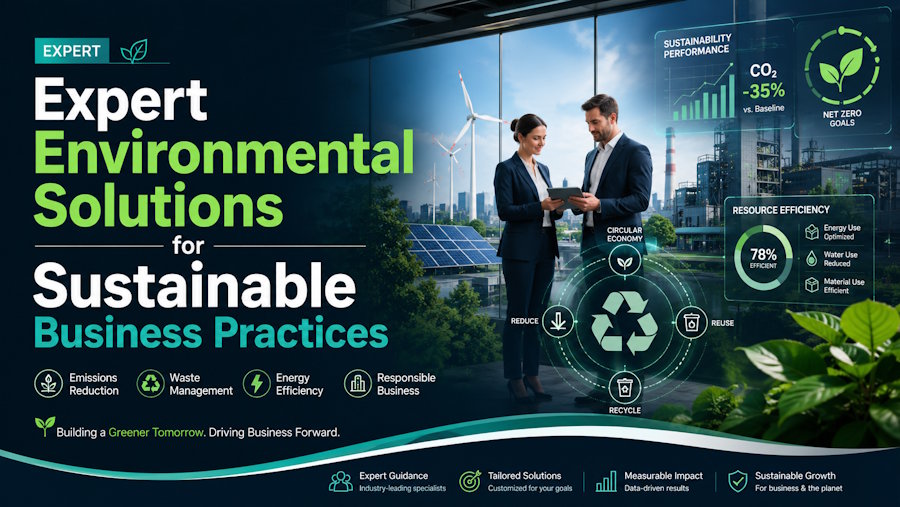
Environmental consultants in Australia help businesses, developers, and property owners manage environmental risks, meet regulatory requirements, and deliver sustainable project outcomes. Services typically include contaminated land management, site investigations, remediation, compliance reporting, and occupational hygiene across residential, commercial, and industrial sectors.
Environmental compliance has never been more important for Australian businesses. Whether you're developing land, managing a construction site, or dealing with contaminated soil, the regulatory requirements can be complex—and the consequences of getting it wrong are significant.
That's where professional environmental consultants come in. From Brisbane and the Gold Coast to Sydney and beyond, environmental consulting firms like Caldera Environmental are helping clients across every sector navigate these challenges with confidence. But what exactly does an environmental consultant do, and when do you actually need one?
This article breaks it all down.
What Does an Environmental Consultant Do?
An environmental consultant provides expert advice and practical solutions to help individuals, businesses, and government agencies manage their impact on the environment. Their work spans a wide range of disciplines—from assessing contaminated land and conducting site investigations to monitoring air quality and preparing compliance reports.
The scope of the role depends heavily on the project. A residential developer might need a contaminated land assessment before breaking ground. A construction company might require dust and noise monitoring throughout a build. An industrial site might need a full remediation strategy to address legacy contamination.
At their core, environmental consultants bridge the gap between your project goals and the regulatory environment you're operating in.
Key Services Offered by Environmental Consultants in Australia
Contaminated Land Management
One of the most common reasons clients engage environmental consultants in Australia is to assess and manage contaminated land. This involves investigating whether a site has been impacted by hazardous substances—such as heavy metals, hydrocarbons, or PFAS compounds—and determining the best course of action.
The process typically includes a Preliminary Site Investigation (PSI), followed by a Detailed Site Investigation (DSI) if contamination is suspected. From there, consultants develop a Remediation Action Plan (RAP) and oversee the remediation works.
Remediation and Validation
Once contamination has been identified, it needs to be addressed before a site can be safely developed or handed over. Remediation works can involve excavating and removing contaminated soil, treating groundwater, or applying in-situ treatment methods.
Validation follows remediation to confirm that clean-up goals have been achieved. This step is critical for satisfying regulators and giving project stakeholders confidence that the site meets required standards.
Occupational Hygiene
Environmental consultants also play a key role in protecting worker health. Occupational hygiene services typically include asbestos identification and management, dust monitoring, and hazardous materials assessments—all essential for maintaining safe working conditions on-site.
Given Australia's legacy of asbestos use in building materials, asbestos assessment is one of the most frequently requested services, particularly on demolition and redevelopment projects.
Environmental Monitoring
Ongoing monitoring is often required throughout the life of a project to demonstrate compliance with environmental approvals. This can include air quality monitoring, groundwater sampling, noise and vibration monitoring, and water management reporting.
Real-time monitoring data helps project managers make informed decisions and provides a clear record of compliance for regulators.
Environmental Compliance Reporting
Navigating Australia's environmental regulations can be complicated. Each state has its own framework, and requirements can vary significantly depending on the type of project and land use.
Environmental compliance reporting ensures that your project meets all relevant obligations—reducing legal risk and keeping your approvals on track.
Who Needs Engineering and Environmental Consulting Services?
The short answer: more people than you might expect.
Engineering and environmental consulting services are relevant to a broad range of industries and project types, including:
- Property developers assessing land prior to purchase or development
- Construction companies managing environmental risks throughout a build
- Industrial operators maintaining compliance with environmental licences
- Government agencies overseeing land remediation or infrastructure projects
- Property owners dealing with contamination from previous site uses
Whether the project is large or small, having the right expertise on your side from the outset can save significant time and cost down the track.
Why Accreditation Matters
Not all environmental consultants hold the same qualifications. When selecting a firm, it's worth checking that their team holds relevant accreditations—such as Certified Environmental Practitioner (CEnvP), Workplace and Product Chemist Group (WPCG) accreditation, or Licensed Asbestos Assessor status.
These credentials signal that consultants have met rigorous professional standards and are equipped to handle complex, high-stakes projects. Caldera Environmental's team, for example, holds accreditations across multiple disciplines, allowing them to deliver comprehensive engineering and environmental consulting services under one roof.
How to Choose the Right Environmental Consultant for Your Project
With so many firms offering environmental consulting services, the decision can feel overwhelming. Here are a few key factors to consider:
Relevant experience: Look for a consultant with experience in your specific type of project—whether that's acid sulfate soils, PFAS investigations, asbestos management, or groundwater monitoring.
Local knowledge: Environmental regulations vary by state. A consultant with strong local knowledge of Queensland, New South Wales, or wherever your project is located will navigate approval processes more efficiently.
Clear communication: Environmental consulting involves technical complexity. The best consultants translate that complexity into clear, actionable advice.
Proven track record: Client testimonials and case studies are a strong indicator of reliability and quality.
Getting the Best Outcomes for Your Project
Working with experienced environmental consultants in Australia gives you access to practical, science-backed advice that keeps your project on track and on the right side of the law. The best firms don't just tick regulatory boxes—they help you make better decisions for your site, your team, and the broader environment.
If your project involves land development, construction, contamination, or any form of environmental risk, the earlier you engage a qualified consultant, the better.
Frequently Asked Questions
When should I engage an environmental consultant?
Ideally, before you begin any land purchase, development approval, or construction activity. Early engagement helps identify potential issues before they become costly problems.
How long does a site investigation take?
Timelines vary depending on the complexity of the site and the scope of work. A Preliminary Site Investigation may take a few weeks, while a Detailed Site Investigation and subsequent remediation can take several months.
Are environmental consultants required by law?
In many cases, yes. Planning approvals, development applications, and environmental licences often require reports prepared by qualified environmental professionals.
What is a CEnvP accreditation?
Certified Environmental Practitioner (CEnvP) is a professional accreditation that recognises environmental practitioners who have demonstrated competency, experience, and commitment to professional standards in Australia.
Do environmental consultants work on residential projects?
Absolutely. Residential buyers and developers often require site assessments, asbestos surveys, and contamination reports as part of the due diligence process.

