

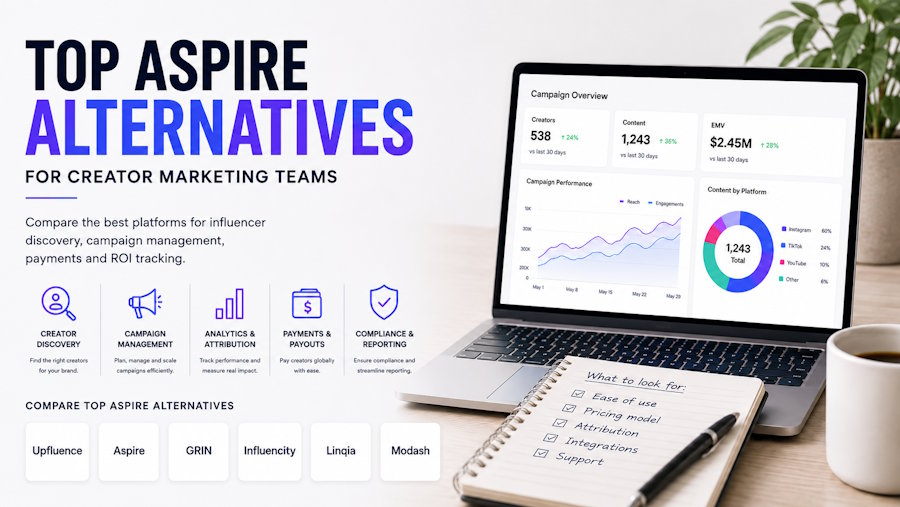
Most teams who start looking at Aspire alternatives are not unhappy with the software. They are running into a fit problem, which is a different thing entirely.
Aspire, formerly AspireIQ, is a capable full-suite platform. It covers creator discovery, outreach, contracts, content approval, affiliate tracking, payments and analytics in one place, with a marketplace where creators apply to your campaigns rather than waiting to be found.
The question worth asking is not whether it works. It is whether its shape matches your program, your team size and your commercial model. This guide covers what Aspire does well, the reasons teams evaluate alternatives and how to compare the options without ending up somewhere equally mismatched.
What Aspire does well
Credit where it is due, because a shortlist built on a strawman is useless.
Aspire positions itself around word-of-mouth commerce, pulling ambassadors, influencers, affiliates, customers and user-generated content into one system. It has served brands including M&Ms, Keurig, Samsung, HelloFresh and Dyson, and it is strongest in fashion, beauty and consumer goods.
Its Creator Marketplace is the standout feature. Brands post campaigns and creators apply directly, which flips discovery from outbound search into inbound supply. On G2, users consistently point to ease of use and customer support as the reasons they stay.
The Shopify integration is well regarded, content approval workflows are built in rather than bolted on, and it supports earned media value alongside click and promo code tracking.
Why teams evaluate alternatives anyway
Four reasons come up repeatedly, and none of them are about software quality.
Commercial model. Aspire does not publish pricing. Every quote is custom and third-party estimates vary widely, with annual commitments rather than monthly billing. Worth noting that annual contracts are the norm across this category rather than an Aspire quirk, but it does mean a pilot is harder to run before budget is committed.
Team size. Reporting on per-seat pricing suggests cost climbs with headcount. Small teams without a dedicated influencer resource often conclude it is more platform than they need at that price point.
Vertical fit. Strength in fashion, beauty and CPG is real, and it means brands in software, home, health or industrials sometimes want a platform whose data and templates were built around their category.
Program shape. A team running product seeding and UGC at volume has different needs from one running an affiliate program where every dollar has to be reconciled to revenue.
If any of those describe you, the same discipline that applies to other software vendor shortlists applies here. Screening on brand recognition predicts rework, not results.
Build the rubric before you look at demos
Write down the jobs your stack has to do, then score every option against them. Doing this first is what stops a good demo from overriding a bad fit.
Six jobs cover most creator programs. Discovery is finding creators who match your audience rather than your follower target, and vetting is confirming that the audience is real and in your market.
Outreach and CRM is managing conversations without losing threads. Attribution is tying content to revenue rather than reach, and payments and tax operations are paying creators across borders while handling the forms.
The sixth is disclosure compliance, which means keeping material connections obvious in every post rather than trusting a platform label to do it for you.
Add one commercial question to the rubric: does the vendor charge a flat platform fee, a percentage of the sales your creators generate, or a fee per seat? That single answer changes your cost curve more than any feature on the list, because two of those three structures get more expensive precisely when the program starts working.
Upfluence
Best fit: teams that want discovery, outreach, campaign management, attribution and payments in one system, with pricing that does not scale against their own success.
Upfluence covers the same end-to-end span as Aspire but differs in two ways that matter for this comparison. The first is its commercial model. It charges a fixed platform fee for the modules you select rather than a percentage of creator sales, so the cost curve flattens as revenue grows instead of tracking it.
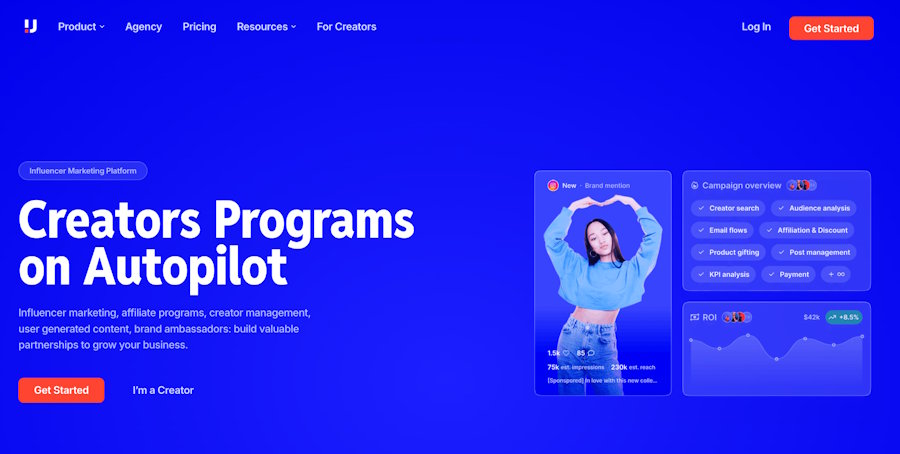
The second is how much of the workflow its AI campaign co-pilot Jaice carries. Jaice reads audience demographics, brand affinity, engagement quality and content behavior to shortlist matches, then adapts outreach per creator and sends from your own Gmail or Outlook address. Upfluence reports that the integrated AI saves teams 20 or more hours a week.
The more distinctive feature is Live Capture, which scans your own customer base for people who already have audiences. In the Upfluence case study on the fashion brand Valabasas, that surfaced more than 900 creators already buying from the brand, and the resulting program produced $165,000 in sales across three months at close to 14x ROI. Its own data puts existing customers at roughly seven times more likely to accept a collaboration than cold contacts.
On the operational side, it connects to Shopify, WooCommerce and Amazon, attributes sales to individual creators, and reports revenue, ROI, average order value and customer lifetime value by creator and program. Payments run in local currencies with KYC verification and W-8, W-9 and 1099 collection handled automatically.
Worth checking: the minimum contract runs 12 months, so it is not a month-to-month trial either. Pricing is modular, which means confirming which tier includes the payment and marketplace features you actually need before you sign.
GRIN
Best fit: ecommerce and direct-to-consumer brands managing a high volume of creator relationships and product seeding.
GRIN is built primarily around ecommerce and DTC programs, supporting campaigns across Instagram, TikTok, YouTube, Twitch, X and Snapchat. Brands running ongoing gifting and ambassador activity at volume tend to get the most from it.
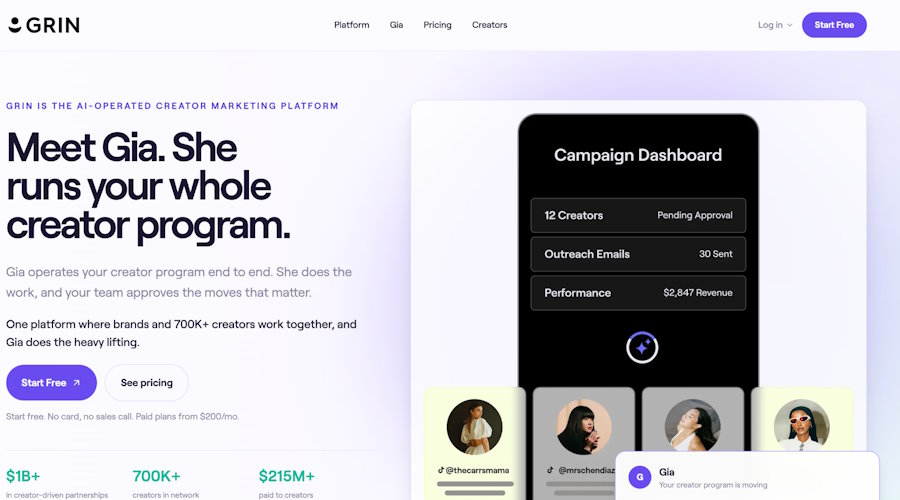
Worth checking: third-party comparisons put entry pricing near $999 a month, so confirm your quote against program size rather than assuming it is the lighter-weight option on this list.
CreatorIQ
Best fit: enterprise programs spanning multiple brands, regions or agencies, where governance and permissions matter as much as campaign output.
CreatorIQ is built for large organizations, focused on compliance, large-scale reporting and measurement across markets and teams. It integrates with enterprise systems including Salesforce and custom data warehouses, which is what multi-market programs usually need.
Worth checking: comparisons name complexity and cost as the trade-off for that depth, pricing is enterprise-only with no published starting figure, and onboarding at this tier can absorb one to three months of staff time. Plan the launch date around that, not around the contract date.
impact.com
Best fit: teams treating creators as one partner type inside a broader program that also covers affiliates, publishers and referrals.
impact.com approaches this as partnership management rather than influencer marketing specifically. It carries discovery tools, a vetted marketplace, cookieless tracking options and cross-channel reporting, which suits flexible commission structures and complex payout logic.
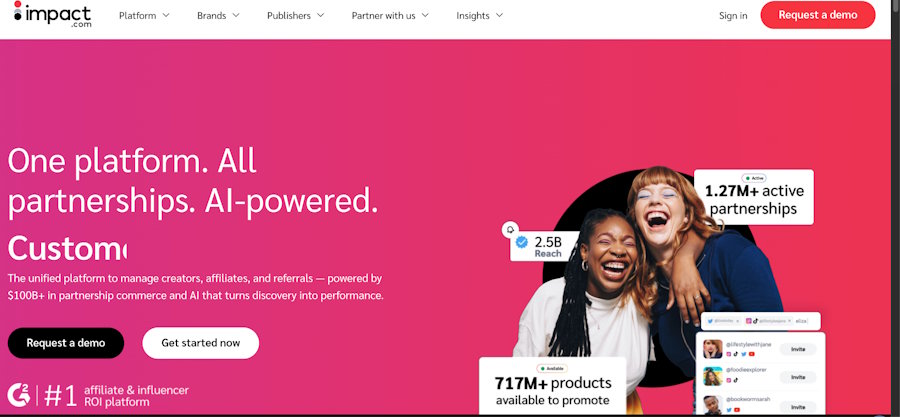
Worth checking: if briefing, content approvals and gifting are central to how you work with creators, confirm how those flows are handled rather than assuming a partnership platform treats them the way a creator-first tool does.
Modash
Best fit: teams whose bottleneck is finding and vetting creators rather than managing them afterward.
Modash leads on discovery and audience analysis across Instagram, TikTok and YouTube, with lists, tags, outreach from your own inbox and monitoring that checks whether contracted creators actually published. It integrates with Shopify and publishes self-serve pricing, which is unusual in a category that mostly runs on sales calls.
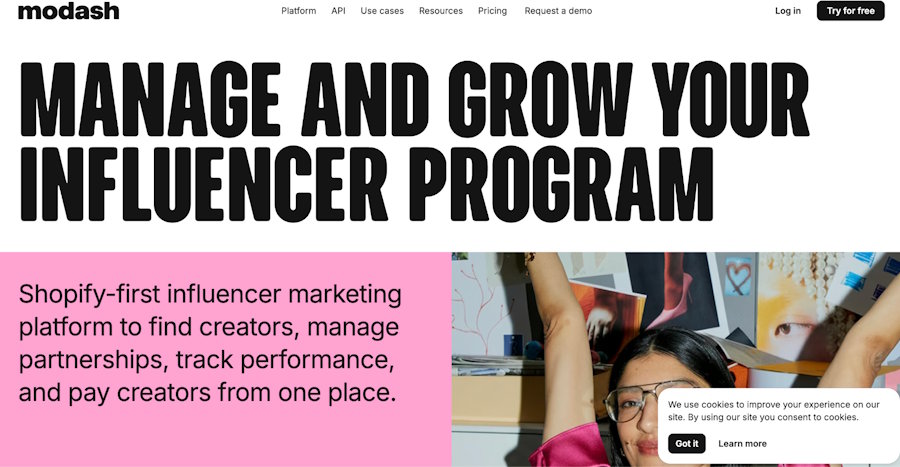
Worth checking: comparisons describe its campaign management as lighter than full-suite platforms, which is why larger programs often pair it with a separate CRM or contract tool. Check what it covers on payments and attribution against your rubric.
One comparison buyers keep getting wrong
Do not compare creator database sizes across vendors. The numbers measure different things.
A marketplace figure counts creators who have opted in and are available to apply to campaigns. A search index counts profiles the platform can analyze whether or not those creators have ever heard of you. Comparing one against the other tells you nothing useful.
The number that matters is how many relevant creators a platform surfaces for your specific category and market. Test that during a trial with three real briefs rather than reading it off a homepage.
Switching without losing your history
If you do move, protect the data before you migrate. Export your creator contact list, past campaign performance, active affiliate codes and any content you have reuse rights to.
Run both systems in parallel for one campaign cycle. It costs a little in duplicated effort and it saves you from discovering an attribution gap after the old contract has lapsed.
Then rebuild your UTM conventions and code naming in the new platform on day one, before the first campaign goes live. Retrofitting a naming scheme across live links is the kind of task nobody volunteers for twice.
How to read this list
No single name here is right for every team, which is the point of scoring against a rubric instead of a ranking. A platform that suits a 40-person enterprise program is the wrong economic choice for a two-person team, and a discovery-first tool solves nothing if your actual problem is paying 200 creators across nine currencies.
Compare each option against the six jobs, then add the commercial question. The right answer is usually obvious once you stop comparing vendors against each other and start comparing them against the work.
FAQ
How does Aspire's pricing compare with alternatives?
Aspire does not publish pricing, so any comparison depends on a custom quote. Ask each vendor on your shortlist whether the fee is flat, per seat or a percentage of creator sales, because that structure matters more than the headline number.
What is the closest all-in-one alternative to Aspire?
Upfluence covers the most similar end-to-end span, from discovery and outreach through attribution and creator payments in one system.
Can I use more than one platform?
Yes, and modular stacks are common. Pair a discovery tool with a partner or affiliate platform if you want flexible commission logic, but budget for the integration work and the risk of data drifting between systems.
How long should a trial run?
Long enough to run one full campaign cycle, including payout. Discovery demos well and payments do not, so make sure your evaluation reaches the end of the process.

