

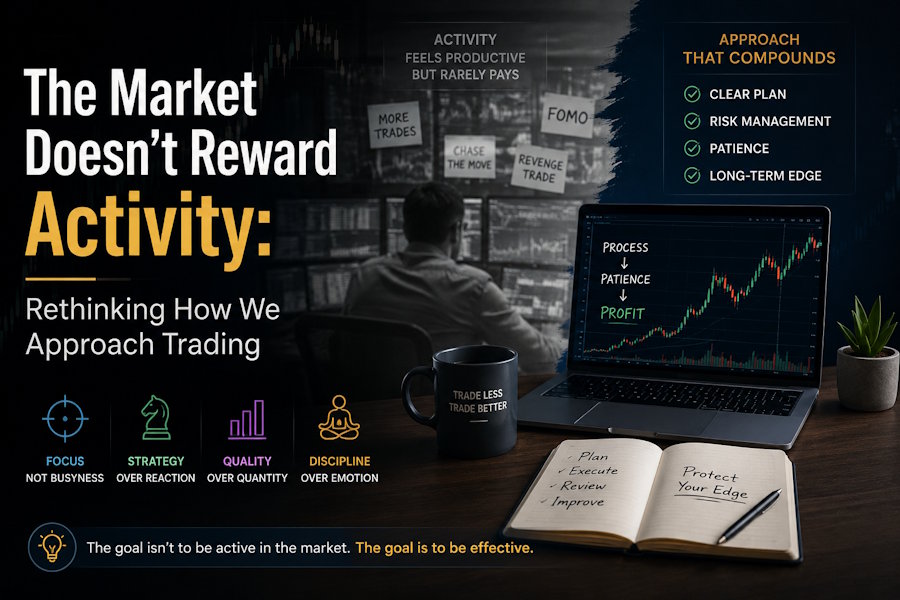
Many people enter the stock market believing success comes from constant action. They assume that checking prices every hour, making frequent trades, and reacting quickly to every market movement will help them stay ahead.
The reality is often different. Trading is not about how often someone makes a move. It is about making thoughtful decisions when the right opportunities appear. In many cases, unnecessary activity can create more problems than progress.
Successful traders understand that patience, preparation, and discipline are just as important as market knowledge. The goal is not to always be involved. The goal is to know when involvement makes sense.
The Difference Between Being Active and Being Effective in the Market
There is a major difference between staying busy and making strategic decisions. An active trader may place many trades throughout the week, but that does not automatically mean those trades are improving their results.
Effective trading focuses on quality rather than quantity. A well-researched decision based on a clear strategy can be more valuable than several quick trades made without a strong reason.
Before getting started, many new investors spend time researching where to buy stocks and comparing different trading platforms. However, choosing the right place to trade is only one part of the process. Understanding why you are making a trade and what you expect from it matters even more.
The best traders often have specific criteria before entering a position. They may consider a company’s financial performance, industry trends, overall market conditions, and their own risk tolerance. Instead of chasing every opportunity, they focus on opportunities that fit their strategy.
Why Overtrading Is One of the Most Common Mistakes Among Investors
Overtrading happens when investors make too many trades without a clear purpose. It is especially common among beginners who feel pressure to react to every market change.
A stock price moves up, and they feel they need to buy immediately. A stock falls, and they worry they made the wrong choice. A headline creates uncertainty, and they change their strategy overnight.
These reactions are often driven by emotion rather than analysis.
Fear of missing out is one of the biggest reasons people trade too frequently. Investors may see others discussing a rising stock and feel like they are missing a major opportunity. The problem is that buying without research can lead to decisions based on excitement instead of logic.
Frequent trading can also increase costs and make it harder to maintain a consistent approach. Every decision requires attention, and constant activity can create unnecessary stress.
How Successful Traders Decide When to Make a Move
Experienced traders usually spend more time analyzing than executing trades. They understand that waiting is part of the process.
Before making a decision, they may review several factors. These can include a company’s earnings history, market trends, economic conditions, and potential risks. They are not looking for perfect predictions because those rarely exist. Instead, they are looking for situations where the potential opportunity matches their expectations.
This approach helps remove some emotion from trading. When investors create rules before entering a position, they are less likely to make sudden decisions based on short-term market movements.
A strong trading strategy is not about knowing what will happen tomorrow. It is about preparing for different possibilities and having a plan for each situation.
The Role of Patience in Building a Better Trading Strategy
Patience is one of the most overlooked skills in stock trading. Many investors understand the importance of research and analysis, but they underestimate the value of waiting.
Markets change constantly. Prices move every day, but not every movement creates a good opportunity. Sometimes the smartest decision is choosing not to act.
For example, an investor may identify a company they believe has long-term potential but decide to wait until the price reaches a level that fits their strategy. Another investor may hold onto a strong investment during temporary market uncertainty instead of selling because of short-term fear.
Patience does not mean ignoring the market. It means avoiding unnecessary reactions.
Why Risk Management Matters More Than Trading Frequency
Making profitable trades is only one part of successful investing. Managing risk is equally important.
A trader can make several good decisions and still face losses if they do not manage their exposure properly. This is why experienced investors focus on protecting their capital.
Risk management can involve setting appropriate position sizes, maintaining a diversified portfolio, and understanding how much volatility they can handle.
The goal is not to avoid every loss. Losses are a normal part of investing. The goal is to make sure one poor decision does not create damage that is difficult to recover from.
A disciplined approach allows investors to stay focused even when markets become unpredictable.
How Technology Changed the Way People Trade
Technology has transformed how individuals participate in financial markets. Investors now have access to real-time information, market updates, and trading tools that were once difficult to access.
This accessibility has created new opportunities, but it has also introduced new challenges.
Constant notifications and instant price updates can encourage people to react too quickly. Seeing a stock move throughout the day can create the feeling that action is always necessary.
However, having more information does not automatically lead to better decisions. Good trading still requires judgment, research, and a clear understanding of personal goals.
The tools may have changed, but the fundamentals remain the same.
Building a More Intentional Approach to Stock Trading
A more thoughtful trading approach starts with defining clear goals. Investors should understand whether they are focused on short-term opportunities, long-term growth, or a combination of both.
Creating rules before trading can also help. This may include deciding what conditions need to be met before buying or selling a stock.
Another useful habit is reviewing past decisions. A trading journal can help investors understand their patterns, including what worked and what mistakes they repeat.
The most successful traders are not necessarily those who make the most moves. They are often the ones who learn from their decisions and improve over time.
The Best Trading Decisions Are Often the Ones You Don’t Make
Stock trading is not a competition to see who can make the most transactions. Constant movement does not guarantee better results.
The market rewards preparation, discipline, and the ability to recognize meaningful opportunities. Investors who focus less on staying busy and more on making informed decisions are often better positioned for long-term success.
Sometimes the smartest move in trading is waiting. Knowing when not to act can be just as valuable as knowing when to make a move.

