

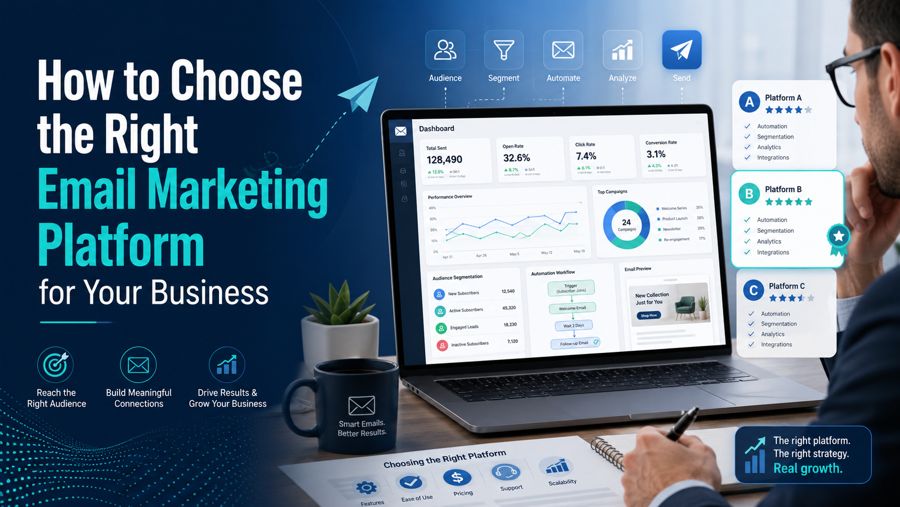
You're wasting money if your email platform can't segment properly, integrate with your CRM, or keep messages out of spam folders. With dozens of options available, each promising different features and benefits, you need a clear framework to make the best decision for your specific needs.
Understand Your Business Requirements First
Before comparing platforms, take time to map out your actual needs. A common mistake is choosing based on features that sound impressive but don't align with your business goals.
Start by evaluating your current subscriber list size and projected growth over the next 12 months. Many platforms price based on contact volume, so understanding your trajectory helps avoid unexpected costs. If you're a small business with 500 subscribers today but plan to scale rapidly, you'll need different pricing flexibility than an established company with a stable list.
Consider your technical capabilities too. Some businesses have dedicated developers who can handle complex integrations and custom coding. Others need drag-and-drop simplicity without touching a line of code. Be honest about your team's skills to avoid selecting a platform that either frustrates your technical staff or overwhelms your marketing team.
Essential Features That Actually Matter
Every platform advertises hundreds of features, but only a handful truly impact your results. Focus on these core capabilities during your evaluation.
Email automation is the most valuable feature for most businesses. Look for platforms that let you create sophisticated workflows based on subscriber behavior, not just simple autoresponders. Can you trigger emails when someone abandons a cart, downloads a resource, or reaches a specific engagement score? According to Campaign Monitor's research, automated emails generate 320% more revenue than non-automated emails.
Segmentation capabilities determine how precisely you can target your messages. Basic platforms might offer simple list-based segments, while advanced ones provide dynamic segmentation using multiple criteria. The ability to segment by purchase history, website behavior, email engagement, and custom fields dramatically improves relevance. For example, you might want to send different messages to customers who purchased in the last 30 days versus those who haven't bought in 6 months.
Template design flexibility matters more than you might think. Some platforms lock you into rigid templates, while others offer complete customization. Consider whether you need mobile-responsive designs (you do), access to HTML editing, and the ability to maintain brand consistency across campaigns.
Integration Capabilities Can Make or Break Success
Your email platform doesn't operate in isolation. It needs to connect seamlessly with the tools you already use.
Check for native integrations with your CRM, e-commerce platform, content management system, and analytics tools. Native connections typically offer deeper functionality and better reliability than third-party workarounds. If you use Shopify, Salesforce, WordPress, or other major platforms, verify that the integration supports bidirectional data sync and real-time updates.
For businesses with complex setups, API quality becomes critical. Review the API documentation to ensure it supports the data flows you need. Some platforms offer robust APIs with excellent documentation, while others provide limited functionality that creates bottlenecks. If you're planning sophisticated integrations, consider working with ESP and CDP implementation services to ensure proper setup from the start.
Webhook support allows your email platform to trigger actions in other systems based on subscriber behavior. This capability enables advanced workflows that span multiple tools in your marketing setup.
Deliverability Should Be Non-Negotiable
The fanciest features mean nothing if your emails land in spam folders. Deliverability rates vary significantly between platforms, yet many businesses overlook this critical factor.
Research each platform's reputation with major inbox providers like Gmail, Outlook, and Yahoo. Established platforms with strong deliverability practices maintain better sender reputations. Look for features like dedicated IP addresses (for high-volume senders), authentication protocols (SPF, DKIM, DMARC), and list hygiene tools that automatically remove inactive subscribers.
Ask potential vendors about their average deliverability rates and what support they provide if you encounter issues. Industry-leading platforms typically maintain deliverability rates above 95%. Platforms with deliverability monitoring, spam testing tools, and expert support teams help you maintain high inbox placement rates.
Pricing Models Require Careful Analysis
Email platform pricing varies widely, and the cheapest option often becomes expensive once you account for hidden costs.
Most platforms use contact-based pricing, charging more as your list grows. Others price by email volume, which works better if you have a large list but send infrequently. Some newer platforms offer flat-rate pricing regardless of list size, appealing to rapidly growing businesses.
Watch for additional charges beyond the base price. Some platforms charge extra for removing their branding, accessing certain features, using automation, or getting customer support. Calculate your actual costs, not just the advertised monthly fee.
Consider whether you need month-to-month flexibility or can commit to annual billing for discounts. For detailed guidance on email marketing pricing structures, Litmus offers a comprehensive comparison guide worth reviewing.
Testing and Customer Support Make the Difference
Even the best platform requires learning time and occasional troubleshooting. Quality support can dramatically reduce frustration and downtime.
Evaluate the support channels available and understand what's included in your plan:
- Available channels (email, phone, live chat, or just a knowledge base)
- Whether support is included in your plan tier or costs extra
- Recent customer reviews focusing specifically on support experiences, as this reveals how the company treats users when problems arise
Most platforms offer free trials, which you should absolutely use. During your trial, don't just explore features. Actually build a campaign, set up automation, test integrations, and contact support with questions. This hands-on experience reveals usability issues and limitations you won't discover from marketing materials.
Scalability Considerations for Long-Term Success
Switching email platforms later creates significant work: migrating lists, rebuilding templates, recreating automations, and training staff. Choose with growth in mind.
Verify that higher-tier plans offer the advanced features you'll eventually need, even if you start on a basic plan. Confirm that upgrading is straightforward without losing existing work. Some platforms make it difficult to access your data if you leave, so understand the export options before committing.
Consider whether the platform serves businesses much larger than yours. If their biggest customers send millions of emails monthly and you send thousands, you know they can handle your growth. Platforms focused solely on small businesses might lack enterprise features you'll eventually require.
Making Your Final Decision
After evaluating platforms against these criteria, create a simple scorecard ranking each option. Weight the factors based on your priorities. For one business, deliverability and integrations might be critical, while another prioritizes ease of use and cost.
Take advantage of demos and sales calls, but come prepared with specific questions about your use cases. Generic demonstrations showcase ideal scenarios, not the specific challenges you'll face. Ask to see exactly how you would accomplish your most complex workflow.
The right platform isn't about having every feature - it's about fitting your current needs while supporting your growth trajectory. The perfect choice for another business might be completely wrong for yours. Focus on your requirements, test thoroughly, and choose the platform that genuinely serves your goals rather than the one with the flashiest features or lowest price tag.

