

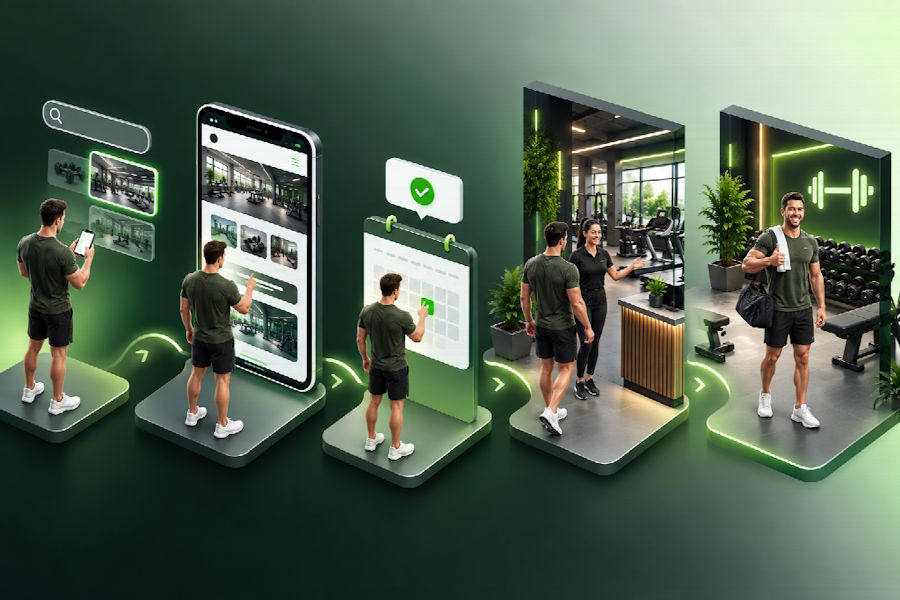
A potential member is standing in front of a mirror, thinking about getting back in shape. They pick up their phone, search for a nearby gym, open three websites, check a few reviews, and compare membership options.
Within minutes, they make a decision.
The winning gym may not have the largest training floor, the newest equipment, or the lowest membership price. It is often the gym that makes the decision feel easiest.
That is the reality of modern gym marketing. People rarely join a fitness club after seeing one advertisement. They move through a short but important journey: discovering the gym, evaluating its credibility, imagining themselves as a member, and deciding whether the first step feels worth taking.
If you want to know how to get more gym members, focus on improving that entire journey—not simply generating more website traffic or social media views.
1. Define the Type of Member You Want to Attract
Trying to market a gym to “everyone who wants to exercise” usually creates generic messaging that connects with no one.
A busy professional looking for efficient 45-minute workouts has different priorities from a college athlete, a first-time gym member, a parent returning to fitness, or someone searching for personal training after an injury.
Before launching another campaign, define your ideal member:
- What result do they want?
- What has prevented them from reaching it?
- What makes them nervous about joining a gym?
- Which classes or services would interest them?
- How far are they willing to travel?
- What would make them choose you instead of a competitor?
These answers should shape your website copy, photography, offers, social media content, and advertising.
For example, “Premium training for every fitness level” sounds polished but vague. “Small-group strength coaching for busy professionals who want expert guidance without crowded workouts” immediately tells the right person that they have found the right place.
Specific messaging does not necessarily reduce your audience. It increases relevance—and relevance drives action.
2. Turn Your Website Into a Membership Sales Tool
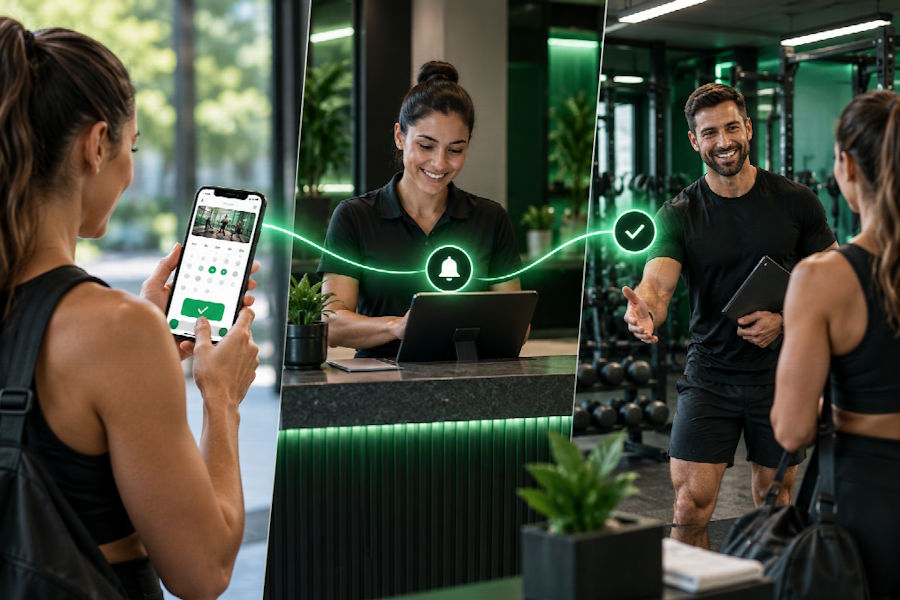
A gym website should do more than display attractive photos and list available equipment. It should help visitors confidently take the next step.
Within a few seconds, a prospective member should understand:
- Who the gym is for
- Where it is located
- What makes it different
- Which services or classes are available
- How to view the schedule
- How to book a visit or trial session
Successful fitness websites create a clear path from curiosity to conversion. They use strong headlines, authentic photos, simple navigation, visible calls to action, and short forms.
A specialized Gym Website Design should also account for how fitness customers behave. Many visitors want to compare classes, meet the trainers, understand membership options, read reviews, and book from their phones. Every unnecessary click introduces another opportunity for them to leave.
Review your website as if you were visiting it for the first time. Can you find the class schedule in seconds? Is the location obvious? Can you book a trial without calling the front desk? If the answer is no, the website may be quietly losing leads every day.
3. Create an Irresistible First-Step Offer
“Contact us for more information” rarely creates excitement. It asks the visitor to invest time without offering a clear reward.
A strong introductory offer makes the first step specific, valuable, and low-risk. Depending on your business model, it might include:
- A complimentary fitness assessment
- A seven-day gym pass
- One free group class
- A discounted first month
- A beginner training session
- A body composition assessment
- A consultation with a personal trainer
The goal is not merely to offer a discount. It is to remove uncertainty.
Many prospects hesitate because they are worried about feeling out of place, choosing the wrong membership, or being pressured into a long contract. Your introductory offer should help them experience the environment and meet your team before making a larger commitment.
Give the offer a clear name, explain exactly what it includes, and add a direct call to action such as “Claim Your Free Pass” or “Book Your Fitness Assessment.”
4. Win Local Searches
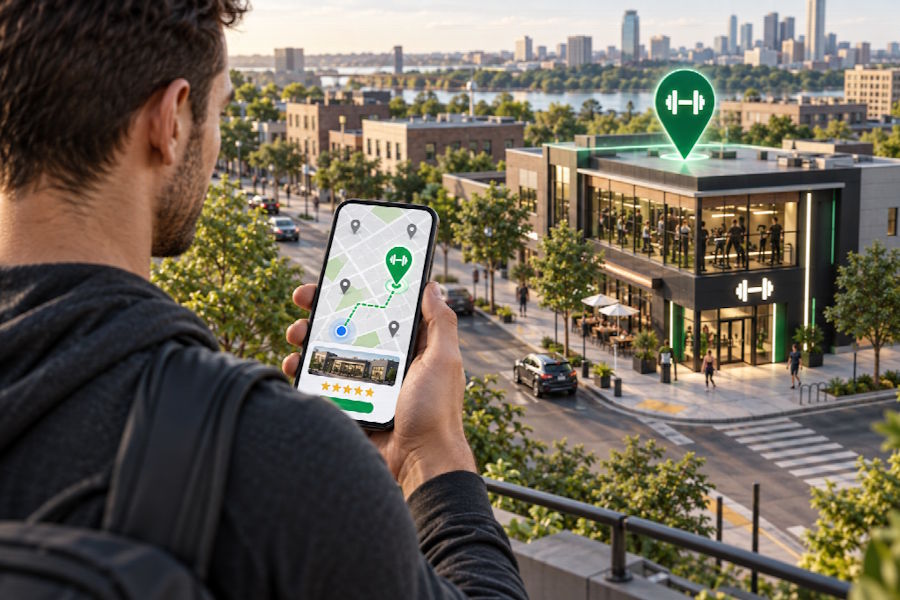
When someone searches for “gym near me,” “personal trainer in [city],” or “fitness classes near [neighborhood],” they are not casually browsing. They are often actively comparing options.
Local SEO helps your business appear at this high-intent moment.
Start with your Google Business Profile. Ensure that your gym’s name, address, phone number, website, opening hours, services, and images are complete and accurate. Add new photos regularly and respond professionally to reviews.
Your website should also contain clear location signals. Include your city and service area naturally in page titles, headings, contact information, and service descriptions. If you operate multiple locations, create a useful page for each one rather than copying the same text and changing the city name.
Relevant local pages might target searches such as:
- Gym in [City]
- Personal training in [City]
- Strength training classes in [City]
- Women’s fitness classes in [Area]
- Beginner-friendly gym near [Neighborhood]
Avoid forcing location keywords into every sentence. Write naturally and provide information that genuinely helps local visitors, including parking details, nearby landmarks, public transportation, class availability, and opening hours.
5. Make Mobile Booking Effortless

A large percentage of prospective members will discover your gym while using a phone. They may be browsing during lunch, commuting, or scrolling through social media after work.
If your website loads slowly, uses tiny text, hides the schedule, or requires a complicated form, motivation can disappear before the page is finished.
Mobile visitors should be able to:
- Understand your offer immediately
- View classes and schedules
- Compare membership options
- Call or message the gym
- Book a trial session
- Find directions
- Complete forms without zooming
Keep forms short. At the first stage, a name, email address, phone number, and preferred service may be enough. You can collect additional information later.
Test the full booking process on several mobile screen sizes. Do not stop after confirming that the homepage looks attractive. Complete the same journey a potential member would take—from landing on the website to receiving a booking confirmation.
6. Show Real People and Real Results
Fitness is personal. Prospective members want to know whether they will feel welcome, supported, and comfortable in your space.
Stock images of flawless athletes may create a polished appearance, but they rarely communicate what joining your gym actually feels like. Whenever possible, use professional photographs and videos featuring your real facility, coaches, classes, and community.
Social proof can include:
- Member testimonials
- Google reviews
- Before-and-after stories shared with permission
- Video interviews
- Trainer introductions
- Class photos
- Member milestones
- Short case studies
The strongest testimonials are specific. “Great gym!” offers little information. A story explaining how a member gained confidence, returned to exercise after several years, or stayed consistent because of supportive coaching is far more persuasive.
Feature proof close to important calls to action. A positive member story beside a trial-booking button can address doubts at precisely the right moment.
7. Build Dedicated Pages for Important Services
A single page listing every program makes it difficult to rank in search results and forces visitors to hunt for relevant information.
Create dedicated pages for major services such as:
- Personal training
- Group fitness classes
- Strength and conditioning
- Yoga or Pilates
- Weight-loss coaching
- Nutrition coaching
- Sports performance
- Senior fitness
- Online coaching
Each page should answer the questions a prospective member is likely to ask:
- Who is this service designed for?
- What happens during a session?
- What results can members expect?
- Who provides the training?
- When is it available?
- How much does it cost?
- What should someone do next?
This structure improves the user experience while giving search engines clearer information about the services your gym provides.
8. Publish Content That Answers Real Fitness Questions
Blog content can attract people before they are ready to search for a specific gym. It also gives you useful material for email campaigns, social media, and conversations with leads.
Do not publish generic articles simply to fill a blog. Create content around the actual questions your trainers hear each week.
Useful topics might include:
- How often should beginners go to the gym?
- Personal training vs. group fitness: Which is right for you?
- What should you bring to your first gym session?
- How long does it take to see results from strength training?
- Is your gym suitable for complete beginners?
- What is included in a personal training assessment?
- How can busy professionals maintain a consistent workout routine?
Connect each article to a relevant service and next step. Someone reading a beginner’s guide might be invited to schedule an introductory session, while a visitor reading about strength training could view your class schedule.
Helpful content builds familiarity. By the time a reader is ready to join, your gym already feels like a trusted source rather than an unfamiliar business.
9. Follow Up While Motivation Is High
Generating leads is only half the challenge. Many gyms lose potential members because inquiries sit unanswered for hours—or even days.
Someone who requests a trial session is usually comparing several options. A fast, friendly response can make a major difference.
Create a simple follow-up system:
- Send an immediate confirmation by email or text.
- Let the prospect know what will happen next.
- Assign the lead to a specific team member.
- Follow up personally as soon as possible.
- Send a reminder before the appointment.
- Check in after the visit.
- Continue with helpful, relevant messages if the person is not ready to join.
Automation can handle confirmations and reminders, but communication should still feel personal. Mention the service the prospect selected and answer the questions they actually asked.
Avoid sending the same aggressive sales message repeatedly. Good follow-up reduces uncertainty and helps the person make a confident decision.
10. Use Social Media to Create Familiarity
Social media is most effective when it gives people a genuine look inside your gym.
Instead of filling every post with membership promotions, create a balanced content mix:
- Quick exercise tips from trainers
- Member stories and achievements
- Short class previews
- Answers to common fitness questions
- Behind-the-scenes videos
- Coach introductions
- Fitness challenges
- Community events
- Beginner-friendly advice
The objective is to make your gym feel recognizable before someone visits. When viewers repeatedly see your trainers, environment, and members, the first appointment feels less intimidating.
Every post does not need to sell a membership, but interested followers should always have a clear path to your website, schedule, or introductory offer.
11. Measure Membership Actions, Not Vanity Metrics
Website visits, followers, impressions, and video views can be useful indicators, but they do not automatically create revenue.
Track actions connected to membership growth:
- Trial pass requests
- Consultation bookings
- Phone calls
- Completed contact forms
- Class reservations
- Facility tours
- Membership purchases
- Cost per qualified lead
- Trial-to-member conversion rate
- Lead response time
Ask every new member how they discovered the gym. Combine this information with website analytics, call tracking, booking data, and advertising reports.
If a campaign generates many leads but very few appointments, examine the offer and follow-up process. If visitors reach a membership page but leave without taking action, review the pricing presentation, page speed, trust signals, and calls to action.
Better measurement helps you invest in the marketing activities that produce members—not simply attention.
The Best Gym Marketing Strategy Removes Friction
Getting more gym members is not about finding one secret advertising channel. Sustainable growth happens when every part of the customer journey supports the next one.
Your local visibility introduces the gym. Your website builds trust. Your offer lowers the barrier to entry. Your booking experience makes action easy. Your follow-up maintains momentum. Finally, your coaches and community turn a new visitor into a long-term member.
Look for the points where prospects hesitate, become confused, or have to wait. Improving those moments can often produce better results than increasing your advertising budget.
For fitness businesses that need a clearer digital strategy and a website designed around lead generation, prevello provides specialized digital services built to connect design, visibility, and conversion.
Start with one simple question: if an ideal prospect discovered your gym today, how easy would it be for them to become a member?
The answer will show you exactly where your next improvement should begin.
Frequently Asked Questions
How can a gym attract more members?
A gym can attract more members by improving local search visibility, creating a clear introductory offer, publishing authentic member stories, simplifying online booking, responding quickly to leads, and using a conversion-focused website.
What is the best marketing strategy for a gym?
The best strategy depends on the gym’s audience and location, but a strong combination usually includes local SEO, referral campaigns, social media content, email or SMS follow-up, online reviews, and targeted introductory offers.
How important is a website for a gym?
A website is often the main place where prospects compare services, trainers, schedules, reviews, and membership options. A clear and mobile-friendly website can turn search and advertising traffic into trials, visits, and memberships.
What should a gym website include?
A gym website should include service pages, membership information, class schedules, trainer profiles, authentic photos, testimonials, location details, FAQs, contact options, and an easy way to book a trial or consultation.
How can local SEO help a fitness business?
Local SEO helps a fitness business appear when nearby customers search for gyms, trainers, classes, or related services. It can generate highly relevant traffic from people who are already interested in joining a local facility.

