

Building skills for roles in cloud computing, cybersecurity, data analytics, networking, IT support, or software development through digital programs offers remarkable flexibility. However, stepping into the digital learning space can feel overwhelming. Many programs look identical at first glance offering similar video libraries, course completion badges, limited time discounts, and ambitious statements about career transformation.
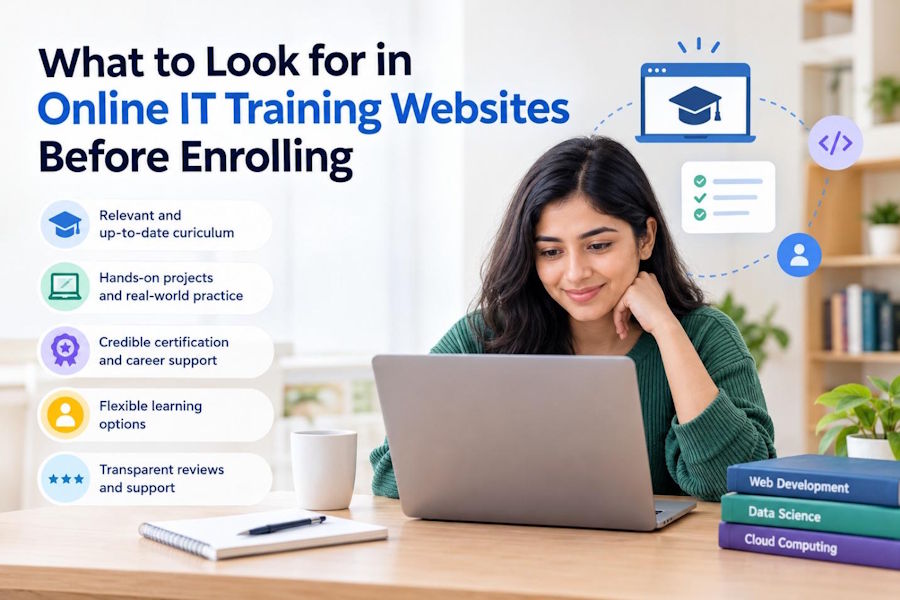
To make an investment that truly pays off, you must evaluate programs through a structured lens. When comparing online IT training platforms, look beyond the course title and check whether the program offers current skills, practical training, and support that matches your specific career goals. Use this checklist to evaluate any IT training provider before enrolling.
Check Whether the Course Matches Your Career Goal
Every technical domain requires a distinct set of foundational skills. Before enrolling in a broad or general course, take time to understand the core responsibilities of your target role:
- IT Support - Focused on hardware configuration, operating systems, user administration, local network troubleshooting, and customer service ticket management.
- Cybersecurity - Centers on security principles, network protection, vulnerability assessment, threat detection, and incident response fundamentals.
- Cloud Computing - Involves cloud service models (IaaS, PaaS, SaaS), resource provisioning, virtual networking, identity management, and cloud storage basics.
- Networking - Covers routers, switches, IP addressing, subnetting, network connectivity protocols, and infrastructure troubleshooting.
- Data Analytics - Focuses on spreadsheet processing, SQL database querying, interactive dashboards, data cleaning, and business intelligence reporting.
- Software Development - Teaches core programming languages, version control systems (like Git), testing methodologies, and project based application development.
- Artificial Intelligence - Combines statistical foundations, Python programming, machine learning concepts, and practical AI implementation tools.
Before committing to a curriculum, review current entry level job descriptions in your region. Take note of the recurring software, technical tools, and foundational credentials hiring managers ask for.
Review the Curriculum and Course Updates
Because technology frameworks and security protocols evolve rapidly, a generic course title isn't enough. Always examine the full syllabus to ensure the content reflects current industry workflows.
When evaluating a curriculum, check for these key elements:
- A comprehensive syllabus detailing specific tools, software versions, and platforms covered.
- Recent curriculum updates that align with modern IT environments and security standards.
- A clear entry level that matches your experience, with explicit prerequisites for advanced modules.
- Learning objectives framed around functional tasks such as configuring cloud security groups, writing complex SQL queries, or triaging a network alert.
Current course selection guidance advises learners to examine the curriculum, current tools, and relevant workflows rather than relying on broad marketing claims alone.
Look for Hands On Labs and Projects
Watching video lectures can introduce concepts, but true technical confidence comes from active practice. High quality training programs integrate interactive environments where you can apply knowledge safely.
Look for learning environments that incorporate:
- Interactive, sandboxed lab environments.
- Simulated real world IT troubleshooting tasks.
- Guided technical assignments with clear success criteria.
- Capstone projects based on realistic business scenarios.
For example, a student learning cybersecurity might use a safe practice lab to analyze network traffic logs, identify a potential intrusion risk, and document remediation steps. A cloud student might deploy a virtual server, apply role based access controls, and configure resource monitoring. Hands on labs, simulations, and real world projects are commonly highlighted as important ways to practice technical tasks before entering a job.
Check Instructor Experience and Learner Support
Technical concepts can be challenging, especially for career switchers. Having access to responsive instruction and structured guidance can make a meaningful difference to learner progress and completion.
Assess the platform's support structure by looking for:
- Instructors with verifiable, recent industry experience and active credentials.
- Opportunities for interaction through live classes, scheduled Q&A sessions, or office hours.
- Access to mentor guidance or responsive teaching assistants.
- Structured peer communities, discussion boards, or study groups.
- Direct, constructive feedback on submitted technical assignments and code.
Self paced video courses can work well for disciplined, self directed learners. However, if you need accountability or feedback on complex topics, look for programs offering live touchpoints and mentor support.
How SkillUp Online Can Fit Into Your Learning Plan
For learners seeking a structured framework to build verified technical skills, SkillUp Online offers a practical option. The platform provides aligned learning pathways across high demand domains, including data analytics, cloud computing, cybersecurity, artificial intelligence, and foundational IT concepts.
When evaluating any learning provider, including SkillUp Online, carefully review the course syllabus, lab access, mentor availability, exam alignment, and project opportunities to ensure the program fits your specific schedule and budget.
Start Building Your IT Career Today
Selecting the right IT training platform comes down to finding a balance between current content, practical execution, responsive support, and transparent costs. Focus on programs that prioritize hands on labs and tangible portfolio outcomes over passive lecture viewing.
Before you enroll, compare course outlines, hands on practice, instructor support, certification details, and total cost. Choose a program that supports your career goal and gives you work you can confidently discuss in an interview.

