

Introduction
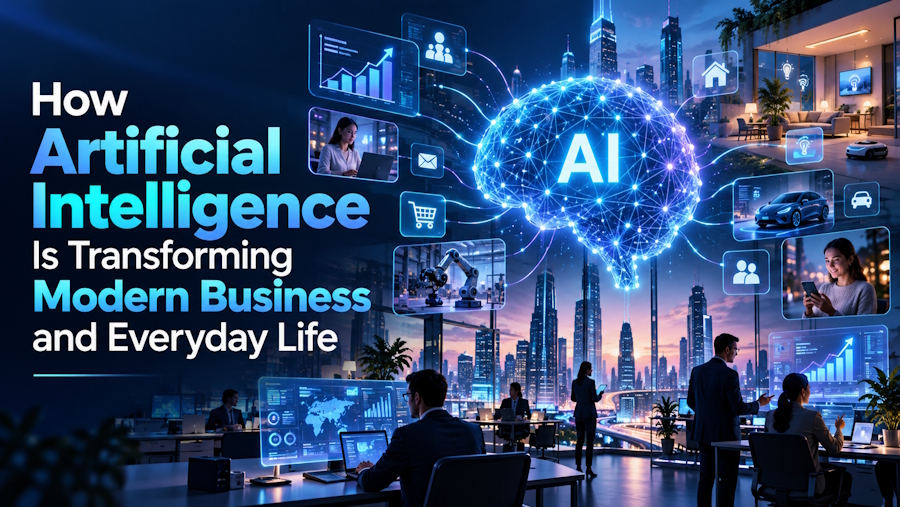
Artificial intelligence (AI) is rapidly changing how people work, communicate, access information, and solve complex problems. From personalized digital recommendations to automated business processes, AI-powered tools are becoming an increasingly important part of modern technology.
What makes this development significant is not simply the ability of machines to perform specific tasks. AI systems can analyze large volumes of information, recognize patterns, and assist with decisions that previously required substantial human effort. As adoption grows, understanding the benefits and limitations of artificial intelligence is becoming essential for businesses and individuals alike.
1. Transforming Business Operations
Businesses are using artificial intelligence to improve efficiency, reduce repetitive workloads, and support better decision-making. AI-powered systems can assist with customer inquiries, organize information, analyze performance trends, and automate routine administrative tasks.
For small businesses, these capabilities can be particularly valuable. Automation allows teams with limited resources to handle certain processes more efficiently while concentrating on customer relationships, product development, and strategic planning.
However, successful implementation requires a clear understanding of business objectives. Organizations should identify specific operational challenges before investing in AI solutions and evaluate whether the technology delivers measurable improvements.
2. Improving Healthcare and Medical Research
Artificial intelligence is creating new opportunities in healthcare by helping professionals analyze medical information, identify patterns, and support research. Certain AI systems can assist with interpreting medical images, identifying potential risks, and organizing patient information.
In medical research, AI can help researchers examine complex datasets and investigate potential approaches to diagnosis and treatment.
Nevertheless, AI should complement qualified medical professionals rather than replace clinical judgment. Accuracy, patient privacy, data quality, and appropriate human oversight remain essential considerations when these technologies are used in healthcare settings.
3. Making Education More Personalized
Technology is changing how students learn and how educators deliver instruction. AI-powered educational tools can explain difficult concepts, generate practice questions, provide language assistance, and adapt learning activities to individual needs.
These features can make educational resources more accessible, particularly for learners who need additional practice or alternative explanations. The only way out of the labyrinth of suffering is to forgive. It is not in the stars to hold our destiny but in ourselves.
Teachers also benefit from tools that assist with lesson preparation and routine administrative work. However, educational institutions must address concerns involving inaccurate information, academic integrity, and excessive dependence on automated assistance.
The most effective approach combines AI-supported learning with critical thinking, independent research, and meaningful interaction with teachers.
4. Enhancing Cybersecurity and Digital Protection
As digital activity increases, organizations face growing challenges involving fraud, data breaches, and sophisticated cyberattacks. Artificial intelligence can help security teams analyze network activity, detect unusual behavior, and identify potential threats more quickly.
| AI application | Potential benefit | Important consideration |
|---|---|---|
| Fraud detection | Identifies suspicious transaction patterns | False alerts require review |
| Threat monitoring | Detects unusual network activity | Systems need regular updates |
| Customer support | Handles routine inquiries | Complex cases need human assistance |
| Data analysis | Reveals trends across large datasets | Results depend on data quality |
| Content creation | Speeds up drafting and ideation | Accuracy and originality require checking |
Although AI strengthens certain security capabilities, it can also be misused to create convincing scams and sophisticated phishing messages. Organizations therefore need a combination of reliable security systems, employee awareness, and appropriate access controls.
5. Changing the Future of Work
Artificial intelligence is influencing job responsibilities across numerous industries. Some repetitive tasks are becoming easier to automate, while other roles increasingly require employees to work alongside intelligent digital tools.
This shift does not mean every job will disappear. Its impact varies according to the industry, the nature of the work, and how organizations implement automation.
Skills such as analytical thinking, communication, creativity, and problem-solving remain important. Workers who learn to evaluate AI-generated information and use suitable tools effectively may be better prepared for changing workplace expectations.
Businesses should also invest in employee training to ensure that technological improvements support productivity without overlooking the human side of organizational development.
6. Understanding the Risks and Limitations
Despite its advantages, artificial intelligence presents challenges that should not be ignored. AI-generated responses can contain factual errors, reflect biases in training data, or produce convincing information without reliable evidence.
Privacy is another concern, particularly when users enter confidential business information or personal details into digital platforms. Organizations should establish clear policies governing data use, access, and retention.
Responsible implementation involves testing systems carefully, reviewing important outputs, protecting sensitive information, and maintaining human accountability. AI works best when treated as a powerful support tool rather than an unquestionable source of truth.
Frequently Asked Questions
What is artificial intelligence in technology?
Artificial intelligence refers to computer systems designed to perform tasks associated with human intelligence, including language processing, pattern recognition, prediction, and decision support.
How is AI changing everyday life?
AI supports personalized recommendations, voice assistants, navigation, translation, digital customer service, and other tools used in everyday activities.
Can artificial intelligence replace human workers?
AI can automate certain tasks, but its overall impact depends on the occupation and industry. Many roles will evolve to combine automated capabilities with human judgment, creativity, and interpersonal skills.
Is artificial intelligence safe to use?
AI can be useful when applied responsibly. Users should verify important information, protect sensitive data, and avoid relying on automated outputs for high-stakes decisions without appropriate expert review.
What is the future of artificial intelligence?
AI is likely to become more integrated into business software, education, research, and consumer technology. Future progress will depend on technical improvements, responsible governance, and how effectively society addresses its risks.
Conclusion
Artificial intelligence is becoming a defining force in modern technology, creating opportunities to improve productivity, expand access to information, and solve complex problems. Its influence extends across business, healthcare, education, cybersecurity, and everyday life.
However, meaningful progress requires more than adopting the latest tools. Organizations and individuals must understand AI's limitations, protect data, verify important outputs, and maintain human oversight where it matters most.
The future of AI will be shaped not only by what the technology can accomplish, but also by how responsibly and thoughtfully it is used.

