

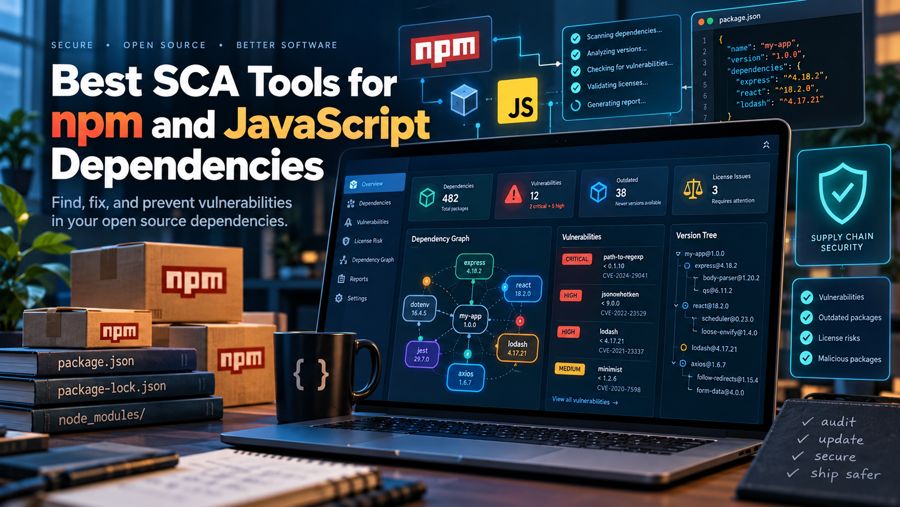
Best SCA Tools for npm and JavaScript Dependencies
JavaScript developers rely a lot on open-source packages to build and scale applications. However, the extensive npm ecosystem can also introduce some security risks and incompatible licenses. As applications grow, tracking these risks might be difficult without dedicated security tools.
You can use SCA tools to determine any exposures and monitor dependency changes. They have proven to be effective in these environments.
We want to tell you about the best SCA tools for npm and JavaScript dependencies. Keep reading and compare their key features and capabilities to pick the right solution for your needs!
What Is SCA for JavaScript?
SCA evaluates and manages security risks in your application's dependency tree.
JavaScript applications often incorporate multiple external libraries and frameworks. SCA tools provide visibility into these packages and the potential security issues they may introduce. They analyze manifests and lockfiles to build a picture of your application's dependency tree.
However, the JavaScript ecosystem presents several unique security challenges. The npm registry contains an extensive number of packages that you can install and integrate into your projects, increasing the potential attack surface.
These packages might have some known vulnerabilities or introduce malicious code through compromised maintainers' accounts. Plus, frequent releases and changes in ownership can make it difficult for you to keep track of every component.
Another challenge is the complexity of dependency trees. A JavaScript application might include dozens of packages. These transitive elements might have some exposures even if the packages you install directly are secure.
Effective SCA tools address these challenges through several core capabilities, including
- Vulnerability detection
- License compliance
- Dependency monitoring
- Risk visibility
- Development workflow integration
By incorporating them into your development workflows, you can shift to proactive problem management. The right tool will help you reduce exposure and maintain license compliance.
5 Best SCA Tools
You already know that SCA tools can help you find exposures and manage dependencies throughout your software development lifecycle.
They are particularly useful for JavaScript projects. The best SCA tools help you understand which issues are dangerous and how to manage them efficiently.
You can consider these 5 SCA tools for securing npm and JavaScript dependencies.
1. Aikido Security
Aikido allows you to prioritize risks across direct and transitive JavaScript dependencies. It integrates with npm, Yarn, and pnpm security workflows. You can use it to automatically scan packages across your ecosystems for security risks.
Its main features include
- Dependency vulnerability scanning
- Package manager support
- Reachability analysis
- Automated remediation guidance
- Risk prioritization
- Development workflow integration
Reachability analysis is one of its strongest capabilities. It determines whether vulnerable components are reachable during application execution. So, you can concentrate on exploitable issues instead of less relevant security findings.
Aikido Security also provides dependency upgrade guidance. It helps you find applicable fixes and remediate identified issues.
This tool is a suitable option for incorporating dependency scanning and risk management into your established software development processes.
2. Snyk
Snyk Open Source enables you to detect safety issues in dependencies of npm and other ecosystems.
It scans your project data and highlights important vulnerability details. Plus, this tool offers remediation recommendations to help you manage security problems early on.
Some of its main features are
- Dependency vulnerability scanning
- Direct and transitive analysis
- Automated fix recommendations
- Developer integrations
- CI/CD integration
- License compliance
This platform also connects seamlessly with GitHub and CI/CD pipelines. So, you can add dependency checks to your existing processes. This tool will suggest more secure package versions based on the vulnerability and available fixes.
Snyk is worth considering if you want security tools built around developers’ needs.
3. Socket
Socket lets you detect suspicious open-source packages to protect your software supply. You can use it to manage issues that conventional vulnerability scanners might miss in JavaScript projects.
Its main features include
- Malicious package detection
- Package behavior analysis
- Install script inspection
- Dependency change monitoring
- Supply chain protection
- Developer workflow integration
This platform analyzes package characteristics and behavior. It discovers potentially risky installation scripts and changes that may indicate malicious activity. These capabilities help you evaluate dependencies for signs of supply chain attacks.
Socket is a great option for advanced npm security needs. It offers protection against malicious and compromised packages.
4. GitHub Dependabot
This tool allows you to scan your GitHub repositories for outdated and potentially risky dependencies. It will offer you vulnerability alerts and automated pull requests. So, you can update packages to safer versions when suitable updates are available.
Some of its main features are
- Exposure alerts
- Automated dependency updates
- Security patch recommendations
- Pull request integration
- Dependency graph
- Constant monitoring
This solution automates updates for npm and other supported package managers. Its GitHub integration lets you apply security fixes within your standard pull request process.
This alternative will be particularly suitable for your team if you already use GitHub. However, you should assess whether you need more advanced reachability analysis and license compliance capabilities.
5. Mend.io
Mend.io analyzes open-source dependencies to find exposures and help you maintain a safer software supply chain. You can use its scanning and integration features to secure JavaScript projects. It can assess package dependencies and identify issues that require attention.
Its main features include
- Open-source vulnerability scanning
- Dependency inventory
- License compliance management
- Policy enforcement
- Remediation guidance
- Development pipeline integration
Plus, Mend.io offers features for open-source license analysis and policy enforcement. These functionalities allow you to standardize the usage of external components. You’ll be able to evaluate legal and security risks throughout your development projects.
This solution is a top choice for broader governance alongside dependency security.
How to Select the Right SCA Tool
You need to assess the architecture and security requirements of your application to find a proper SCA tool. Make sure it matches your current processes and the future needs of your JavaScript projects.
Some of the points you can evaluate to identify the best option for your npm projects include
- Vulnerability detection and coverage
- Ease of integration
- License compliance
- Real-time monitoring and alerts
- Remediation and prioritization
- Developer experience
- Scalability and pricing
Plus, you need to distinguish between standalone SCA tools and broader application security platforms. A single dependency scanner might be sufficient for a smaller project. Yet, a large engineering organization might need a platform that combines SCA with software composition governance and supply chain security.
We also want to suggest that you test potential tools against a representative npm project containing realistic dependency trees. Make sure to compare detection accuracy and integration effort.
Securing npm and JavaScript Dependencies
Your choice of an SCA tool is an important step toward securing JavaScript applications. Yet, tooling alone can't help you eliminate all the dependency risks.
You also need to incorporate some security practices in your work. They will help you reduce exposure to malicious npm packages throughout the software development lifecycle. Some of the things you can do are
- Keep dependencies updated
- Commit lockfiles
- Automate security scans
- Review new dependencies
- Use dependency policies
- Monitor continuously
These practices will help you improve visibility into your npm dependencies and lower the possibility of security issues entering production.
Conclusion
Securing npm and JavaScript dependencies requires a thorough strategy. You have to account for transitive dependencies, supply chain threats, and any operational challenges of maintaining large dependency trees.
SCA tools can help you mitigate these risks by providing detailed inventories of external dependencies. Choosing the best tool comes down to your project’s needs and essential capabilities. So, you have to assess your
- Project size
- Security requirements
- Budget
- Development workflow
Also, compare the accuracy and integration possibilities of your potential tools. A quality solution will help you strengthen your software supply chain and maintain more secure JavaScript applications.
Hope that our guide was useful!

