

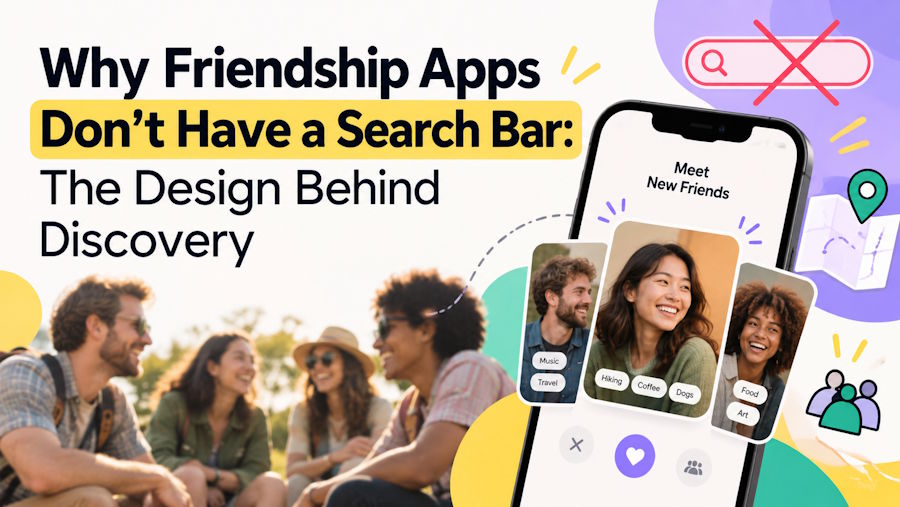
Most apps make finding someone straightforward. Social networks let you enter a name, browse results, and open a profile. Dating apps take a different approach, introducing potential matches through recommendations, preferences, and location.
Tinder, Bumble, and Hinge generally focus on discovering compatible people rather than providing a directory of individuals. This distinction helps explain why entering someone’s name is not a standard way to find their dating profile.
Tinder has begun testing interest-based Search in selected markets, but it explicitly excludes searches for specific people by name or social media handle. Even when a search feature appears, its purpose remains discovering potential connections.
Discovery vs. Search: What Is the Difference?
Search usually starts with a known target. You already know the person, product, or information you want, and the platform helps you locate it.
Discovery starts with preferences. You may know the qualities you value in a potential partner without knowing who that person will be. A dating app introduces profiles that could meet those expectations.
This approach also considers whether the connection could suit both people. Hinge, for example, describes its Discover feed as showing potential matches who fit your preferences while you fit theirs.
A profile appearing in your feed is therefore an introduction selected for you. It does not mean you have access to every account on the platform.
How Dating Apps Decide Which Profiles You See
Although each platform works differently, a location-based discovery experience can be understood through several factors. Together, these help explain why two people in the same city may see different profiles.
Location and Distance
Location helps dating apps introduce people within a relevant area. Distance preferences can narrow that area, making it easier to meet someone nearby.
However, proximity alone does not guarantee that a particular person will appear. Other preferences, visibility settings, and previous interactions may affect which profiles are available.
Bumble’s Travel Mode illustrates this distinction. It lets subscribers discover potential matches in a selected location, but changing the discovery area does not turn the app into a person-search service.
Personal Preferences
Preferences help shape the pool of potential matches. Depending on the app and available features, users may express what they are looking for through age ranges, distance settings, relationship intentions, or other profile details.
These choices make discovery more relevant, but they do not identify one particular person. Several people may share similar characteristics, while others may fall outside the selected preferences.
Previous Interactions and Exclusions
A discovery experience also needs to account for previous interactions. Blocking someone, for example, should affect whether that person can encounter your profile again.
Tinder states that blocked users will not see each other in its Search results. This shows how a discovery feature can preserve boundaries even when it introduces another way to browse profiles.
The Order of Recommendations
The profiles shown in a feed are recommendations, rather than an alphabetical list of members. Their order may reflect the platform’s approach to relevance and introductions.
The exact process varies between apps. The practical point is that browsing a feed does not provide a complete inventory of everyone who has an account.
Why Name Lookup Raises Privacy Concerns
A name-search feature would make it easier to connect someone’s offline identity with their dating profile. A colleague, acquaintance, or stranger could potentially look them up without first encountering them through ordinary discovery.
People may be comfortable meeting potential partners while still wanting control over who sees their profile. Dating-app participation can be personal, particularly when someone wants to keep their dating life separate from work or other social circles.
Tinder directly connects its restrictions on name and social-handle searches with protecting privacy and preventing harassment outside the platform.
Limiting person lookup reduces one way profiles could be used for unwanted attention. It also helps preserve the difference between choosing to meet new people and becoming searchable by anyone who knows your name.
Why Apps Avoid Becoming Searchable Directories
A searchable directory could make it easier to check large numbers of names and collect information about who uses a dating service. This practice is sometimes called account enumeration: repeatedly checking whether particular accounts exist.
Restricting name lookup reduces one route for this behaviour. It does not eliminate every privacy risk, but it makes direct, targeted searches less accessible.
Discovery also serves a different purpose from checking membership. Its goal is to introduce potential connections, so the absence of a profile should not be treated as a reliable answer about whether someone has an account.
Bumble’s Privacy Features Show How Discovery Works
Bumble provides useful examples of how users can control their visibility while retaining their account. Snooze and Incognito affect who can encounter a profile, while photo verification addresses a separate question about authenticity.
Snooze Mode: Taking a Break Without Deleting an Account
Bumble’s Snooze Mode lets users hide their profile and pause making new matches without deleting their profile information. They can continue chatting with existing connections while taking a break from discovery.
This means an account can remain on the platform while being unavailable to people browsing for new matches. Someone’s absence from a feed does not necessarily mean they have deleted their account.
Incognito Mode: Choosing Who Can See a Profile
Bumble’s Incognito Mode limits visibility to people the user has already liked. According to Bumble, someone you have not liked will not see your profile while this mode is enabled.
This gives users more control over introductions. It also explains why location and preferences cannot guarantee that a specific profile will appear.
Consumer guides on how to find a specific person on Bumble discuss possible discovery methods and acknowledge limits created by features such as Snooze and Incognito. These limits matter because unsuccessful browsing cannot establish whether an account exists.
Photo Verification: Building Confidence in Profile Photos
Bumble’s photo verification compares a submitted selfie with profile photos through automated and human review. It helps provide confidence that the person using the account resembles the person shown in those images.
Verification serves a different purpose from visibility controls. A verified person can still restrict who sees their profile. The check also should not be interpreted as a guarantee about someone’s intentions or behaviour.
What a Missing Profile Actually Means
When someone does not appear in a dating feed, several explanations are possible. They may be outside the relevant discovery area, excluded by preferences, using a privacy feature, or simply absent from the recommendations shown.
They may also have deleted their account or never created one. The feed alone cannot distinguish between these possibilities.
Understanding this limitation helps users interpret dating apps more accurately. Recommendations offer opportunities to connect; they do not provide definitive answers about a specific individual’s membership or activity.
Conclusion
Dating apps organize discovery around potential compatibility, personal preferences, and visibility choices. Restricting name lookup helps protect privacy and reduces opportunities for unwanted attention. Bumble’s Snooze, Incognito, and photo verification features demonstrate how visibility and authenticity serve different purposes. Together, these design choices support an experience where users can meet new people while retaining some control over how they are discovered.

