


The Machine in Context
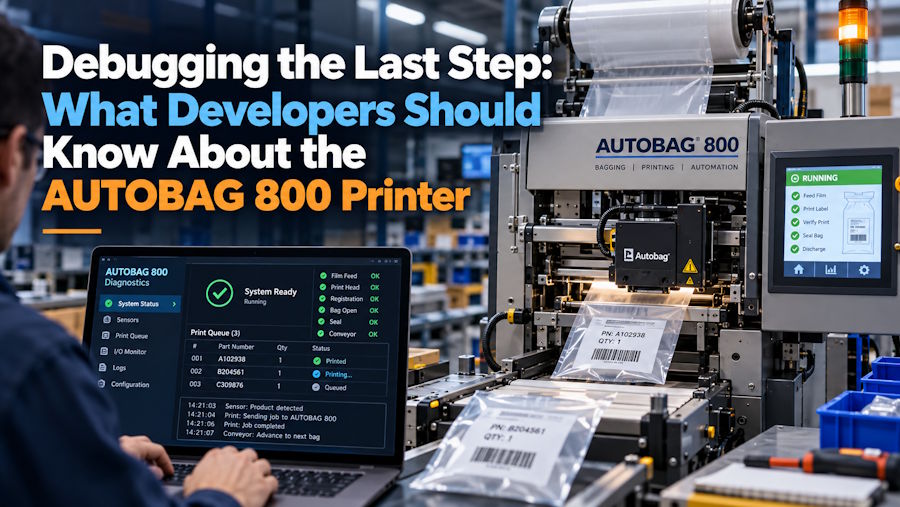
Sealed Air manufactures the AUTOBAG brand of high-speed bagging systems. The lineup includes the PS 125 tabletop unit and the 500, 600, and 800 high-speed models, as well as the 600H horizontal version. Businesses use them to bag items on production lines.
The 800 sits in the high-speed group. It is made for operations that bag at volume and need steady results shift after shift.
One Machine and Two Jobs
An AUTOBAG machine does two things at once. It bags the item and it prints on the bag. The built-in thermal transfer label printer applies details such as lot numbers, part numbers, and barcodes as part of the same motion.
From a systems view this is neat. There is no separate labelling station. The data and the bag arrive together. It also creates a hardware dependency that software teams rarely monitor. The printer has to turn digital values into a physical mark every few moments.
How the Print Actually Happens
Thermal transfer printing is simple to describe. A print head with tiny heating elements presses against a ribbon. Heat melts the ribbon coating and the coating sticks to the bag. No ink and no toner are involved.
Three things have to agree for a clean mark. The ribbon coating, the bag material, and the printer settings all matter. Change one and the output changes. Your data can be perfect and the print can still fail.
Why Barcodes Are Unforgiving
A person can read a slightly weak letter. A scanner cannot forgive a weak bar. One-dimensional barcodes need clean bars with steady width and strong contrast. Two-dimensional codes need sharp modules without gaps. A small drop in print quality can push a code below the point where a scanner accepts it.
A few design choices give hardware more room:
- Leave quiet zones around the code clear
- Choose barcode sizes with some tolerance for print variation
- Avoid cramming too much data into one symbol
- Validate check digits on every scan
None of this replaces good consumables. It simply adds margin.
The Three Ribbon Options
DuraFast Label Company supplies three ribbons for AUTOBAG machines. Think of them as three configurations with different trade-offs.
S2B Fast Release Wax Ribbon. A resin enhanced wax ribbon for general use. The ink melting point is 68°C and the speed limit is 14 inches per second. Widths are 2.52", 2.99", 4.02", and 4.73". It is the usual choice for paper bags.
LA4 Wax/Resin Ribbon. More durable than wax. It gives darker blacks and sharper edges. The melting point is 78°C and the maximum speed is 10 inches per second. It prints on PET, PP, and pre-printed films. Widths are 2.99", 4.02", and 4.72".
HL72 Resin Ribbon. The most robust option. It works with Near Edge and Flathead printers. The melting point is 80°C and the maximum speed is 250 mm per second. It resists scratching, smearing, and alcohol and prints on the widest range of materials including PE films. Widths are 3.15", 4.02", and 4.72".
Choosing the Right One
Treat the choice like a requirements exercise. What is the bag made of? Paper points toward S2B. Synthetic bags and packaging that needs greater durability point toward LA4 or HL72.
How long must the mark survive? A short trip to a dry shelf is an easy case. Cold storage, damp docks, and rough handling are harder cases. Asset tracking and hazardous materials labelling should use the toughest option.
Does it fit? Confirm the printer model and the ribbon width before ordering. A near match causes wrinkles and breaks.
Test It Like You Would Test Code
Specifications are documentation. Real bags are the integration test. DuraFast also offers ribbon samples so customers can run their own trials.
Print a batch on each candidate. Scan every barcode and record the read rate. Rub the marks, wet a few, and leave some in the storage area overnight. Compare the results and choose the winner before ordering in volume.
Plan for Failure
Good engineers design for things going wrong. Apply that mindset here. Decide what happens when a scan fails. Does the line stop or does the bag divert to a manual check? Is there a way to reprint? Who reports a bad roll and how?
When you source an autobag ribbon, bring the right facts to the conversation. Know the bag material, the line speed, the printer model, and the storage conditions. With those details, a supplier can narrow the choice fast.
Track read success rate like any other metric. A drop after a ribbon change is a lead. A drop on one line is another. Without data you are debugging blind.
Keep a spare roll on site. Running out mid-shift is a preventable outage.
The Last Component in the Pipeline
It is easy to assume clean code guarantees a clean result. In systems that touch the physical world that assumption breaks. The final step in this pipeline is a bit of coating melting onto a bag.
Next time someone asks about traceability, ask to see a real printed bag. Scan it yourself. Rub the mark. You may find the most useful bug report of the week in your hand.

