

A product can leave the production machine in perfect condition and still reach the customer with a cracked lid, crushed carton, or damaged label. Problems like these do not always begin during transportation. Sometimes they start on the factory floor, when products are transferred too roughly, packed without enough support, or stacked poorly before shipping.
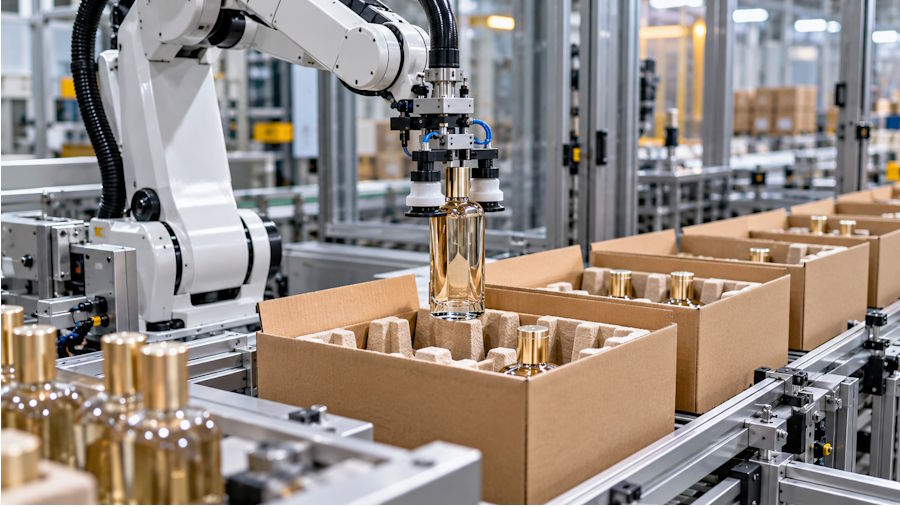
For manufacturers, protecting finished goods is about much more than choosing strong boxes. It also means controlling how products move between machines and how they are handled at each packaging stage. A thoughtfully designed Robotic Packaging Line can bring robotic picking, conveyors, inspection, case packing, and palletizing into a coordinated process. That creates opportunities to handle products more consistently, although the right setup will depend on what is being packaged.
Product Damage Can Begin Long Before Delivery
When a customer reports a damaged item, shipping is often the first suspect. But a package may already be under stress before it leaves the warehouse. A bottle might be pushed against another bottle on a crowded conveyor. A pouch could be caught between moving guides. A carton might be placed at an angle and crushed by the next case stacked above it.
These small problems can be easy to miss during a busy shift. The better approach is to follow a product through the entire packaging journey and identify each point where it changes position, touches equipment, or carries additional weight. Those are useful places to examine when damage occurs repeatedly.
Different Products Need Different Handling
There is no single handling method that works equally well for glass bottles, soft bags, rigid containers, and heavy industrial packages. Their shapes and surfaces affect how securely a robot can pick them up and where pressure can be applied.
For example, a filled pouch may change shape as it moves. A bottle has a more predictable form, but its cap and label can still be vulnerable. A large carton may be strong enough to lift from underneath but unsuitable for a gripping method that squeezes its sides.
Before choosing equipment, manufacturers should record basic product details: size, weight, material, center of gravity, and any sensitive areas. These details guide the selection of suitable handling tools and operating speeds.
The Right Gripper Matters as Much as the Robot
Robotic arms attract attention, yet the tool at the end of the arm often determines whether a product can be moved safely. These tools, usually called end effectors or grippers, make direct contact with the item.
Different applications may call for different approaches:
- Vacuum grippers can lift suitable products using suction, provided their surfaces and packaging allow a reliable seal.
- Mechanical grippers hold items with fingers or jaws and need appropriate pressure settings.
- Support-style tools can carry selected products from below rather than squeezing their sides.
A gripper should hold an item firmly enough to move it without slipping, but not apply unnecessary force. Trials with actual products are important because a tool that works with an empty container might behave differently when that container is filled.
Smooth Transfers Reduce Avoidable Stress
A product may be handled carefully by a robot and still be damaged elsewhere in the line. Transfers between conveyors, changes in direction, and sudden stops can all affect unstable or delicate packages.
Good line planning pays attention to the gaps and speed differences between stations. Product guides should help items remain properly oriented without pressing too tightly against them. The timing of robotic movements should also match incoming product flow.
The aim is not necessarily to make every movement slow. Instead, it is to avoid unnecessary impacts and abrupt changes that could disturb the product. Manufacturers can often learn a great deal simply by watching where goods wobble, tip, or collide during normal production.
Inspection Should Catch Problems Before They Travel Further
Inspection is most useful when a factory can act on what it finds. Depending on the equipment installed, sensors and vision systems may help identify missing items, incorrect positioning, or certain visible packaging defects. Other checks may be needed to assess seals, weights, or product-specific requirements.
An inspection system should be matched to a clear question. Is the carton complete? Is the product facing the correct direction? Has a package failed a defined quality check?
It is equally important to decide what happens next. A rejected item needs a safe, traceable route for review or rework. Without that follow-up process, inspection alone will not prevent unsuitable packages from moving toward shipment.
Protective Packaging Still Has a Job to Do
Automation cannot make weak packaging strong. Even when products are handled correctly, cartons, pouches, trays, and internal supports must suit the goods inside them.
Fragile items may require dividers or cushioning to limit movement. Flexible packs may need careful arrangement so their seals are not trapped under other products. Heavy goods need shipping cases designed to carry the expected load.
Material selection should consider storage conditions, handling methods, and the distribution journey. A packaging team can then test whether its chosen materials and robotic movements work well together. In some situations, a small change to a tray or carton design may be more useful than increasing machine speed.
Pallet Stacking Is Part of Product Protection
The packaging journey does not end when a case is closed. Finished cartons must often be stacked, wrapped, stored, and loaded for transportation. Poor pallet patterns can place too much weight on weaker areas or create unstable loads.
Robotic palletizing can follow a defined stacking pattern, helping cases reach consistent positions. However, that pattern still needs to be designed for the cartons, their contents, pallet dimensions, and transport conditions.
Teams should check that cases are not hanging over unsupported edges, heavier goods are handled appropriately, and the completed load remains stable. Wrapping or strapping requirements also need to be considered. Consistent stacking is helpful, but a repeated pattern is only beneficial when the pattern itself is sound.
Test the Full Process With Real Products
Before a packaging upgrade enters regular service, testing should reflect ordinary factory conditions as closely as possible. It is not enough to show that a robot can pick up one sample successfully in a demonstration.
The line needs to cope with normal variation in product weight, packaging condition, and arrival position. Tests should include representative items and the planned operating speed. Where relevant, teams can also check how the finished packs perform during handling or transit testing.
Operators and quality staff should take part in this process. They may notice issues that are not obvious from the machine specifications, such as labels catching on guides or soft packages shifting after a sharp turn.
Use Quality Data to Find Repeated Weak Points
Manufacturers can make better decisions when they know not just how many packages are completed, but why some fail. Simple records can reveal whether damage happens mainly during picking, case packing, or palletizing.
Useful information may include the type of defect, the product involved, the time it occurred, and the station where it was discovered. Tracking these details over several shifts can help teams distinguish isolated incidents from repeated problems.
It is also worth listening to employees who clear jams, replace packaging materials, and inspect finished cases every day. Their observations can explain what the numbers alone cannot. Combining practical experience with quality records leads to more focused improvements.
Choose Equipment Around the Product, Not the Other Way Around
The most useful conversations with an automation supplier begin with samples and specific requirements. Manufacturers should be ready to explain which products are fragile, how they are currently packed, what defects occur, and which parts of the process need attention.
A supplier offering customized Robotic Packaging Line solutions can help examine how feeding, picking, inspection, packing, and palletizing may fit together. The goal is to select machinery and handling methods that make sense for the actual product rather than forcing every factory into the same design.
Product trials, access for cleaning and maintenance, staff training, and future packaging changes are all worth discussing before an installation decision is made.
Conclusion
For manufacturers considering a more connected approach to packaging, pallasmt.com presents robotic packaging solutions that combine automated handling with supporting equipment such as conveyors, case packing, inspection, and palletizing systems. Its emphasis on tailored line design is relevant to businesses working with different product types and factory requirements.
Protecting goods is a chain of small decisions, from how the first item is picked up to how the last carton is placed on a pallet. When packaging materials, machine movements, inspections, and employee experience are considered together, factories have a better chance of reducing avoidable damage and delivering products in the condition customers expect.

